India's power sector has witnessed a remarkable transformation over the past few decades. As the nation's energy demands continue to surge, the need for efficient and reliable transmission infrastructure has become more critical than ever. At the forefront of this revolution stands the ambitious 1200kv transmission line in India project – a technological marvel that promises to reshape how electricity travels across the country.
Understanding High Voltage Transmission in India
Before we dive into the specifics of the 1200kV system, let's understand why transmission voltage in India has been steadily increasing. The concept is simple: the higher the voltage, the lower the energy loss during transmission over long distances. It's like widening a highway to let more vehicles pass through smoothly without traffic jams.
India currently operates various transmission voltage levels, including 220kV, 400kV, and 765kV systems. Each upgrade represents a significant leap in efficiency and capacity, enabling power to travel farther with minimal losses.
The 765kv Transmission Line India Network
The 765kV transmission line India network has been the backbone of our power transmission system for years. Introduced in the 1980s, this ultra-high voltage system marked India's entry into the elite club of nations with advanced power infrastructure. These lines crisscross the country, connecting major power generation hubs with consumption centers thousands of kilometers away.
The success of the 765kV network laid the groundwork for even more ambitious projects. Today, India operates one of the world's largest 765kV networks, with thousands of circuit kilometers transmitting electricity across the nation. These lines have proven their worth by maintaining grid stability and ensuring power reaches remote corners of the country.
The 400kV Transmission Line: India's Workhorse
While we're discussing cutting-edge technology, we shouldn't overlook the reliable 400kV transmission line network that forms the middle layer of India's transmission hierarchy. These lines are the workhorses of regional power distribution, connecting state grids and facilitating inter-state power transfer.
The 400kV network is extensive, well-established, and continues to expand. It strikes an excellent balance between transmission capacity and infrastructure cost, making it ideal for medium to long-distance power transmission. Many renewable energy projects, particularly solar and wind farms, connect to the grid through 400kV substations.
Enter the 1200kv Revolution
Now, let's talk about the game-changer: the 1200kV transmission line in India. This isn't just another incremental upgrade – it's a quantum leap in transmission technology. India became only the second country in the world, after China, to successfully test and develop 1200kV transmission technology.
The journey began with extensive research and development at the Central Power Research Institute (CPRI) in Bangalore. Engineers and scientists worked tirelessly to overcome numerous technical challenges, from insulator design to corona discharge management. The result? A transmission system capable of carrying enormous amounts of power across vast distances with unprecedented efficiency.
Why 1200kV Matters
You might wonder: do we really need such high voltages? The answer is a resounding yes. Here's why:
Reduced Transmission Losses: At 1200kV, power losses drop significantly compared to lower voltage systems. This means more electricity reaches consumers, and less is wasted as heat along the way. In a country as large as India, these savings add up to massive amounts of energy and cost reductions.
Long-Distance Transmission: The 1200kV system can efficiently transmit power over 3,000 kilometers or more. This is crucial for India, where major hydroelectric projects in the Himalayas need to send power to industrial and urban centers in the south and west.
Higher Capacity: A single 1200kV line can carry as much power as multiple 400kV or 765kV lines combined. This reduces the need for multiple transmission corridors, saving land and minimizing environmental impact.
Grid Stability: Higher voltage transmission enhances grid stability and makes it easier to manage frequency and voltage fluctuations across the national grid.
SPKN India: Pioneering Transmission Infrastructure
When discussing India's transmission revolution, SPKN India deserves special mention. As a key player in the power transmission and distribution sector, SPKN India has been instrumental in developing and maintaining critical transmission infrastructure across the country.
Companies like SPKN India work on various aspects of transmission projects – from manufacturing critical components to installation and maintenance of transmission lines and substations. Their expertise spans across different voltage levels, including the 400kV, 765kV, and emerging 1200kV systems.
The role of specialized companies in India's transmission sector cannot be overstated. They bring technical expertise, quality equipment, and efficient project execution capabilities that are essential for building such complex infrastructure. As India pushes forward with its 1200kV ambitions, the contribution of industry players becomes even more vital.
The Technical Marvel Behind 1200kV
Building a 1200kV transmission line isn't just about scaling up existing technology. It requires innovations across multiple domains:
Insulator Technology: At such high voltages, preventing electrical leakage through insulators becomes extremely challenging. Special composite insulators with unique designs are required to withstand the electrical stress.
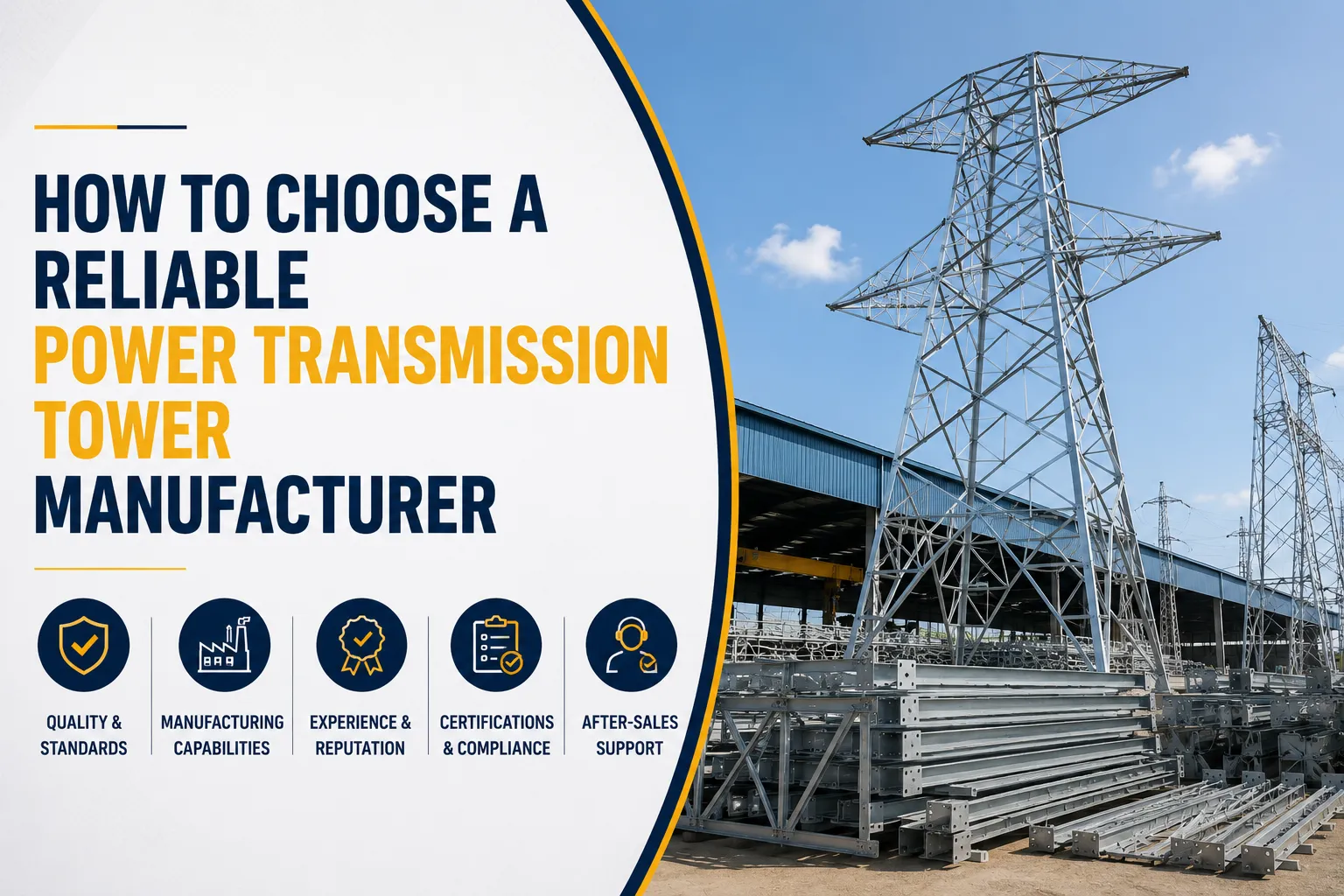
Tower Design: The transmission towers for 1200kV lines are massive structures, designed to maintain safe clearances and withstand extreme weather conditions. They're engineering marvels in their own right, often standing over 60 meters tall.
Conductor Configuration: The conductors (power-carrying cables) used in 1200kV lines are arranged in bundles to manage corona discharge and radio interference. Each bundle can contain six or more individual conductors.
Right-of-Way Management: The higher the voltage, the wider the safety corridor needed around the transmission line. Managing land acquisition and environmental concerns becomes a significant challenge.
Current Status and Future Plans
India's 1200kV test line, established at the Bina substation in Madhya Pradesh, has successfully demonstrated the technology's viability. Power Grid Corporation of India Limited (PGCIL) has been leading these efforts, conducting extensive tests and gathering operational data.
The vision is clear: eventually, major power highways at 1200kV will connect hydroelectric projects in the Northeast and Himalayas with load centers across India. These ultra-high voltage corridors will form the backbone of a truly integrated national grid.
However, the transition won't happen overnight. The 765kV network continues to expand, and the 400kV system remains vital for regional connectivity. The three voltage levels will coexist, each serving specific transmission needs based on distance, capacity, and regional requirements.
Environmental and Economic Benefits
Beyond technical advantages, the 1200kV system offers significant environmental benefits. By concentrating more power in fewer transmission corridors, we reduce the overall land footprint of transmission infrastructure. This is particularly important in a densely populated country like India, where every hectare of land matters.
Economically, while the initial investment in 1200kV infrastructure is substantial, the long-term benefits are compelling. Reduced transmission losses translate to fuel savings at power plants and lower electricity costs for consumers. The ability to transmit power over longer distances also enables optimal utilization of generation resources, regardless of their location.
Challenges and the Road Ahead
Despite the promise, implementing 1200kV transmission on a large scale presents challenges. High upfront costs, complex right-of-way acquisition, and the need for specialized expertise are significant hurdles. Additionally, coordinating such mega projects across multiple states requires strong political will and administrative efficiency.
There's also the question of demand. Building 1200kV lines makes sense only when there's sufficient power generation and consumption to justify such massive transmission capacity. India's growing energy needs and renewable energy push make this increasingly relevant.
Integration with Renewable Energy
The transmission voltage in India hierarchy, including the 1200kV system, plays a crucial role in India's renewable energy ambitions. Large solar parks in Rajasthan and Gujarat, and wind farms along the coasts, need robust transmission networks to evacuate power to consumption centers.
The 1200kV network could be particularly valuable for connecting offshore wind projects and large-scale renewable energy zones to the mainland grid. As India targets 500 GW of renewable energy capacity by 2030, transmission infrastructure becomes as important as generation capacity.
Conclusion
The development of the 1200kV transmission line in India represents more than just technological achievement – it symbolizes India's commitment to building world-class infrastructure and ensuring energy security for future generations. From the reliable 400kV transmission line network to the expanding 765kV transmission line India system, and now to the cutting-edge 1200kV technology, our transmission infrastructure continues to evolve.
Companies like SPKN India and other industry players are crucial partners in this journey, bringing expertise and execution capabilities that transform vision into reality. As we look ahead, the integration of various voltage levels in India's transmission grid will create a resilient, efficient network capable of meeting the nation's growing energy demands while supporting our transition to cleaner energy sources.
The future of power transmission in India is bright, and it's being carried on conductors operating at voltages our predecessors could only imagine. The 1200kV transmission line isn't just about moving electricity – it's about powering India's dreams and aspirations for a developed, energy-secure nation.