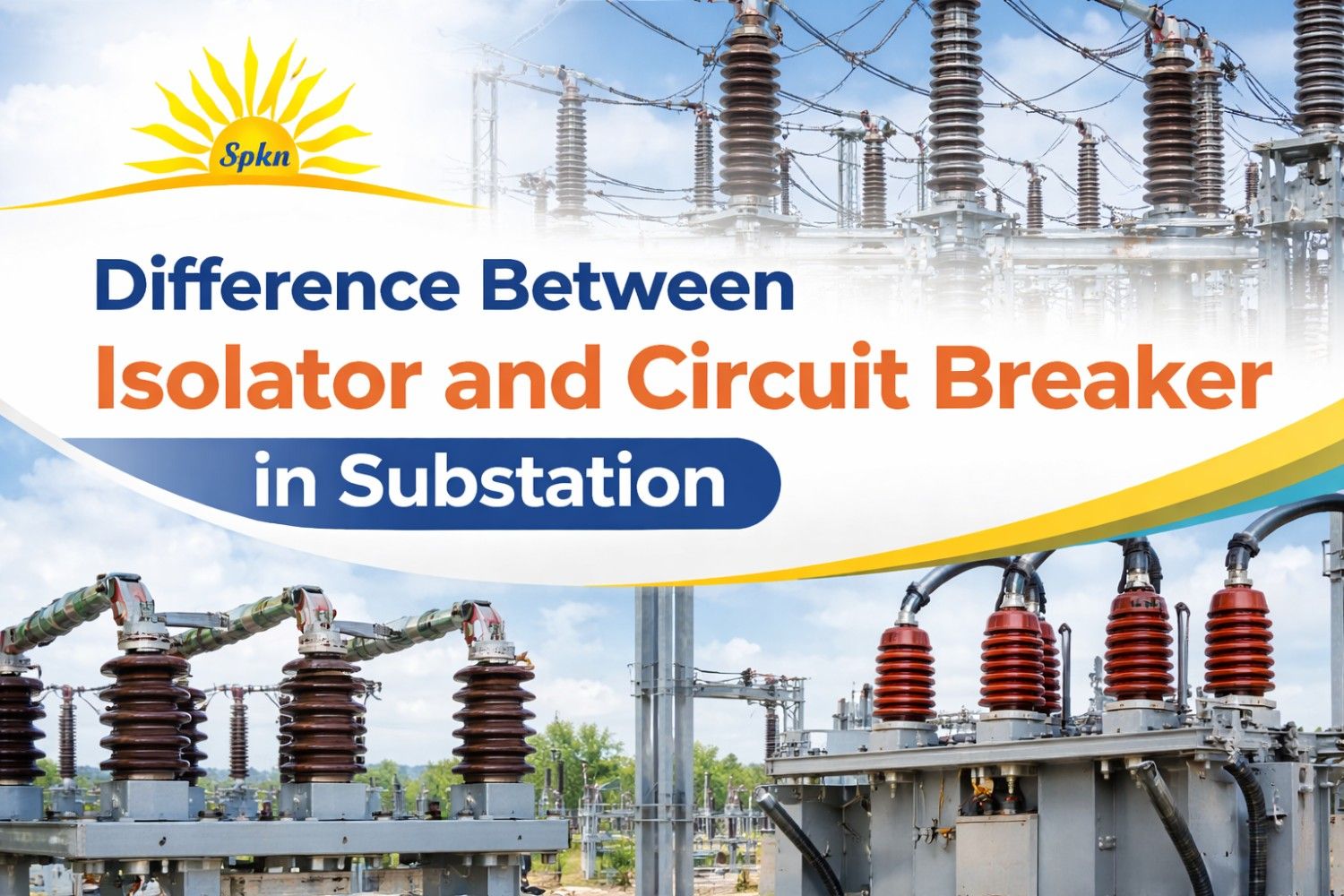
In modern electrical power systems, safety and reliability are extremely important. Every substation relies on protective devices to control electricity and prevent damage to equipment. Two of the most essential devices used in substations are the isolator and the circuit breaker.
Many people working in the electrical field often ask:
What is electrical isolator?
How is it different from a circuit breaker?
Where are relays and circuit breakers used together?
In this detailed guide by Spkn India, we will explain everything in a simple and practical way so engineers, technicians, students, and industry professionals can clearly understand the difference between these two important devices.
What is Electrical Isolator?
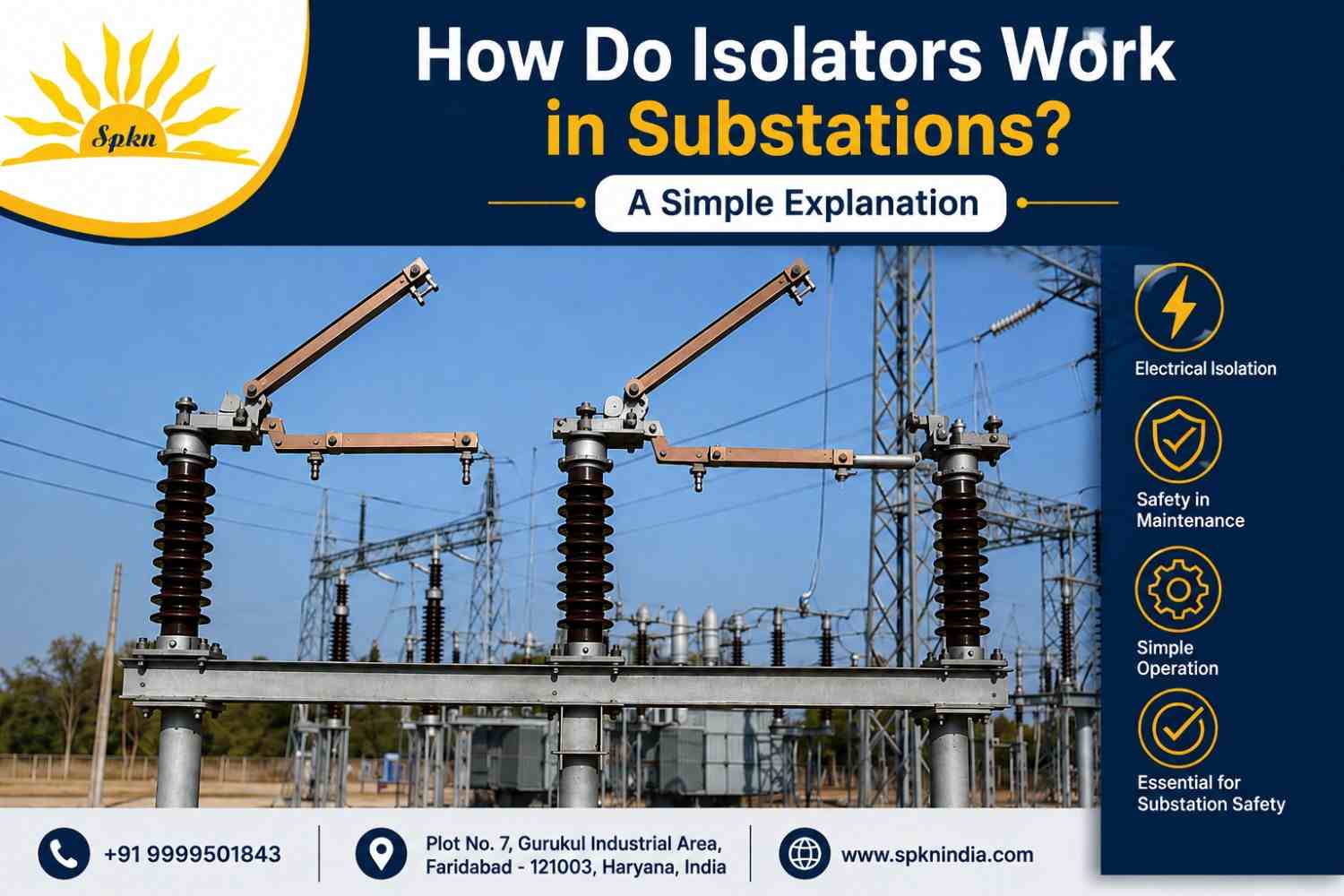
An isolator in electrical systems is a mechanical switching device used to disconnect a part of an electrical circuit from the power supply for maintenance or safety purposes.
It is mainly used when the circuit is already switched off and no current is flowing. The primary function of an isolator is to ensure complete electrical isolation so that maintenance work can be carried out safely.
In simple words:
An electrical isolator is a safety device used to physically separate equipment from the power supply.
Key Functions of an Isolator Switch in Substation
The isolator switch in substation plays a very important role in maintaining safety and operational efficiency.
Main functions include:
- Disconnecting equipment from the power supply
- Ensuring safe maintenance operations
- Providing visible isolation
- Preventing accidental energization
- Improving electrical system safety
- Supporting circuit breaker operations
Isolators are typically installed:
- After circuit breakers
- In substations
- On transmission lines
- In industrial power systems
What is a Circuit Breaker?
A circuit breaker is an automatic electrical device used to interrupt current flow during faults such as:
- Short circuit
- Overload
- Earth fault
- Electrical failure
Unlike an isolator, a circuit breaker can operate while current is flowing.
This makes circuit breakers a critical part of power system protection.
Functions of a Circuit Breaker
Circuit breakers are designed to:
- Detect electrical faults
- Interrupt current automatically
- Protect equipment from damage
- Prevent electrical fires
- Maintain system stability
- Ensure continuous power supply
They are used in:
- Power substations
- Industrial plants
- Commercial buildings
- Transmission and distribution systems
Role of Relays and Circuit Breakers in Substation Protection
In electrical substations, relays and circuit breakers work together as a protection system.
How They Work Together
- Relay detects fault
- Relay sends signal
- Circuit breaker trips
- Power supply stops
This process happens within milliseconds and protects expensive electrical equipment.
Types of Relays Used with Circuit Breakers
Common relay types include:
- Overcurrent relay
- Differential relay
- Distance relay
- Earth fault relay
- Thermal relay
These relays continuously monitor the electrical system and activate the circuit breaker when a problem occurs.
Types of Isolator Used in Substations
Understanding the types of isolator is important for selecting the right equipment for different voltage levels and applications.
1. Single Break Isolator
This is the simplest type of isolator and is commonly used in substations.
Features:
- One break point
- Simple design
- Cost-effective
- Easy maintenance
2. Double Break Isolator
This isolator has two break points, providing better isolation and safety.
Features:
- Higher reliability
- Better insulation
- Used in high-voltage systems
3. Pantograph Isolator
Pantograph isolators are mainly used in high-voltage transmission systems.
Features:
- Vertical movement
- Compact design
- High performance
4. Bus Bar Isolator
Bus bar isolators are used to isolate busbars in substations.
Features:
- High safety
- Reliable operation
- Used in large substations
Difference Between Isolator and Circuit Breaker in Substation
Here is the most important comparison for engineers and technicians.
Isolator vs Circuit Breaker Comparison Table
| Feature | Isolator | Circuit Breaker |
|---|---|---|
| Operation | Manual | Automatic |
| Load Handling | No load operation | Can operate under load |
| Function | Isolation | Protection |
| Arc Control | No arc quenching | Arc quenching system |
| Speed | Slow | Fast |
| Safety | Maintenance safety | Fault protection |
| Installation | After circuit breaker | Before isolator |
| Cost | Lower | Higher |
| Usage | Maintenance isolation | Fault protection |
Working Principle of an Isolator in Electrical Systems
The working principle of an isolator in electrical applications is simple and reliable.
Steps:
- Circuit breaker turns OFF
- Current flow stops
- Isolator disconnects circuit
- Maintenance begins safely
This ensures there is no electrical risk during servicing or repairs.
Working Principle of Circuit Breaker
The circuit breaker works using automatic protection mechanisms.
Steps:
- Fault occurs
- Relay detects fault
- Signal sent to breaker
- Breaker trips instantly
- Power supply stops
This prevents equipment damage and ensures system safety.
Why Both Isolator and Circuit Breaker Are Used Together
In substations, both devices are essential because they perform different functions.
Circuit Breaker
Provides:
- Fault protection
- Automatic operation
- Equipment safety
Isolator
Provides:
- Physical disconnection
- Maintenance safety
- Visible isolation
Together, they create a complete protection system.
Applications of Isolator Switch in Substation
The isolator switch in substation is widely used in various electrical environments.
Common applications include:
- Power transmission lines
- Distribution substations
- Industrial plants
- Power generation stations
- Electrical maintenance operations
- High-voltage switchyards
Advantages of Electrical Isolators
Electrical isolators offer several important benefits.
Key Advantages
- High safety during maintenance
- Simple operation
- Reliable performance
- Low maintenance cost
- Long service life
- Easy installation
- Improved system reliability
Advantages of Circuit Breakers
Circuit breakers provide essential protection in modern electrical systems.
Key Advantages
- Automatic fault protection
- Fast response time
- Reduced equipment damage
- Improved electrical safety
- Reliable power supply
- Fire prevention
Safety Importance of Isolator and Circuit Breaker in Substation
Electrical substations handle high voltage and heavy electrical loads. Without proper protection devices, accidents and equipment failures can occur.
Both isolators and circuit breakers help:
- Prevent electrical accidents
- Protect expensive equipment
- Reduce downtime
- Improve system reliability
- Ensure worker safety
This is why every modern substation depends on these devices.
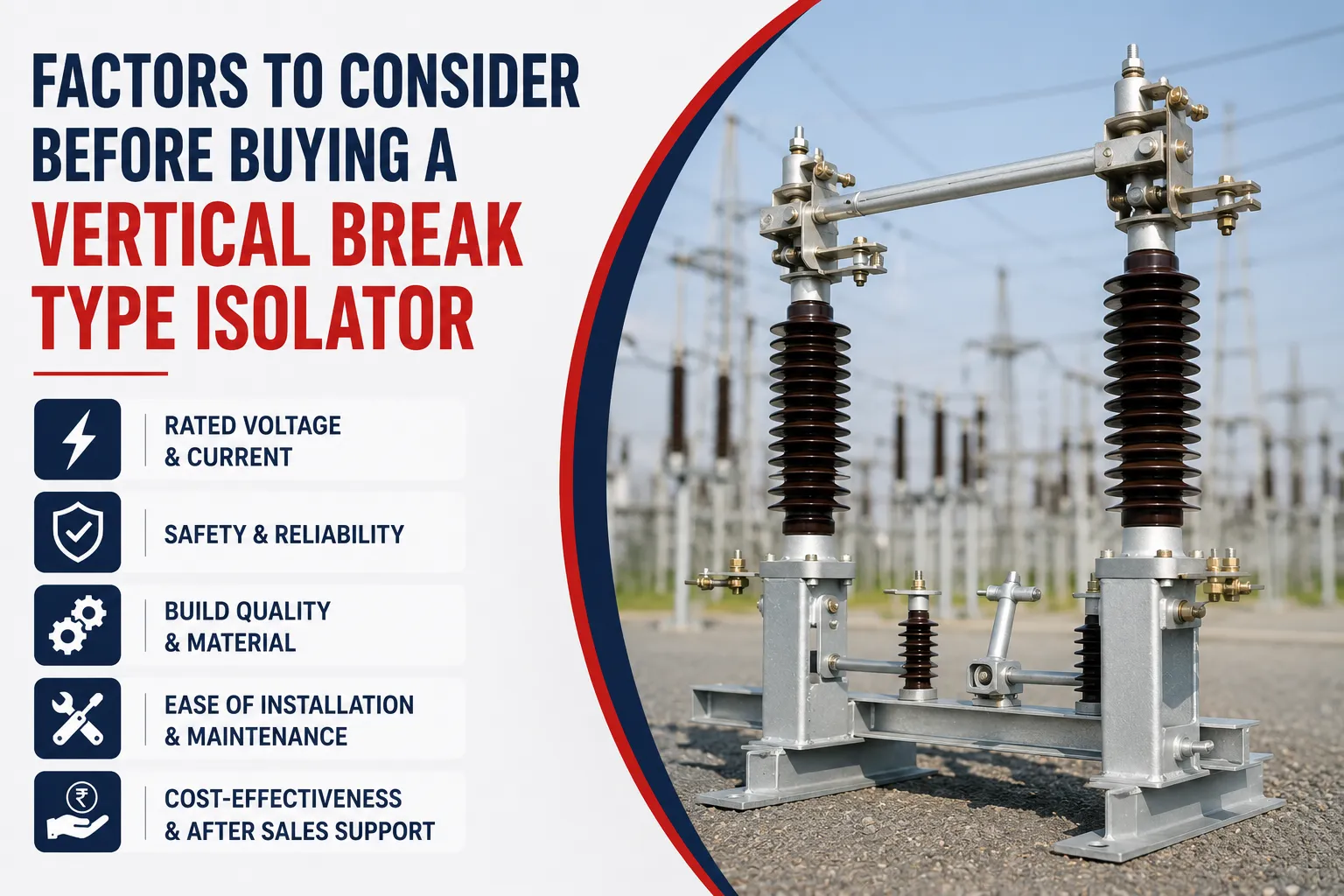
How to Choose the Right Electrical Isolator
Selecting the right isolator is important for safety and performance.
Factors to Consider
- Voltage rating
- Current rating
- Installation type
- Environmental conditions
- Safety requirements
- Maintenance needs
- Industry standards
Why Choose Spkn India for Electrical Isolators and Substation Equipment
Spkn India is a trusted name in the electrical industry, known for delivering reliable and high-quality power equipment for substations and industrial applications.
Key Reasons to Choose Spkn India
- High-quality manufacturing standards
- Reliable electrical performance
- Durable products
- Industry compliance
- Experienced engineering team
- Wide product range
- Strong customer support
Spkn India provides advanced electrical solutions designed to meet modern power system requirements.
Conclusion
Understanding the difference between isolator and circuit breaker in substation systems is essential for anyone working in the electrical field. Both devices play critical roles in maintaining safety, reliability, and efficiency in power systems.
While the circuit breaker protects the system during faults, the isolator ensures safe maintenance by disconnecting equipment from the power supply.