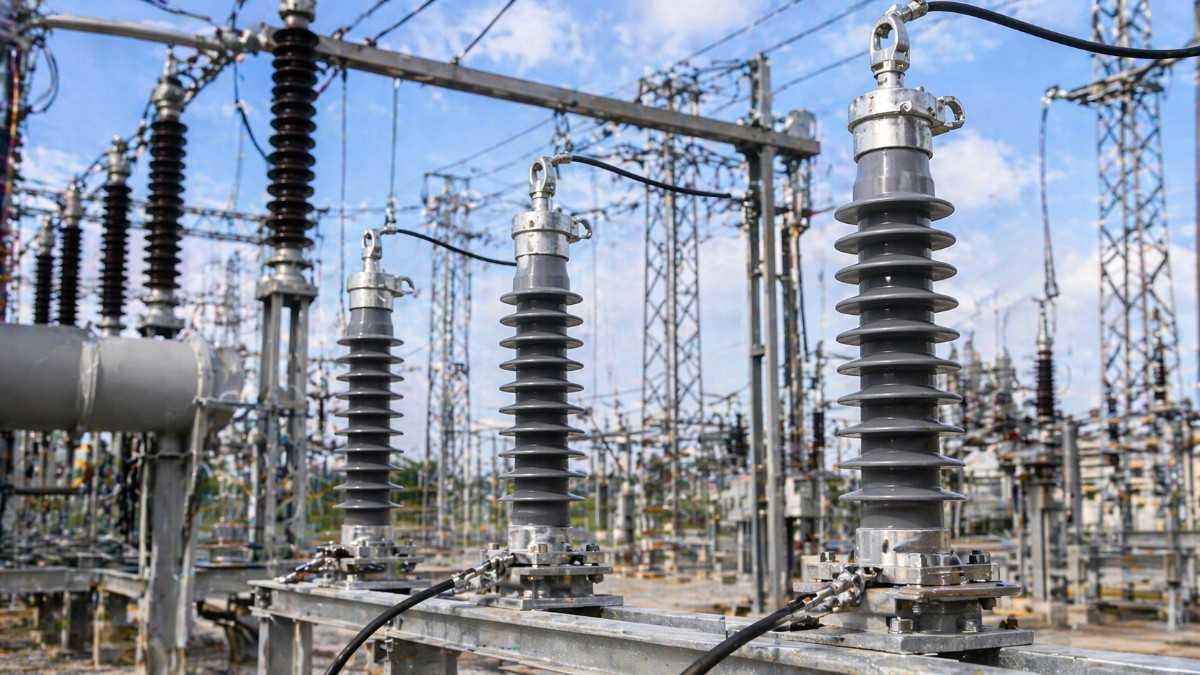
Substations Are the Heart of the Power Grid. Are They Protected?
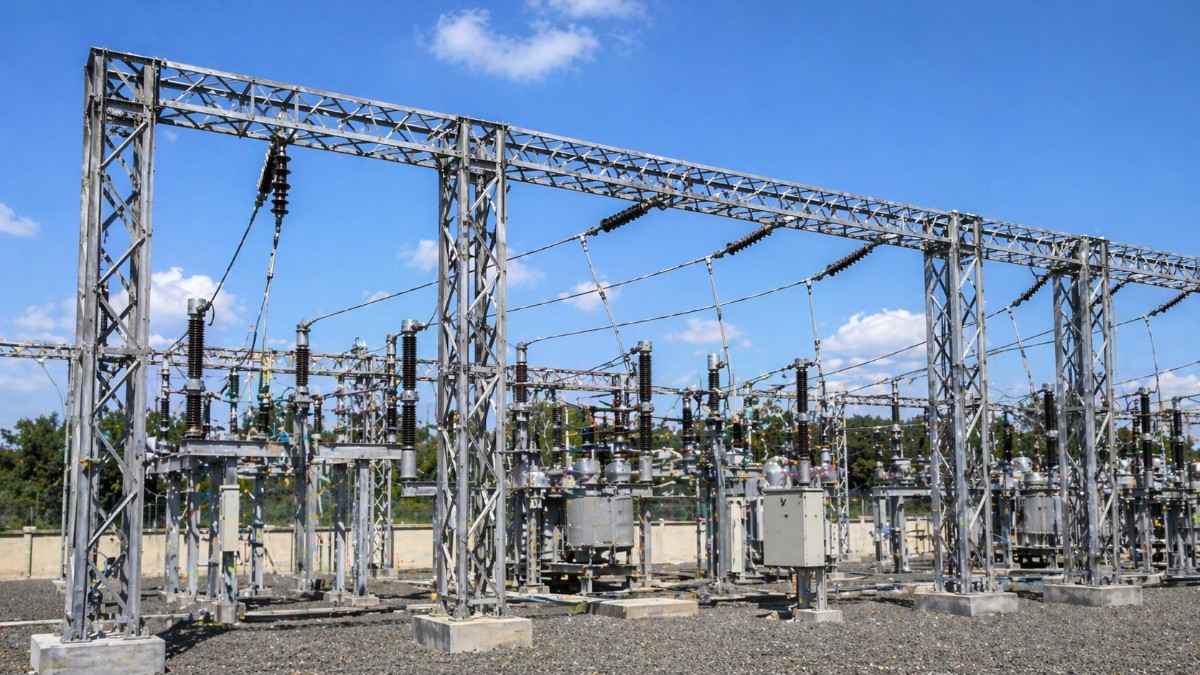
Every time you switch on a light, run a factory machine, or charge your phone, electricity has passed through at least one substation. These facilities step voltage up and down, route power across cities, and keep the grid balanced.
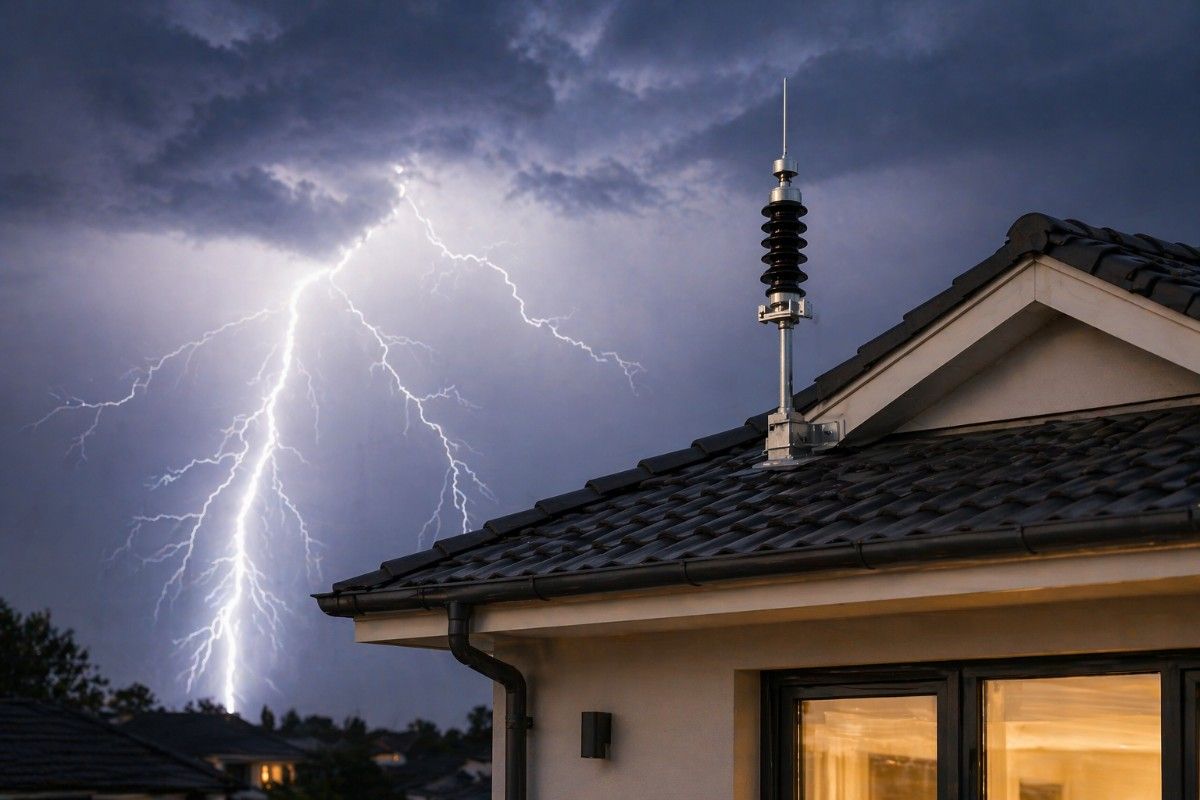
Now imagine a single lightning strike wiping out a transformer worth several crores. Or a switching surge silently degrading insulation until a catastrophic flashover shuts down an entire industrial zone.
This is not a hypothetical. It happens across India every monsoon season, and in many cases, it happens because the lightning arrester for substation was either absent, incorrectly selected, or poorly maintained.
If you work in power distribution, EPC contracting, substation design, or electrical procurement, knowing the real facts about lightning arresters for substations is not optional. It is part of doing your job right.
Here are 10 key facts that every engineer, procurement manager, and power professional in India must know.
Fact 1: A Lightning Arrester for Substation Does Not Just Protect Against Lightning
This surprises a lot of people. The name says lightning, but the device protects against all forms of transient overvoltage, not just lightning strikes.
In substations, overvoltages arrive from three main sources:
Lightning Overvoltages: Direct strikes to the substation structure or nearby transmission lines send travelling waves into the substation at extremely high voltage levels.
Switching Overvoltages: Every time a circuit breaker opens or closes, or a large transformer is energized, it generates a voltage transient that can be 2 to 3 times the normal system voltage. In large 220kV and 400kV substations, switching surges are actually the more frequent threat.
Temporary Overvoltages (TOV): These are sustained overvoltages caused by load rejection, ground faults, or resonance conditions. A good lightning arrester for substation must withstand TOV without thermal runaway.
The correct technical term for the device is actually a surge arrester. In India, the term lightning arrester remains more commonly used in field practice, but engineers specifying equipment should understand that the device handles all three types of overvoltage events.
Fact 2: Metal Oxide Surge Arresters Have Largely Replaced Older Designs in Modern Substations
If you visit an older substation built in the 1970s or 1980s in India, you might still see silicon carbide arresters with series gaps. These were the standard for decades.
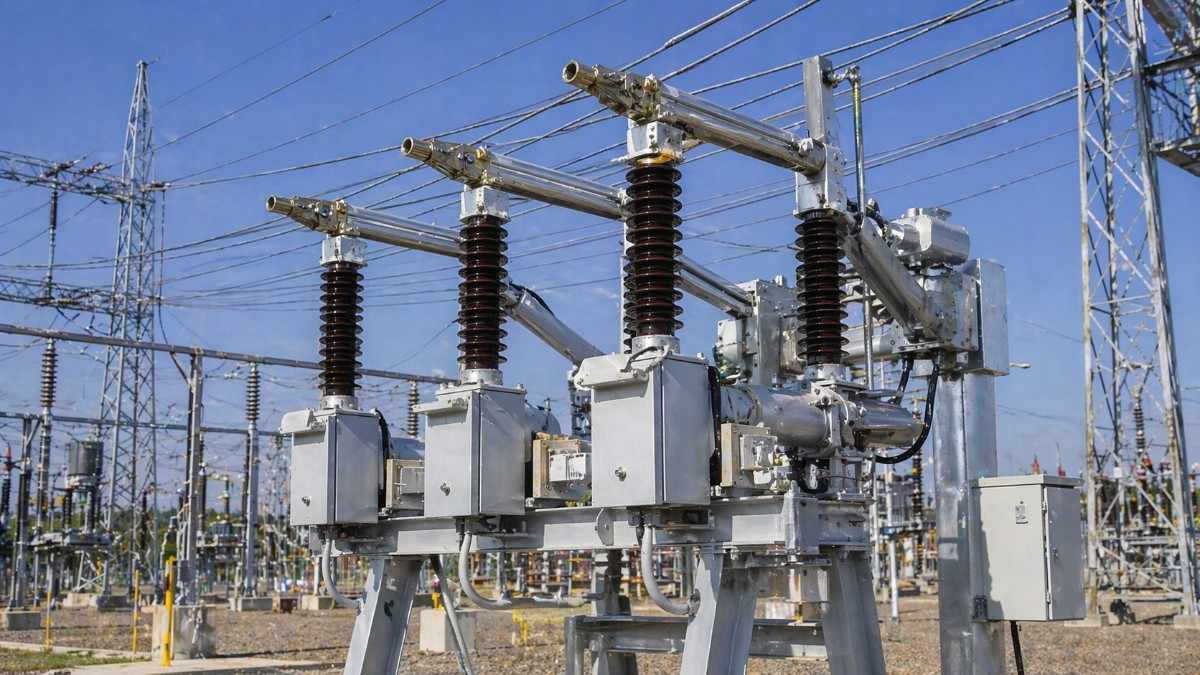
Modern substations across India now predominantly use Metal Oxide Surge Arresters (MOSA), which use zinc oxide (ZnO) varistor blocks as the primary protection element.
Here is why the shift happened:
- ZnO blocks have a highly nonlinear voltage-current characteristic. They conduct almost no current at normal voltage but respond almost instantaneously to overvoltage.
- They are gapless, meaning there is no series air gap that can cause delayed response or gap erosion.
- They offer much more precise voltage clamping, which means better protection for modern sensitive substation equipment.
- They have higher energy absorption capacity per unit volume compared to SiC arresters.
For new substation projects in India, whether at 11kV distribution level or 400kV transmission level, metal oxide surge arresters are the standard specification today.
Fact 3: Arrester Placement Inside a Substation Directly Impacts Protection Effectiveness
Many engineers assume that installing a lightning arrester for substation anywhere near the equipment is sufficient. This is one of the most dangerous misconceptions in substation protection design.
The distance between the arrester and the protected equipment matters enormously. When a voltage surge travels from the arrester location to the equipment, it picks up additional voltage due to the lead inductance of the connecting conductors.
This phenomenon is called the separation effect, and it means:
- Every meter of distance between the arrester and the transformer adds voltage stress on the equipment.
- At 400kV substations, even a few meters of separation can add tens of kilovolts to the residual voltage seen by the transformer.
Best practice in Indian substation design, as per IEC 60099-5 application guidelines, is to install the lightning arrester for substation as close to the transformer terminals as physically possible, ideally within 5 to 10 meters for EHV substations.
For large switchyards with multiple bays, additional arresters may be needed at incoming line entries and at each transformer bay separately.
Fact 4: The Energy Absorption Capacity Is the Most Critical Selection Parameter
Most procurement teams focus on the voltage rating of a lightning arrester for substation. That is important, but it is not the most critical parameter for substation applications.
Energy absorption capacity, measured in kilojoules (kJ) or kilojoules per kilovolt (kJ/kV), determines how much surge energy the arrester can safely absorb without overheating or failing.
In substations, surge events can carry enormous energy, especially switching surges in large EHV systems. An arrester that is correctly voltage-rated but under-rated on energy can go into thermal runaway, a condition where the arrester heats up faster than it can cool down, eventually rupturing or causing a fault.
For critical substation transformers, engineers should always specify high-energy class arresters and verify the energy handling capability against the prospective surge energy calculated for that specific system configuration.
SPKN India provides detailed technical datasheets with energy rating information to help procurement managers and design engineers make the right selection for each project.
Fact 5: Continuous Operating Voltage (COV) Must Be Matched to the System Voltage Carefully
The Continuous Operating Voltage, also called MCOV (Maximum Continuous Operating Voltage), is the maximum voltage that the arrester can be permanently connected to without degrading.
In Indian power systems, this requires careful attention because:
- The nominal system voltage and the actual operating voltage can differ significantly due to load conditions and voltage regulation.
- In a 33kV system, the phase-to-earth voltage under normal conditions is approximately 19kV. But during a single line to ground fault, the healthy phase voltage can rise to full line voltage, which is 33kV.
- If the arrester COV is set too close to the normal operating voltage, a ground fault can push the voltage above the COV and cause the arrester to absorb current continuously, leading to thermal failure.
The general rule in Indian substation design is to select an arrester with a COV that is at least 1.05 times the maximum continuous phase-to-earth voltage under worst-case system conditions.
This is a calculation that needs to be done for every substation project, not assumed from a standard table.
Fact 6: Polymer Housing Has Become the Preferred Choice Over Porcelain in Indian Substations
Traditional lightning arresters for substations used porcelain housing. Porcelain is mechanically strong and has excellent electrical properties, but it has significant drawbacks in Indian conditions.
The shift to polymer (silicone rubber) housed arresters has been driven by several practical advantages:
Pollution Performance: Polymer housings with hydrophobic surfaces repel water and prevent the formation of a continuous conductive film, making them far superior in India's highly polluted industrial and coastal environments.
Seismic Safety: Porcelain arresters are brittle and can shatter violently during seismic events, releasing pressurized internal components. This is a serious safety hazard. Polymer arresters fail in a more controlled manner.
Weight and Handling: Polymer arresters are significantly lighter, making transportation, installation, and replacement easier on tall substation structures.
Vandalism Resistance: In remote rural substations across states like Uttar Pradesh, Bihar, and Jharkhand, porcelain components are vulnerable to stone throwing and vandalism. Polymer housings are far more resistant.
Most new substation projects in India, including those under PGCIL and state TRANSCO specifications, now mandate polymer housed metal oxide surge arresters as standard.
Fact 7: A Surge Counter and Leakage Current Monitor Are Essential, Not Optional
Installing a lightning arrester for substation without a surge counter is like installing a fire alarm without a log recorder. You will never know how many times it operated or whether it is still in good health.
A surge counter records every operation of the arrester, giving maintenance teams data on how frequently the substation experiences overvoltage events. This data is valuable for:
- Planning maintenance schedules
- Identifying chronic overvoltage problems on specific feeders
- Justifying equipment upgrades to management
A leakage current monitor goes one step further. It measures the continuous resistive leakage current flowing through the arrester varistor blocks. As ZnO blocks age or suffer damage from repeated surge events, the resistive leakage current increases. Monitoring this trend allows maintenance teams to identify a degrading arrester before it fails catastrophically.
In critical substations, including grid substations and large industrial facilities, online leakage current monitoring systems that provide real-time data to SCADA systems are increasingly being adopted across India.
Fact 8: Standards Compliance Is Non-Negotiable for Substation Grade Arresters
Not every lightning arrester in the Indian market is suitable for substation use. The standards gap between a distribution-grade arrester and a substation-grade arrester is significant.
For lightning arrester for substation applications in India, relevant standards include:
- IEC 60099-4: The primary international standard for metal oxide surge arresters without gaps for AC systems. Covers classification, test requirements, and performance criteria.
- IEC 60099-5: Application guide for surge arresters, covering selection, installation, and coordination with insulation.
- IS 3070 (Part 3): Indian standard for metal oxide surge arresters.
- IEEE C62.11: Used in some projects following American standards, particularly for private sector and multinational industrial clients.
Always demand test certificates and type test reports from the manufacturer before finalizing procurement. A lightning arrester for substation that has not been type-tested to IEC 60099-4 is a liability, not an asset.
Fact 9: Incorrect Earthing of the Arrester Is a Leading Cause of Substation Protection Failure
A lightning arrester for substation is only as effective as the earth connection it is tied to. This fact is repeated in every textbook and ignored in a surprising number of actual installations.
The earth connection of the arrester must:
- Have a resistance below 1 ohm for EHV substations and below 5 ohms for distribution substations, as per IS 3043.
- Use a direct, short, and straight conductor path to the substation earth mat. Every bend and every extra meter adds inductance, which adds voltage during high-frequency surge events.
- Be bonded to the substation earth grid at the nearest grid conductor, not at a remote point.
- Be checked for resistance annually using a proper earth tester.
A common field mistake in Indian substations is connecting the arrester earth lead to the equipment structure rather than directly to the earth grid. This can cause dangerous potential differences during a surge event, damaging equipment and posing safety risks to personnel.
Fact 10: Regular Maintenance of Lightning Arrester for Substation Is a Safety and Compliance Requirement
Lightning arresters are passive devices. They sit quietly doing nothing under normal conditions, and that makes it very easy to forget about them during maintenance cycles.
This is a serious mistake.
A degraded or failed lightning arrester gives no visible warning under normal operating conditions. It only reveals its failure when the next surge event arrives, and by then, it is too late.
A proper maintenance schedule for lightning arrester for substation should include:
- Visual inspection every 6 months: Check for cracks, tracking marks, contamination on the housing, loose connections, and physical damage.
- Surge counter reading every 6 months: Record and trend the number of operations.
- Leakage current measurement annually: Compare against baseline values to detect degradation.
- Earth resistance testing annually: Verify earth connection integrity.
- Insulation resistance test: Check for moisture ingress or internal degradation.
- Thermographic scanning: Use infrared cameras to detect hot spots indicating internal defects or poor connections.
In India, many state electricity boards and private utilities now include these checks as part of their annual substation maintenance contracts. SPKN India supports maintenance teams with technical guidance and replacement products to keep substation protection systems in optimal condition.
Why SPKN India Is the Trusted Choice for Lightning Arrester for Substation
With 10 critical facts now clear, the next question is: where do you source a lightning arrester for substation that actually delivers on all these parameters?
SPKN India has built its reputation as a trusted manufacturer and supplier of industrial electrical equipment across India, and lightning arresters for substation applications are a core part of that offering.
Here is what makes SPKN India the right choice:
Full Standards Compliance: Every SPKN India substation-grade lightning arrester is manufactured and tested as per IEC 60099-4, IS 3070, and relevant Indian standards. Type test certificates are available for all product ranges.
Application-Specific Selection Support: The SPKN India technical team assists engineers and procurement managers in selecting the correct arrester based on system voltage, energy requirements, pollution level, and installation environment, not just a catalogue number.
Polymer and Porcelain Options: Whether your project specifies polymer housed or porcelain housed arresters, SPKN India offers both with the correct creepage distances for Indian pollution conditions.
Surge Counter and Monitoring Accessories: SPKN India supplies matched surge counters and leakage current monitors for complete arrester monitoring systems.
Pan-India Project Experience: From 11kV rural distribution substations in Chhattisgarh to 400kV grid substations in Gujarat and Maharashtra, SPKN India has supplied and supported substation protection equipment across the length and breadth of India.
Reliable Supply Chain: Procurement managers working on tight EPC project timelines can depend on SPKN India for consistent availability, accurate documentation, and on-time delivery.
When the next surge event hits your substation, you want to know that the lightning arrester protecting your transformer was sourced from a manufacturer that understood every one of these 10 facts when they built it.
Conclusion: Facts Build Better Substations
A lightning arrester for substation is not a commodity item to be selected by price alone. It is a critical protection device whose correct selection, placement, installation, and maintenance directly determines the reliability and safety of the entire substation.
From understanding that it protects against switching surges as well as lightning, to knowing that its earth connection resistance can make or break its effectiveness, these 10 facts give you the foundation to make better decisions on every substation project.
Partner with SPKN India for technically sound, standards-compliant lightning arresters for substation applications across India. Contact the team for product datasheets, type test certificates, and application-specific recommendations for your next project.