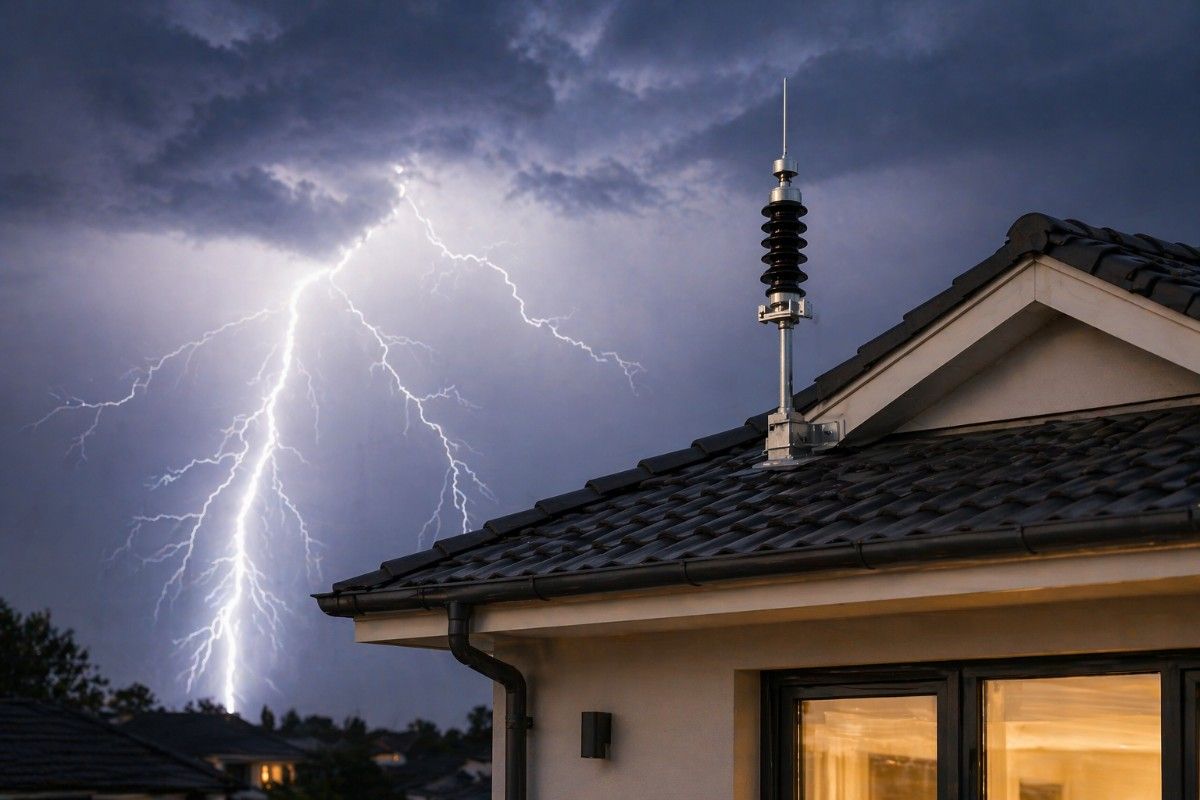
Your Home Deserves More Than Just a Circuit Breaker
Picture this: a heavy monsoon evening in Mumbai, dark clouds rolling in, and suddenly a sharp lightning bolt strikes near your locality. Within seconds, your TV flickers, your inverter beeps, and your WiFi router is dead. Sound familiar?
Most Indian homeowners invest in good wiring, quality MCBs, and expensive appliances but completely overlook the one device that actually protects everything from a catastrophic voltage surge: a lightning arrester for home.
Choosing the wrong one, or worse, not having one at all, can cost you lakhs in damaged appliances, electrical rewiring, or even a house fire. This guide will walk you through exactly how to pick the right lightning arrester for home use, without the confusing jargon.
First, Understand What You Are Actually Protecting Against
Lightning does not have to strike your house directly to destroy your appliances. In fact, most damage happens through indirect strikes, when lightning hits a nearby utility pole, transformer, or even the ground, it sends a massive voltage spike racing through the power lines straight into your home's electrical system.
This is called a transient overvoltage, and it travels at the speed of light. Your standard circuit breaker cannot stop it. Only a lightning arrester can absorb and divert that surge safely to the ground before it reaches your equipment.
In India, where the lightning flash density is among the highest in the world, especially in states like West Bengal, Odisha, Bihar, Maharashtra, and Kerala, having a lightning arrester for home is not a luxury. It is a necessity.
Buyer's Checklist: 7 Things to Evaluate Before You Buy
This is where most buyers go wrong. They either buy the cheapest option available or simply trust whatever the electrician recommends without understanding the product. Use this checklist to make a smarter decision.
1. Know Your Home's Voltage System
Before anything else, check whether your home runs on a single-phase or three-phase supply.
Single-phase (230V) is standard for most residential homes. Three-phase (415V) is used in larger bungalows, farmhouses, or homes with heavy machinery like water pumps, industrial ACs, or workshop equipment.
The lightning arrester you choose must match your supply voltage. Using an underrated arrester is like using a paper umbrella in a thunderstorm. It gives a false sense of security.
2. Check the Maximum Continuous Operating Voltage (MCOV)
MCOV is the maximum voltage the arrester can handle continuously without breaking down. For Indian single-phase homes, look for an arrester with an MCOV of at least 175V to 260V. For three-phase connections, it should be higher.
This is a spec most buyers completely ignore and it is one of the most important ones.
3. Look at the Energy Absorption Capacity (Joules or kA)
The higher the energy absorption rating, the more surge energy the device can safely divert to ground. For homes located in high-lightning zones or near open fields, you want a higher discharge current rating, ideally 10kA to 20kA for residential use.
If your home is in a metro city apartment with indirect exposure, a standard 5kA to 10kA rated arrester may be sufficient.
4. Identify the Type of Lightning Arrester You Need
Not all lightning arresters are built the same. For home use, you typically choose from:
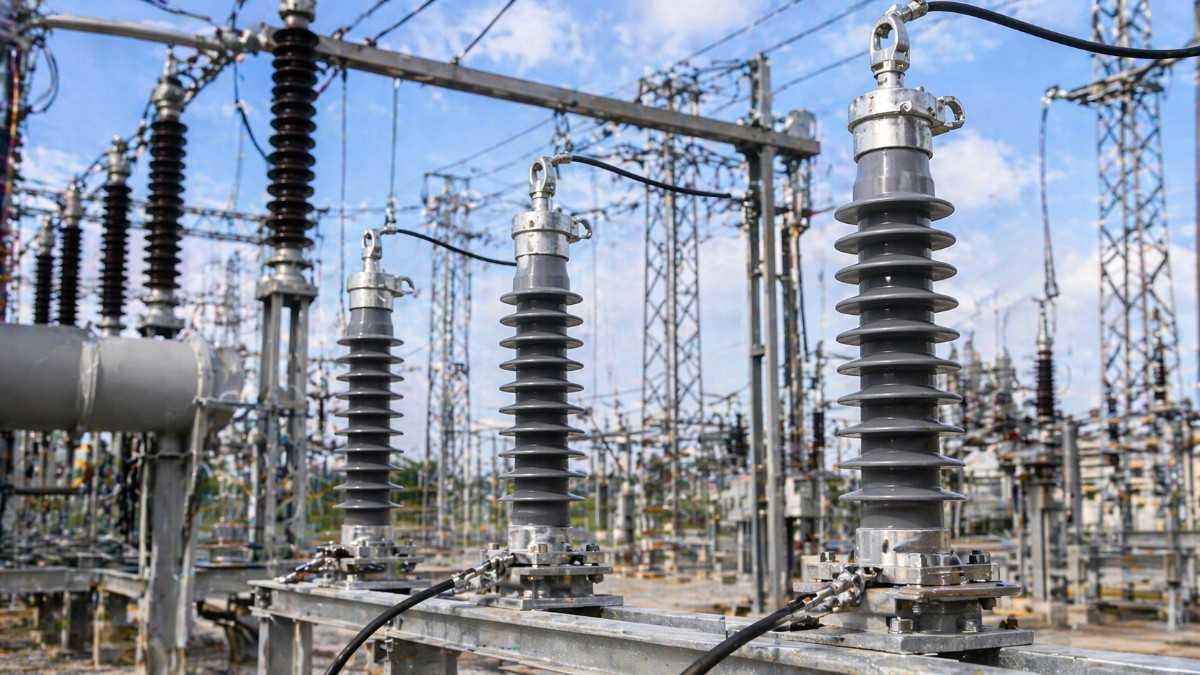
Metal Oxide Varistor (MOV) Based Surge Protective Devices: These are the most common for residential use. They are compact, fast-acting, and highly reliable. They respond within nanoseconds to a voltage spike.
Type 1 (Class I) Arresters: Installed at the main distribution board, usually at the point where the power line enters the home. Designed to handle direct lightning current. Required in homes with external lightning protection systems or aerial power feeds.
Type 2 (Class II) Arresters: Installed inside the home's distribution board. Protects against indirect surges and switching transients. Most Indian homes need at least this type.
Type 3 (Class III) Arresters: Point-of-use protection installed near sensitive appliances like computers, home theatres, or medical equipment. Acts as the last line of defence.
For complete home protection, a combination of Type 1 plus Type 2 is recommended. If budget is a concern, start with a Type 2 at your main DB and add Type 3 near your most expensive appliances.
5. Verify Compliance with Indian and International Standards
This is non-negotiable. Always buy a lightning arrester that complies with:
- IS/IEC 61643-11 for low-voltage surge protective devices
- IEC 60099-4 for metal oxide surge arresters
- BIS certification for products sold in India
A product without proper certification may fail exactly when you need it most, during an actual lightning event.
6. Evaluate the Response Time
A good lightning arrester must respond in less than 25 nanoseconds. The faster it clamps the voltage, the less damage your appliances suffer. Always check the response time specification on the product datasheet. Anything above 100 nanoseconds for a home-use device is too slow.
7. Check for Remote Indication or Fault Alarm
Modern lightning arresters come with a status indicator, a small LED or flag that tells you whether the device is still functional. After a major surge event, the MOV inside the arrester may get partially degraded. Without an indicator, you would never know the device has been compromised.
For peace of mind, always choose a lightning arrester for home that includes a visual fault indicator or remote alarm output.
Common Mistakes Indian Homeowners Make
Mistake 1: Relying Only on Surge Protector Power Strips Those multi-socket surge protector strips sold at electronics stores are not the same as a proper lightning arrester. They offer minimal protection and are designed for minor electrical noise, not actual lightning surges.
Mistake 2: Installing at the Wrong Location A lightning arrester installed too far from the main distribution board loses its effectiveness due to lead inductance. It should be installed as close to the entry point of your electrical supply as possible, with short and straight earth connections.
Mistake 3: Ignoring the Earthing System A lightning arrester is only as good as the earthing system it is connected to. If your home earthing is poor, the surge energy has nowhere to go and it will find the path of least resistance, which could be through your appliances. Always combine a quality arrester with a proper earthing pit meeting IS 3043 standards.
Mistake 4: Buying Once, Forgetting Forever Lightning arresters degrade over time, especially after absorbing multiple surge events. Test or inspect your arrester at least once a year, especially before the monsoon season begins.
Real-World Scenario: Why Location Matters in India
Consider a home in a semi-urban area of Bhubaneswar, Odisha, one of the highest lightning-prone districts in India. The homeowner uses a standard MCB panel with no surge protection. One monsoon season, an indirect strike near the electricity pole sends a 6kV transient through the line. The result: two air conditioners, a refrigerator, and a smart TV are permanently damaged.
Had they installed a Type 1 plus Type 2 combination lightning arrester for home at the entry point of their distribution board, with proper earthing, all of that equipment would have been saved. The cost of the arrester system was a fraction of the appliance replacement cost.
This is not a hypothetical. It is a reality thousands of Indian families face every monsoon.
A Quick Comparison: Type 1 vs Type 2 vs Type 3
| Feature | Type 1 | Type 2 | Type 3 |
|---|---|---|---|
| Installation Point | Main incoming panel | Distribution board | Near appliances |
| Protection Against | Direct lightning current | Indirect surges | Residual surges |
| Discharge Current | 25kA and above | 5kA to 40kA | 1kA to 5kA |
| Best For | Homes with aerial feeds | All residential homes | Sensitive electronics |
| Used Alone? | No, needs Type 2 | Yes, most common choice | No, needs Type 1/2 |
Why SPKN India Is the Trusted Name for Lightning Arrester for Home
With so many options flooding the Indian market, many of them imported low-quality products with no real certification, choosing a reliable domestic manufacturer matters more than ever.
SPKN India has been a trusted name in industrial electrical equipment manufacturing and supply across India. Here is why buyers, from homeowners to EPC contractors, consistently choose SPKN India:
Certified Quality: All SPKN India lightning arresters are manufactured and tested as per IEC and BIS standards, ensuring you get a product that actually performs when it matters.
Wide Product Range: Whether you need a compact residential surge protective device or a heavy-duty arrester for a three-phase industrial connection, SPKN India offers a complete range to match your exact requirement.
Expert Guidance: The team at SPKN India understands the Indian electrical landscape, including regional lightning risk zones, supply voltage variations, and installation challenges specific to Indian homes and industries.
Durability First: Products are built for Indian climate conditions, high humidity, temperature extremes, and the intense monsoon season that makes lightning protection critical across the country.
After-Sales Support: SPKN India does not just sell a product. They support you through selection, installation guidance, and post-purchase queries, making them a partner, not just a supplier.
Whether you are an electrical engineer specifying equipment for a residential project, a procurement manager sourcing for a housing complex, or a homeowner wanting reliable protection for your family, SPKN India has the right lightning arrester for home to meet your needs.
Conclusion: Do Not Wait for the Next Storm to Take Action
The right time to install a lightning arrester for home was before last monsoon. The second best time is right now.
With India's increasing lightning incidents, rising appliance costs, and the growing dependence on sensitive electronics at home, surge protection is no longer optional. It is as essential as an MCB or an ELCB in your distribution board.
Use the checklist in this guide, avoid the common mistakes, match the type to your home's requirement, and always buy from a certified, reputable manufacturer like SPKN India.
Your appliances, your electrical system, and your family's safety are worth it.
Explore SPKN India's full range of lightning arresters and surge protective devices today. Contact the team for product selection assistance, bulk inquiries, and technical support tailored to your project needs.