An electrical isolator is a device that can literally determine the safety of your maintenance team. For the electrical engineers, procurement managers, and EPC contractors in India who work on residential projects, using the correct isolator is of great importance and can not be overstated.
In this article, I will cover all the different types of isolators that are used in residential setups, what you should look for when purchasing isolators, and the most common mistakes that are made. Think of this as a site-specific, practical checklist that you can use, as opposed to the theoretical, textbook explanations that you are used to seeing.
What is an Isolator, Really?
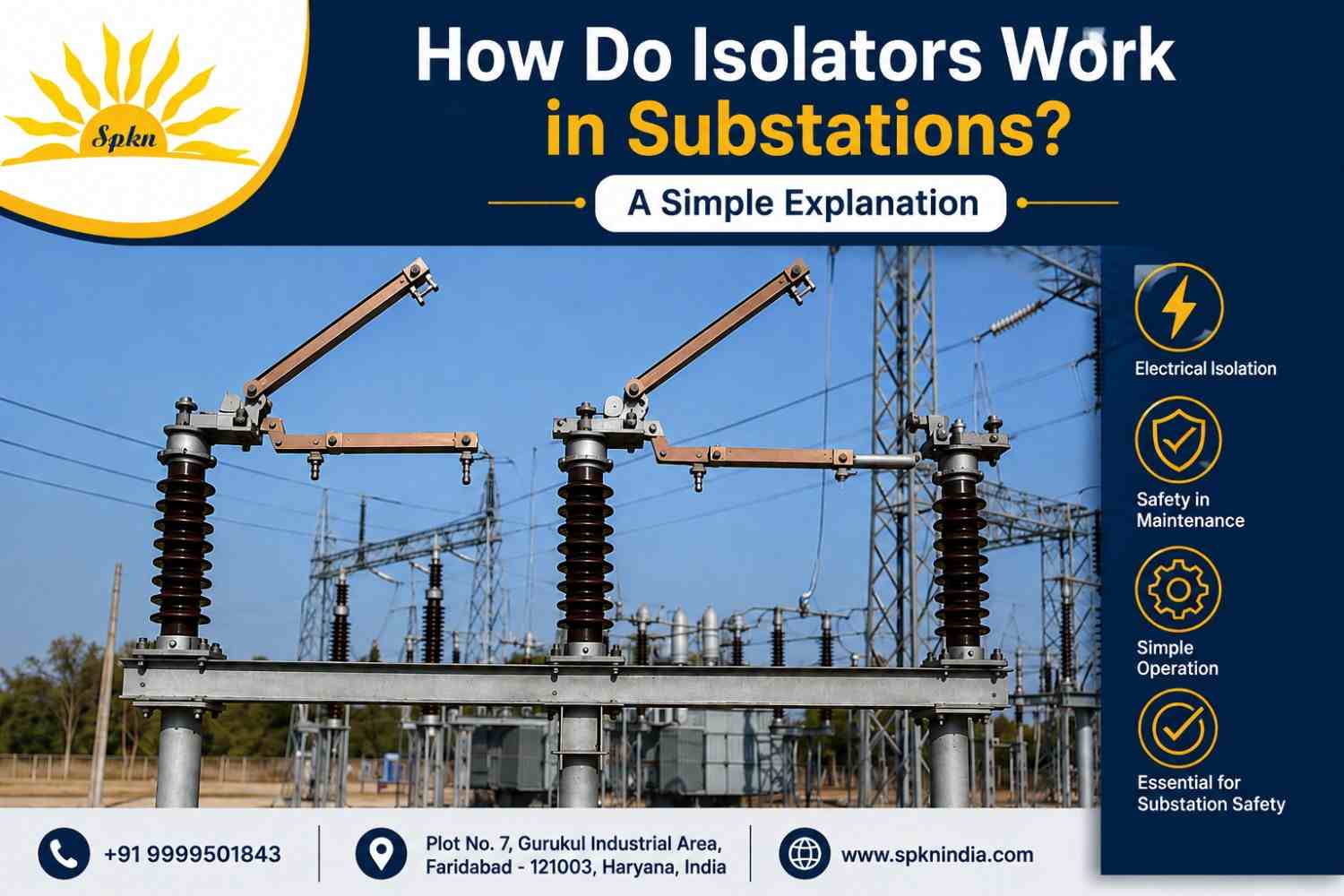
What is an isolator? It is a switch that manually disconnects a circuit from its power source only when the load current is zero.
A circuit breaker and an isolator have different functions. A circuit breaker is designed to break a fault current or a load current. An isolator creates an air gap to serve as a visible and physical separation to allow maintenance workers to perform duties on the downstream equipment without the equipment being accidentally switched on.
From my electrician training, I would say that this concept is confusing to most people. An isolator is used for isolation and to confirm the safety of the equipment. A circuit breaker is used for protection and is switched under a load. Confusing the two of these is one of the most common mistakes made on residential work sites and is dangerous.
Types of Isolators in Substation vs Residential Buildings
To understand residential-specific types of isolators, it is important to understand where isolators are situated in the power chain.
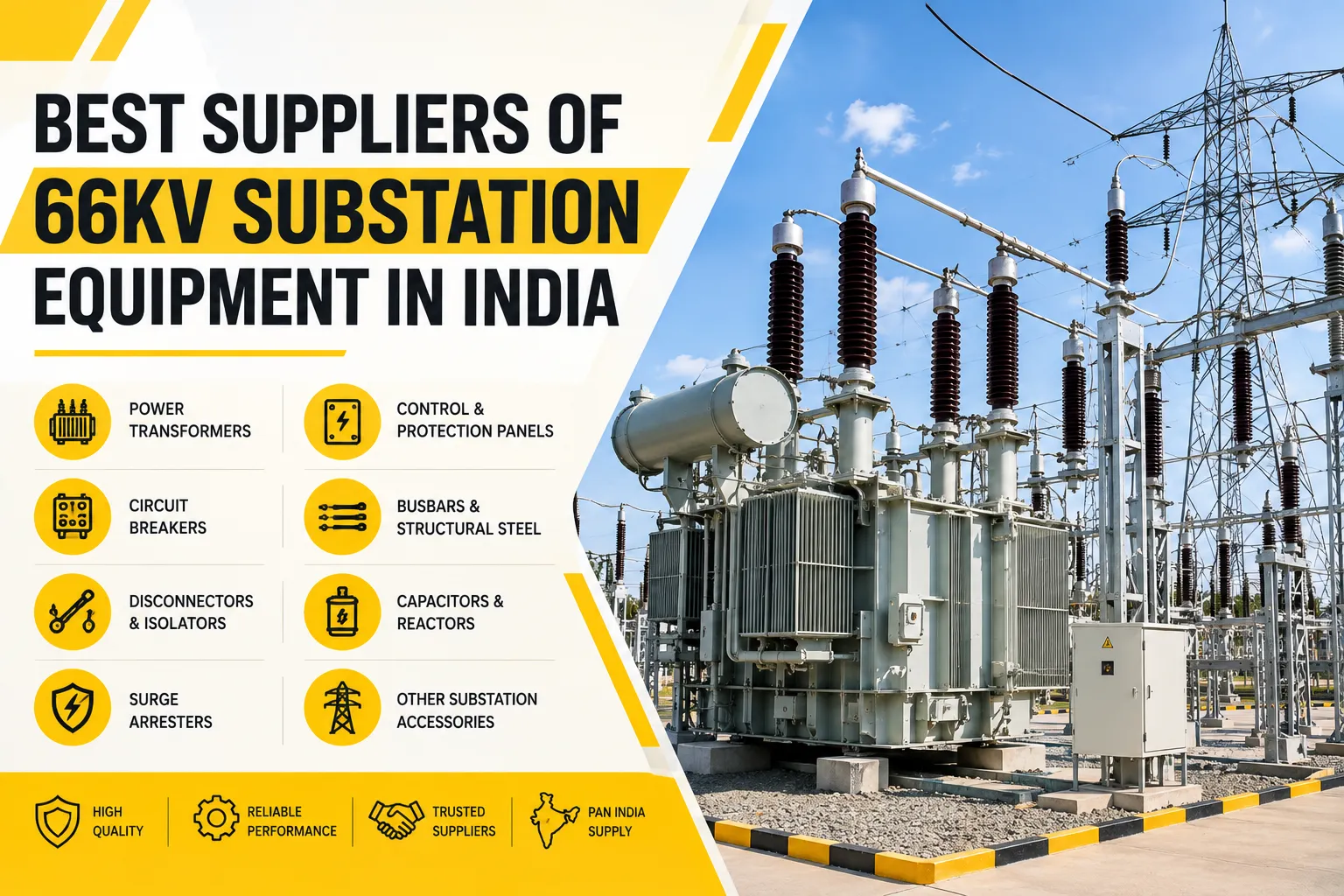
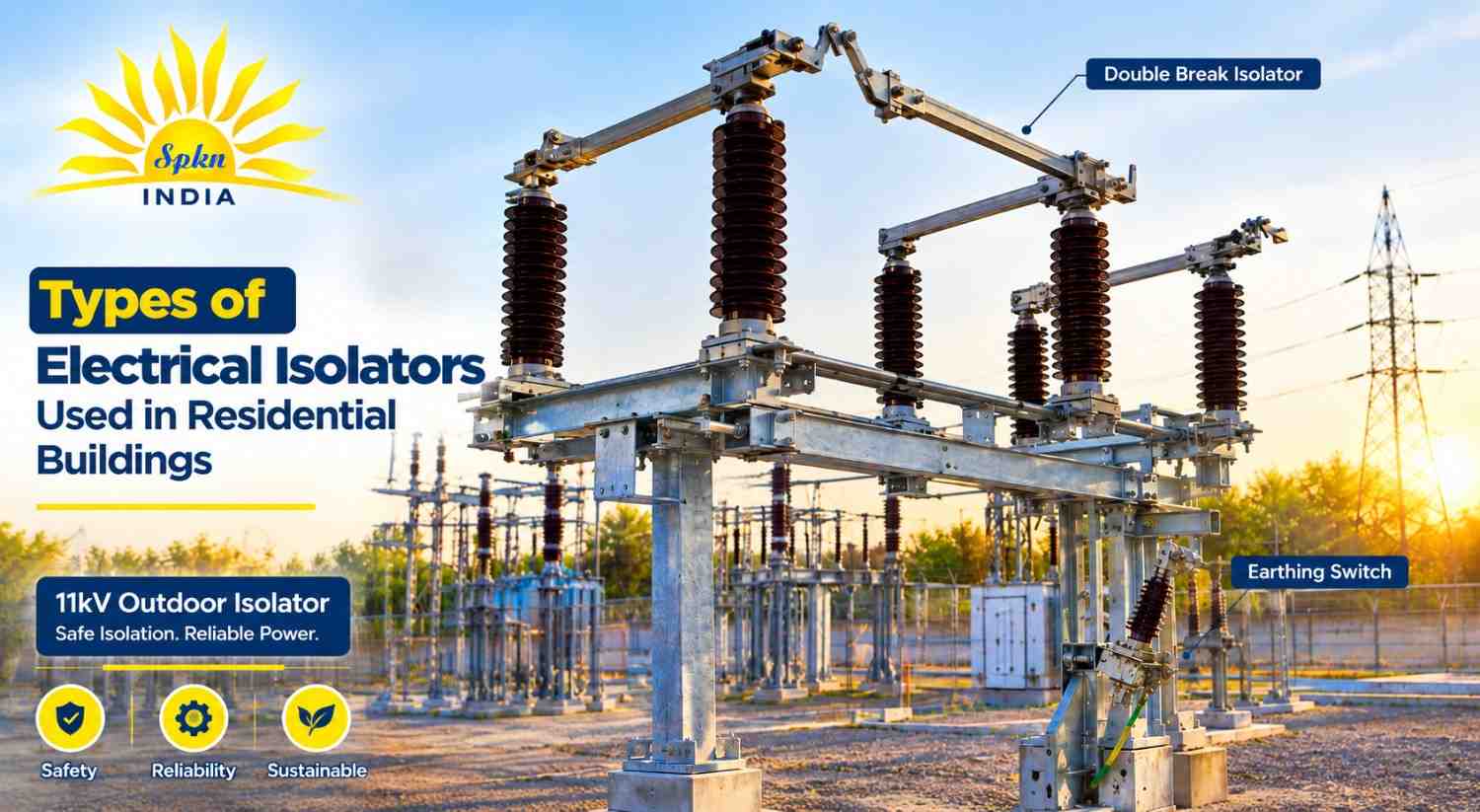
Isolators in a substation can be:
- Air break isolators
- Gas insulated isolators (SF6)
- Oil-filled isolators
- Vertical break isolators
- Double break isolators
- Pantograph isolators used in high-voltage yards
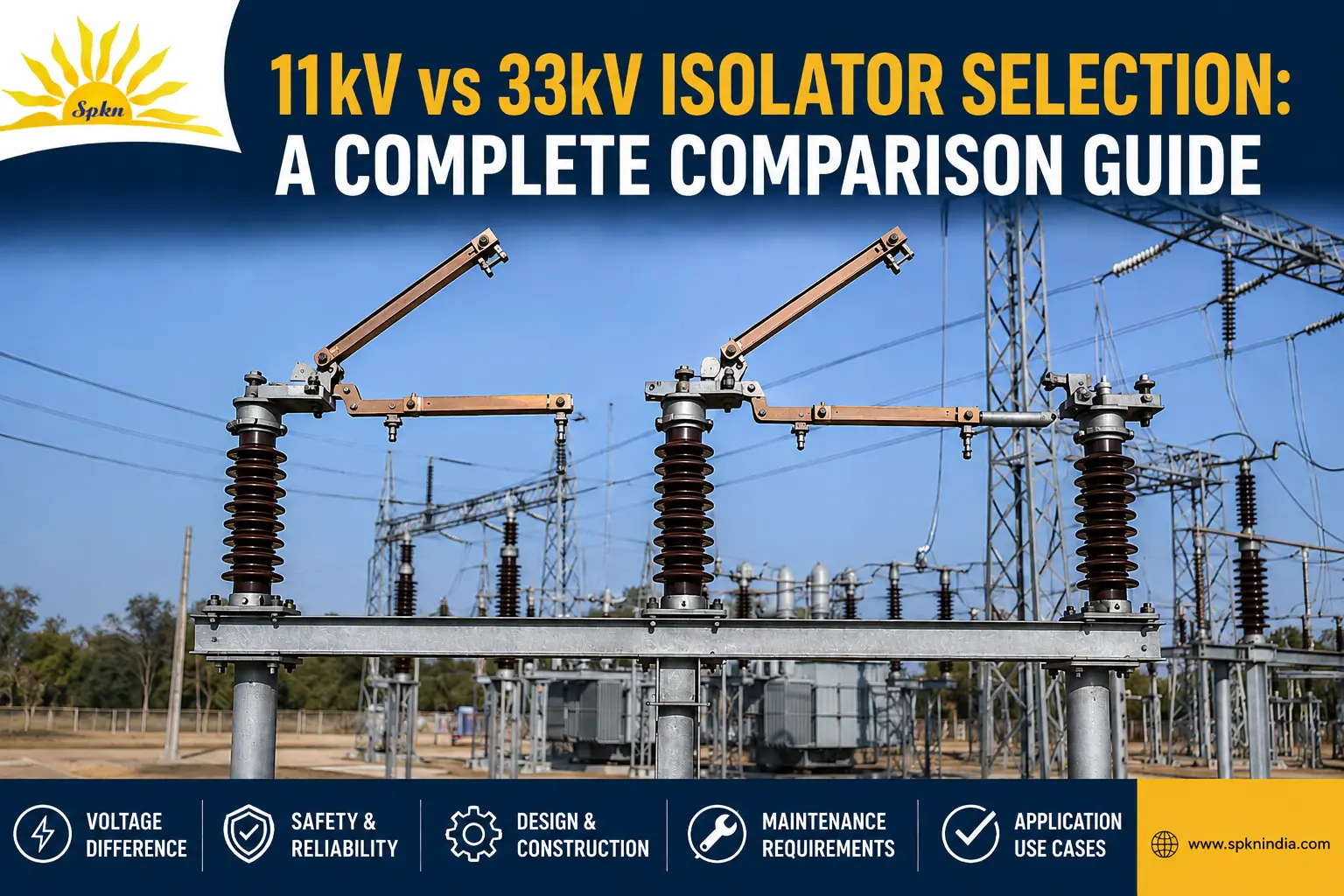
Isolators at 11kv and 33kv are used in substations to isolate and distribute bulk power transmission and distribution lines. Being situated outdoors exposes them to weather conditions and fault currents.
Residential buildings are situated much lower in the power chain. The voltage has already been stepped down by transformers, and the isolators used are simple and small, and can be used in indoor/semi-outdoor panels.
Knowledge of isolators used in a substation helps the engineers and the procurement team understand the reason for the design of isolators used in residential applications. The principles of visible break, dielectric strength, and mechanical interlocking are the same, but at a smaller scale.
Important Types of Electrical Isolators Found in Residential Buildings
This section will focus on the types of isolators I have seen on residential building drawings and bill of quantities (BOQs) in India.
1. Single Pole Isolator
Used to isolate a single phase circuit, normally found in the electrical distribution for individual flats or small utility rooms. Single phase distribution is very common in older buildings, so single pole isolators are also found in older buildings.
2. Double Pole Isolator (DP Isolator)
As mentioned earlier, the double pole isolator is the most common isolator found in residential building construction in India. A DP isolator breaks both the phase and neutral, which is a safety requirement for most domestic distribution boards.
DP isolators are found upstream of MCB distribution boards for apartments, bungalows, and even for common area panels in housing society buildings.
3. Triple Pole and Neutral Isolator (TPN Isolator)
For residential supply that is three phase, as is commonly found for larger bungalows and villas, a TPN isolator breaks all three phases and the neutral for complete isolation for maintenance.
4. Rotary Isolator Switches
These are compact, panel-mounted isolators with a rotary handle mechanism. They are popular in modern residential MCB panels because of their space-saving design and quick on/off operation. Rotary isolators are commonly rated at lower ampere values suited for domestic load, including a compact electrical isolator rated for 63 amp applications used in individual metering points.
5. Fused Isolators
Fused isolators provide both isolation and overcurrent protection. In residential buildings, these are typically found at the incoming supply point for each flat or in common utility rooms. In these locations, an additional layer of protection is required in addition to manual isolation.
6. Changeover Isolators
With an increasing number of housing societies in India doing generator backups, changeover isolators (manual or automatic) are common. These isolators permit the transfer of power from the mains to the DG set, protecting linemen as well as the occupants of the building.
7. Weatherproof Isolators
For meter rooms, terrace installations, and panel boards that are located in semi-outdoor conditions, isolators that are weatherproof and have an IP rated enclosure are required. I have seen many non-weatherproof units fail in less than two monsoons in cities like Mumbai and Chennai.
Quick Comparison Table
| Isolator Type | Typical Use in Residential Buildings | Poles |
|---|---|---|
| Single Pole | Individual flats, small circuits | 1 |
| Double Pole (DP) | Flat/villa distribution boards | 2 |
| TPN Isolator | Three-phase supply, common areas | 3+N |
| Rotary Isolator | Compact panels, metering points | Varies |
| Fused Isolator | Incoming supply with backup protection | Varies |
| Changeover Isolator | Mains-DG switching | 4 (typical) |
| Weatherproof Isolator | Meter rooms, terrace panels | Varies |
Buyer's Checklist: What to Verify Before Buying
This is the part that most guides overlook, and it's the part where procurement managers and EPC contractors waste time or money. When you are about to place an order for isolators for a residential project, go through this checklist.
- Check what the current rating is. Isolators that are undersized will quickly degrade and overheat with the repeated thermal cycles of a domestic load.
- Check the pole configuration against the distribution board design (single pole, DP, or TPN).
- Check if the isolator has an IS certification. Isolators manufactured as per the standards of IS 4064 ensure quality and safety of the product.
- Check the enclosure rating of the unit if it will be installed in meter rooms, terraces, or if it will be semi-exposed.
- Check the breaking capacity of the isolator. While isolators should not be used to break a load, they should be able to withstand a switch being thrown to the other position without being damaged by arcing.
- Check the contact material and the build of the isolator. In humid conditions, like in India, copper contacts with silver plating will last much longer than other contacts.
- Check that the changeover isolators have mechanical interlocking to prevent back feeding of the mains from the DG.
- Ask for a test certificate from the manufacturer. Do not accept a datasheet.
- Check the availability of spares, as you will need to replace the contact kits and handles over the 15-20 year lifecycle of the building.
- Compare the track record of the manufacturer, especially for bulk housing society or township projects where consistency across hundreds of units is important.
If you are sourcing compact rotary isolators for metering applications, it's a good idea to check the SPKN India Isolator 63 Amp Price page for the latest information and the 63 amp isolator price listing to help you with your decision for individual flat isolator selection.
Case Studies from Indian Housing Projects
A few years back, I worked on a mid-sized housing society retrofit in Gurugram. The original DP isolators installed about a decade earlier started degrading due to poor contact material. Each isolator had at least some degree of blade pitting, and two of them had actually welded shut during a fault event.
We replaced the old isolators with properly rated DP and TPN isolators, and we also replaced the terrace-mounted DG changeover panel with weatherproof units. The new isolators immediately improved reliability, and the moisture intrusion issues that the residents complained about each monsoon disappeared.
This is a standard issue with the majority of the older residential buildings in India. The isolators that are installed during the initial construction of a building are often never touched again unless something fails, which is why using properly rated equipment prevents both cost and risk during the lifespan of the building.
I have also seen a similar trend in more recent townships and EPC-driven residential developments where standardizing isolator types across all distribution boards is can help simplify maintenance for the facility staff, which reduces human error.
Common Mistakes to Avoid
Breaking load current with an isolator results in arcing and increased isolator failure. Isolators should only be used when the circuit is de-energized or has a negligible load.
Working passed pole configuration mismatches is also dangerous. Leaving a DP unit requires a double pole isolator, and using a single pole isolator results in the neutral being live during maintenance.
Neglecting to check the IP rating of outdoor panels when exposed to coastal conditions is also a common mistake and results in isolator failure.
Thinking that an isolator can be substituted for a MCB is also a common mistake. They have different protective functions and cannot be interchanged.
Ignoring mechanical interlocks for DG changeover can also result in backfeed conditions for utility linemen.
Why Choose SPKN India
SPKN India has extensive experience in designing and manufacturing electrical isolation equipment for industrial and residential use in the actual conditions found in India as opposed to equipment designed for use in a laboratory.
As an ISO 9001:2015 certified manufacturer based in Faridabad, Haryana, SPKN India provides isolators that conform to the relevant Indian Standards and have been tested for durability under the conditions of humidity, dust, and temperature found in various parts of India.
What makes SPKN India unique for residential and township projects is:
- The use of corrosion-resistant contacts in isolators for long-term reliability
- A wide range from single pole to DP, TPN, rotary, fused, and weatherproof isolators
- Bulk orders consistency for large housing society and EPC contracts
- Technical support for optimal isolator configuration based on the load and site conditions
- A supply platform for the entire country featuring Delhi, Faridabad, Mumbai, Ahmedabad, Bengaluru, Chennai, Kolkata, Nashik, Goa, and Karnataka
For an EPC contractor finalizing specifications for a new township or a procurement manager sourcing replacement units for an aging housing society, SPKN India’s engineering team can provide the type of isolator that best suits your load and installation requirements.
Conclusion
Selecting the right electrical isolator for a residential building becomes easier with an understanding of pole configuration, current rating, enclosure protection, and compliance with the relevant standards. What normally derails a project is the hasty selection of an isolator as an afterthought, rather than as a deliberate decision, considering the site conditions and load calculations.
Use the checklist I have provided in this report for your next project, whether it is a single villa or a 500-unit township, and you will avoid the failures that I have seen on residential sites in India for the past several years.
For dependable and manufacturing standards compliant isolators, contact SPKN India at info@spknindia.com or call +91 9999501843. They will provide you with what you need for your project.