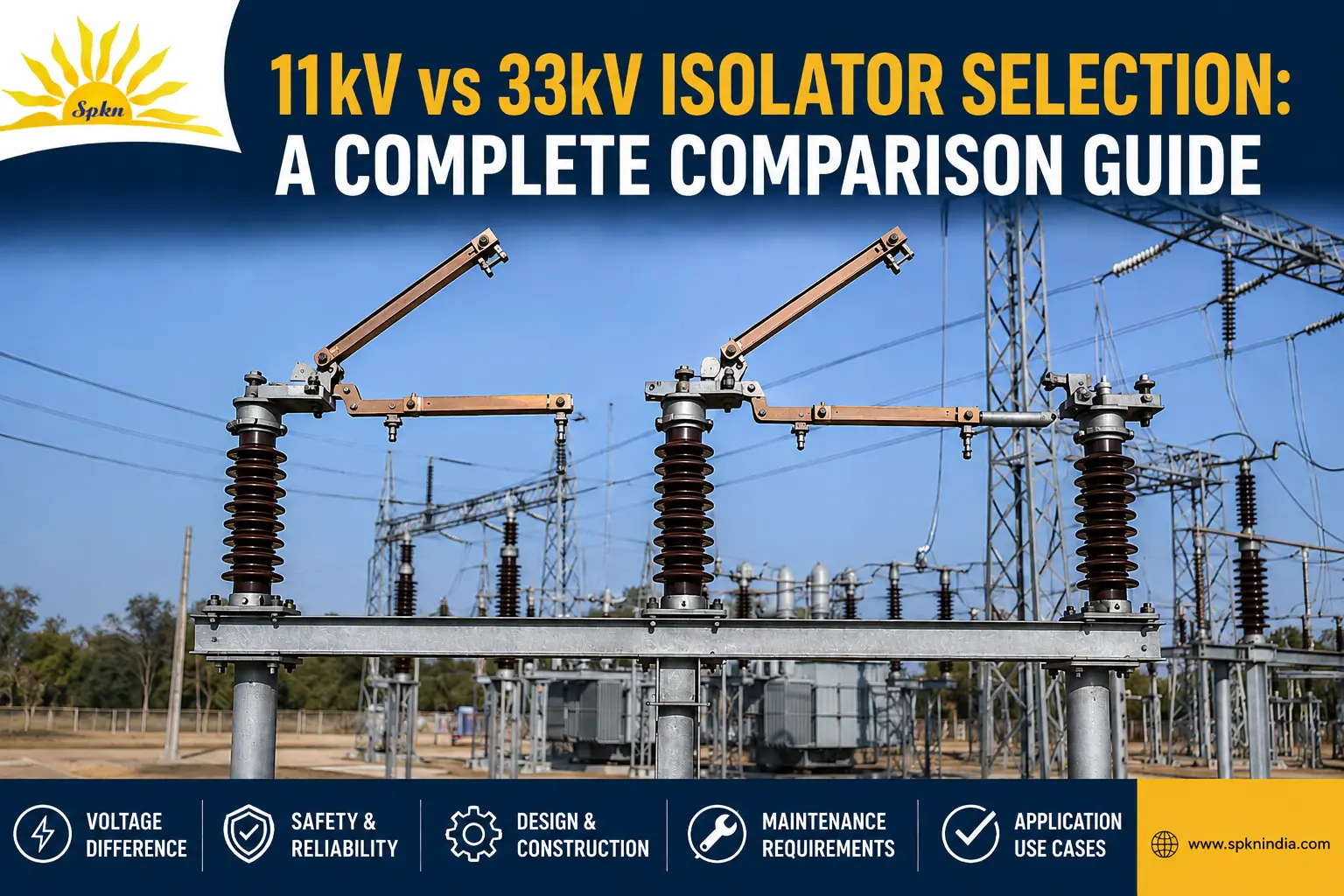
If you work anywhere near power distribution, substations, or electrical contracting, you've probably faced this question at least once: should I go with an 11kV isolator or a 33kV isolator?
It sounds like a small decision, but picking the wrong one can lead to safety issues, equipment failure, or a project that doesn't pass inspection. The good news is, once you understand what each isolator does and where it fits, the choice becomes a lot simpler.
In this blog, we'll break down 11kV vs 33kV isolators in plain, human language — no heavy jargon, just practical information you can actually use. We'll also talk about where to source reliable equipment, including options like the 11kV Outdoor Isolator in India and the 33kV Air Break Switch, and take a quick look at some of the leading 33kV isolator manufacturers in India, including SPKN India.
What Is an Isolator, Really?
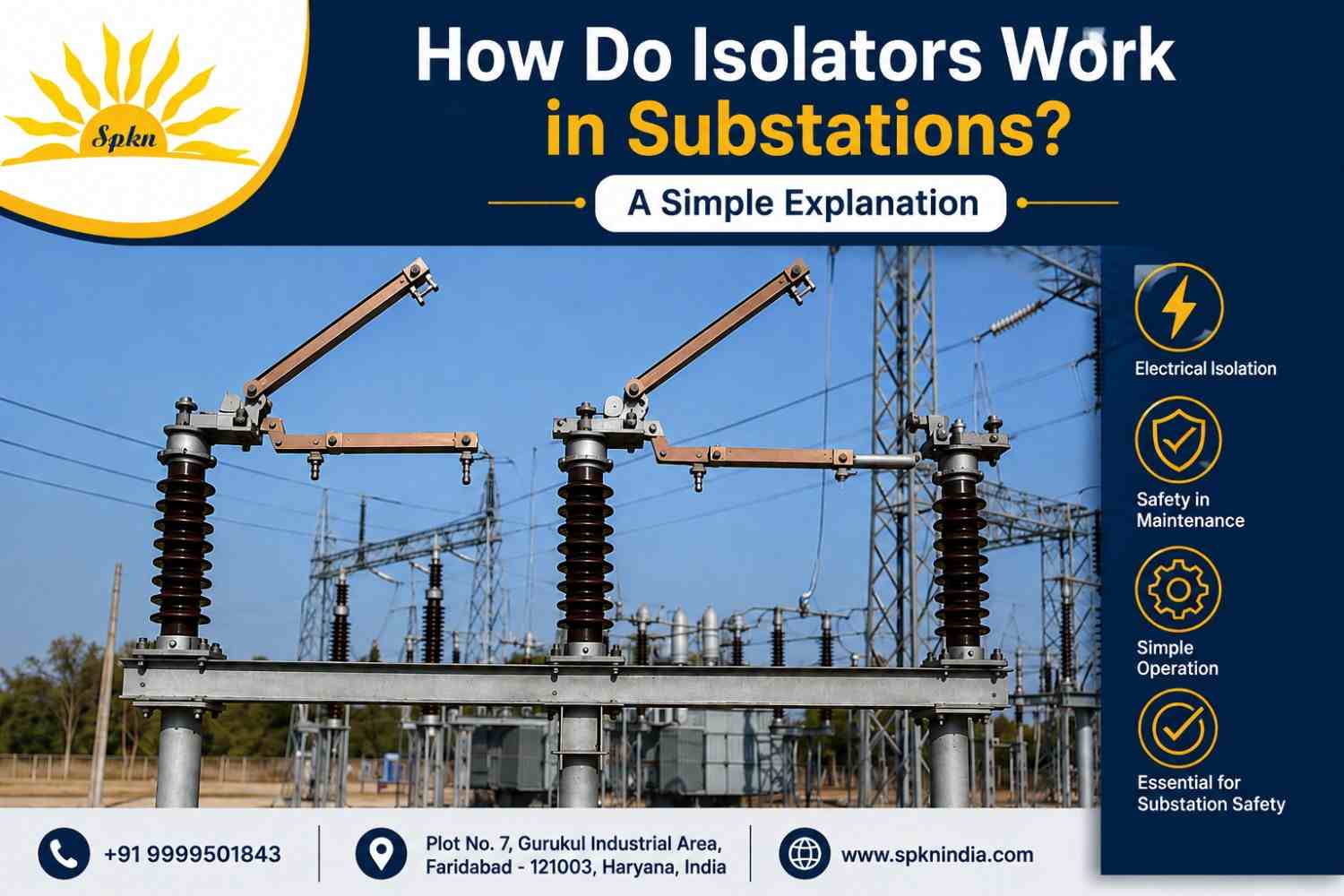
Before comparing voltages, let's keep it simple. An isolator is a switch — but not the kind that interrupts current under load like a circuit breaker does. An isolator is used only when the line is already de-energized, to create a clear, visible air gap in the circuit.
Think of it as a safety lock. Once the isolator is open, technicians can see with their own eyes that the line is disconnected. That visible break is what makes isolators so important for maintenance work — there's no guessing, no risk of accidental power flow.
Understanding 11kV Isolators
An 11kV isolator is designed for medium voltage systems, typically used at the distribution level — think local substations, feeder lines, and the last-mile network that brings power to homes, shops, and small industries.
Where 11kV isolators are commonly used:
- Distribution substations
- Local feeder pillars and ring main units
- Industrial and commercial power connections
- Rural electrification projects
Because 11kV networks are widespread — almost every city and village has them — the demand for a good 11kV Outdoor Isolator in India is honestly huge. These isolators need to handle outdoor weather conditions: dust, rain, humidity, and temperature swings, all while staying reliable for years without much maintenance.
Understanding 33kV Isolators
Now step up a level. A 33kV isolator works at a higher voltage and is generally used for bulk power transmission between substations, before the power gets stepped down further for local distribution.
Where 33kV isolators are commonly used:
- Grid substations and transmission yards
- Power evacuation from renewable energy plants (solar/wind)
- Industrial power intake points
- Utility feeder interconnections
Since 33kV lines carry more power over longer distances, the isolators used here need to be built tougher — better insulation, stronger contacts, and higher mechanical strength. This is also where a 33kV Air Break Switch often comes into play, since it's commonly paired with isolators for load-break and disconnection duties in outdoor switchyards.
11kV vs 33kV Isolator: Key Differences
| Feature | 11kV Isolator | 33kV Isolator |
|---|---|---|
| Voltage Level | Up to 11,000 V | Up to 33,000 V |
| Typical Use | Local distribution | Transmission/bulk supply |
| Installation Area | Feeder lines, local substations | Grid substations, industrial intake |
| Insulation Requirement | Moderate | Higher |
| Mechanical Strength | Standard | Reinforced |
| Common Accessory | Horn gap fuse, LT switches | Air Break Switch, earth switch |
How to Choose the Right Isolator for Your Project
Here's the simple part — selection almost always comes down to these factors:
- Check the system voltage first. This isn't optional. Using an 11kV isolator on a 33kV line (or the other way around) is a safety hazard, not a cost-saving trick.
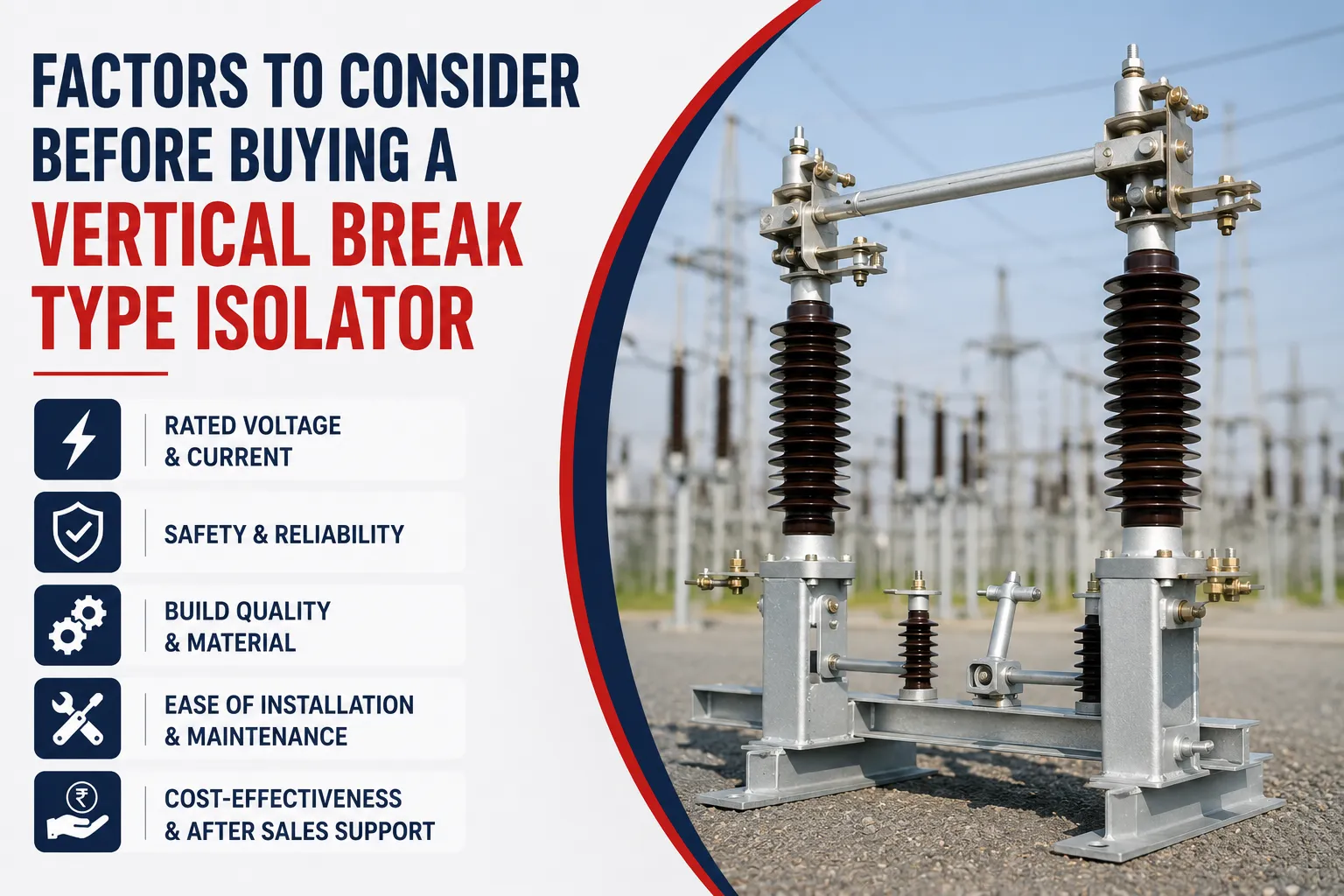
- Think about current rating. Isolators commonly come in 400A, 800A, and 1250A ratings — match this to your load requirement, not just the voltage.
- Consider the environment. Coastal, humid, or high-pollution areas need isolators with better corrosion resistance and insulation.
- Look at mounting type. Horizontal or vertical configuration depends on your substation layout and space.
- Don't skip certification. Always confirm the isolator is tested as per IS/IEC standards, and ideally ERDA or CPRI approved.
Choosing a Reliable Manufacturer
Once you know which voltage and rating you need, the next big decision is who you buy from. This is where quality really separates good isolators from ones that fail early.
Among the well-established 33kV isolator manufacturers in India, SPKN India is a name that regularly comes up. Based out of Faridabad and New Delhi, SPKN India has been supplying isolators, air break switches, and HT line materials to power utilities, EPC contractors, and government electrification projects for over a decade.
A few things worth noting about SPKN India:
- They manufacture isolators across multiple voltage classes — 11kV, 22kV, 33kV, 66kV, and even higher.
- Products are offered in different configurations, including gang-operated and double-stack designs, suited for varying substation needs.
- Their range also covers the 33kV Air Break Switch, commonly paired with isolators in outdoor switchyard setups.
- They've supplied to multiple state electricity boards and distribution companies across India, which says a lot about field reliability.
- Manufacturing follows ISO 9001:2015 practices, with type and routine testing done in line with Indian and IEC standards.
If you're comparing vendors for an 11kV Outdoor Isolator in India, it's worth checking not just the price, but also after-sales support, warranty terms, and whether the manufacturer has actual utility-scale project experience — not just catalog claims.
Common Mistakes to Avoid
- Choosing based on price alone. A cheaper isolator that fails in two years costs more than a slightly pricier one that lasts a decade.
- Ignoring environmental conditions. An isolator that works fine in a dry region may corrode fast near the coast.
- Skipping proper earthing accessories. Isolators paired with earth switches add an extra layer of safety during maintenance.
- Not verifying certification. Always ask for test certificates — don't just take a vendor's word for it.
Final Thoughts
Choosing between an 11kV and 33kV isolator really isn't complicated once you break it down. It comes down to where the isolator will sit in your network — local distribution or bulk transmission — and matching that to the right current rating, build quality, and manufacturer support.
Whether you're sourcing an 11kV Outdoor Isolator in India for a local substation or a 33kV Air Break Switch for a grid-level project, working with an experienced and certified supplier makes the biggest difference in long-term performance. Manufacturers like SPKN India have built a track record across multiple voltage classes and utility projects, which makes them a practical option to evaluate when shortlisting vendors.