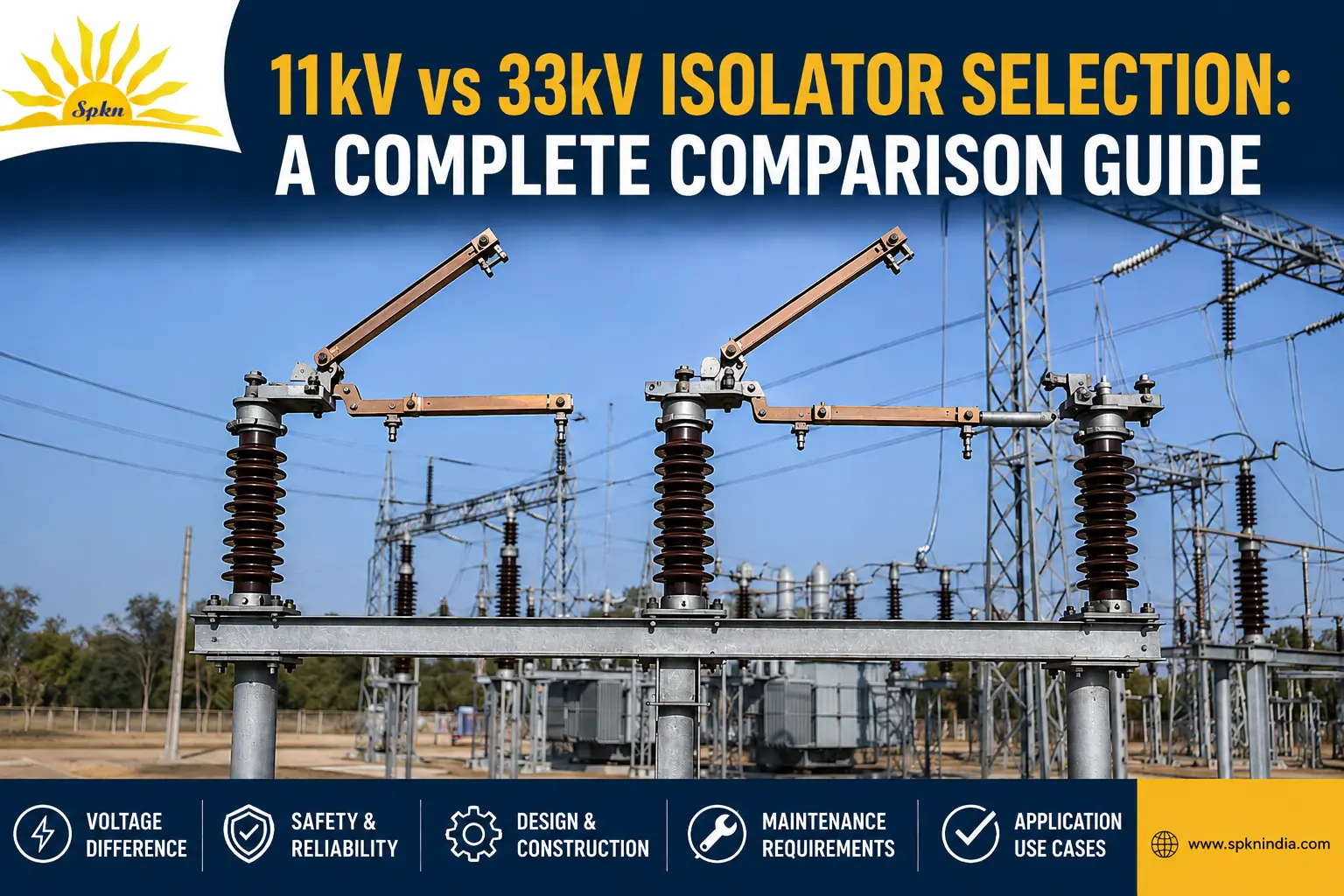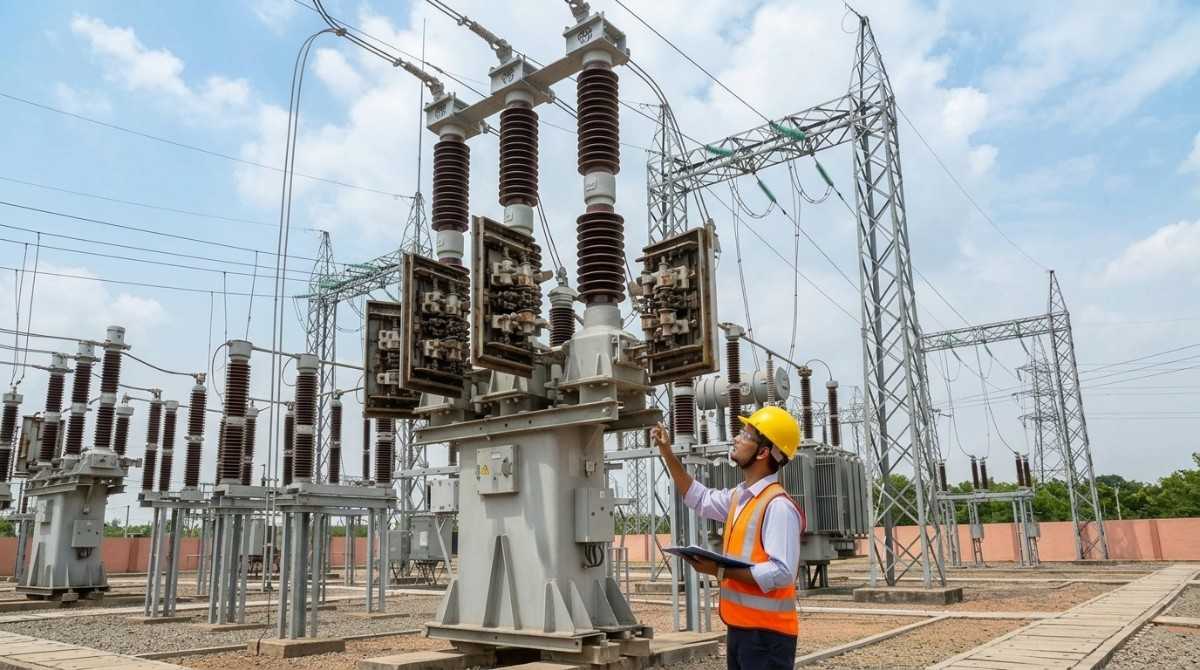
If you are sourcing electrical switchgear for an industrial project or a power distribution network, the air break switch is one component you cannot afford to get wrong. A poor-quality switch does not just fail quietly. It trips during a live operation, causes arc flash incidents, delays entire production lines, and in worst cases, takes down a substation section.
Yet most procurement teams still treat air break switches as commodity items, selecting purely on price. This guide is written to change that mindset, and to help electrical engineers, EPC contractors, and industrial buyers make smarter decisions when choosing an Air Break Switch Manufacturer in India.
So What Exactly Is an Air Break Switch?
Before getting into selection, a quick grounding on the product itself.
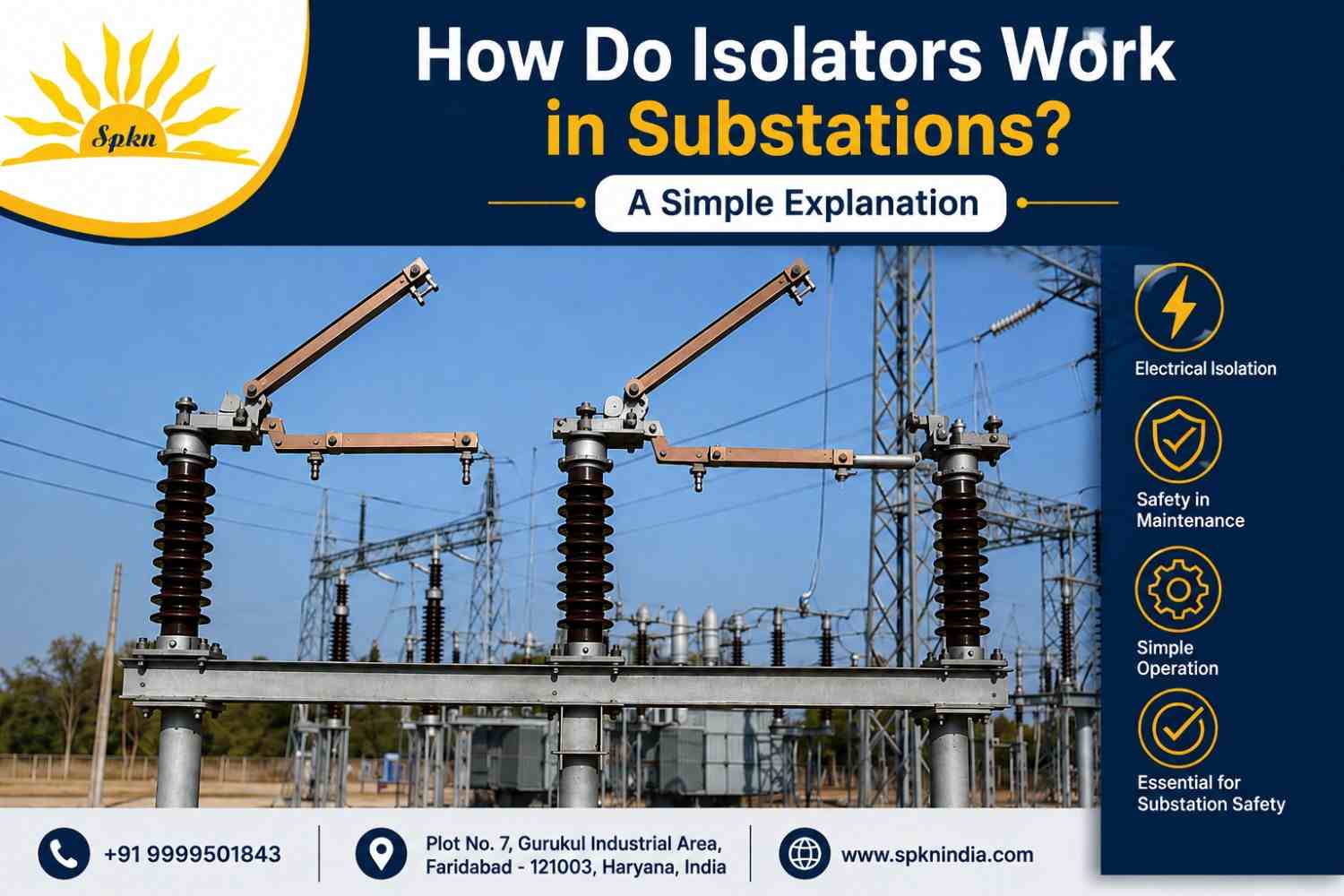
An air break switch (ABS) is a manually or motor-operated disconnecting device used in medium and high voltage electrical circuits. Unlike circuit breakers that interrupt fault currents, the air break switch is designed to isolate sections of a circuit under no-load or minimal-load conditions. The interruption happens in open air, without any insulating medium like oil or SF6 gas.
This simplicity is its strength. Fewer moving parts, straightforward maintenance, and long service life make it a preferred choice across Indian industries for decades.
You will find them at:
- 33 kV and 11 kV outdoor substations
- Transmission and distribution line isolation points
- Industrial feeder panels and switchyards
- Renewable energy plants (solar and wind installations)
- Railway traction substations
- Water treatment and pumping stations
The Five Buyer Mistakes That Cost Projects Dearly
This is the problem-solution core of this guide. Most purchasing errors fall into predictable patterns.
Mistake 1: Treating voltage rating as the only spec
Buyers often specify only the voltage class (say, 11 kV or 33 kV) and leave everything else open to interpretation. What they miss: short circuit withstand current rating, continuous current capacity, and insulator creepage distance matter equally, especially in coastal or industrial pollution zones.
Mistake 2: Ignoring the mounting configuration
Air break switches come in vertical break, horizontal break, and double end break configurations. Selecting the wrong one for your substation layout creates installation headaches, increases cable run lengths, and sometimes requires structural modifications.
Mistake 3: Skipping the operating mechanism spec
Will the switch be manually operated, or does the substation require remote or motorized operation? Many buyers finalize orders without specifying this, leading to last-minute design changes on-site.
Mistake 4: Underestimating environmental conditions
An ABS installed near a chemical plant, a coastal refinery, or a cement factory faces corrosive environments that standard galvanized hardware cannot handle. Material grade of the base frame, clamps, and insulators must match the pollution level (light, medium, or heavy).
Mistake 5: Buying from unverified manufacturers without type test reports
In India, not every manufacturer supplying air break switches holds valid type test certificates from CPRI (Central Power Research Institute) or NABL-accredited labs. Without these, you are accepting a product that has never been tested to failure under controlled conditions.
Types of Air Break Switches Used in Indian Industries
Understanding the variants helps you narrow down what your project actually needs.
Single Break (SB) Type
One break point per phase. Compact and cost-effective. Suitable for 11 kV systems in urban distribution networks.
Double Break (DB) Type
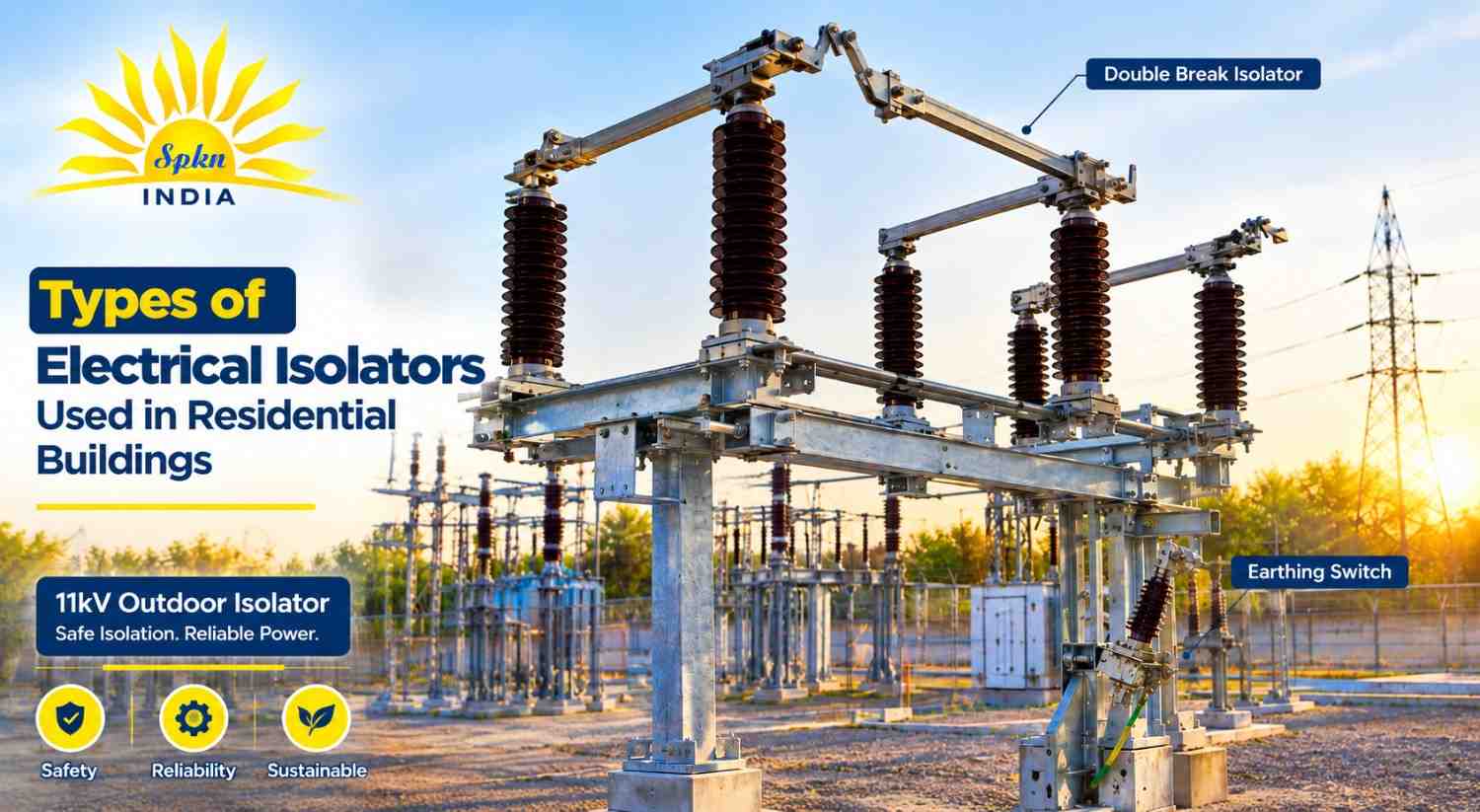
Two break points per phase, offering higher dielectric strength and greater safety margin. Common in 33 kV and 66 kV outdoor installations.
Vertical Break Type
The moving blade rotates vertically. Preferred where horizontal clearances are limited, like in compact switchyards.
Horizontal Break (Side Break) Type
The blade swings horizontally. Ideal for open-air substation bays with adequate clearance.
Centre Break Type
The blade breaks at the centre with both ends moving. Offers symmetrical arc extinction and is frequently used in higher voltage classes.
Tandem (Gang Operated) Type
All three phases operate simultaneously from a single handle or motorized mechanism. Essential for synchronized isolation in three-phase circuits.
Key Technical Parameters: What the Datasheet Should Tell You
When evaluating any air break switch manufacturer in India, ask for a full technical datasheet. Here is what to review:
| Parameter | Why It Matters |
|---|---|
| Rated Voltage (kV) | Must match system voltage class |
| Rated Current (A) | Determines continuous load capacity |
| Short Time Withstand Current (kA) | Defines fault survivability |
| Impulse Withstand Voltage (kVp) | Protection against lightning surges |
| Power Frequency Withstand Voltage (kV rms) | Insulation quality check |
| Creepage Distance (mm) | Critical for polluted environments |
| Degree of Protection (IP rating) | For mechanism enclosures |
| Material of Conductor | Electrolytic copper vs aluminium |
| Insulator Type | Porcelain vs polymer |
Real-World Scenarios: Where These Switches Actually Work
Theory is useful. Real context is better.
Scenario A: Solar Power Plant Interconnection (Rajasthan)
A 50 MW solar plant connecting to the state grid at 33 kV uses gang-operated horizontal break ABS units at each feeder bay. These switches allow grid engineers to isolate the plant for maintenance without affecting other feeders on the same busbar. The motorized version is preferred here because the control room is located 400 meters from the switchyard.
Scenario B: Paper Mill in Maharashtra
A paper manufacturing unit draws power at 11 kV from the MSEDCL grid. The incoming feeder section uses a single break, manually operated ABS as a visible isolation point before the main transformer. During scheduled maintenance, operators physically confirm isolation by seeing the open blade before entering transformer bays. This visible isolation is a safety protocol required under IE Rules.
Scenario C: Railway Traction Substation in UP
Traction substations feeding 25 kV AC overhead lines use heavy-duty double break ABS units with anti-condensation heaters in the mechanism box. The high ambient temperature variation and heavy switching cycles in these substations demand robust construction and superior contact pressure springs.
Polymer vs Porcelain Insulators: Which Should You Specify?
This is one of the most debated choices among procurement engineers in India.
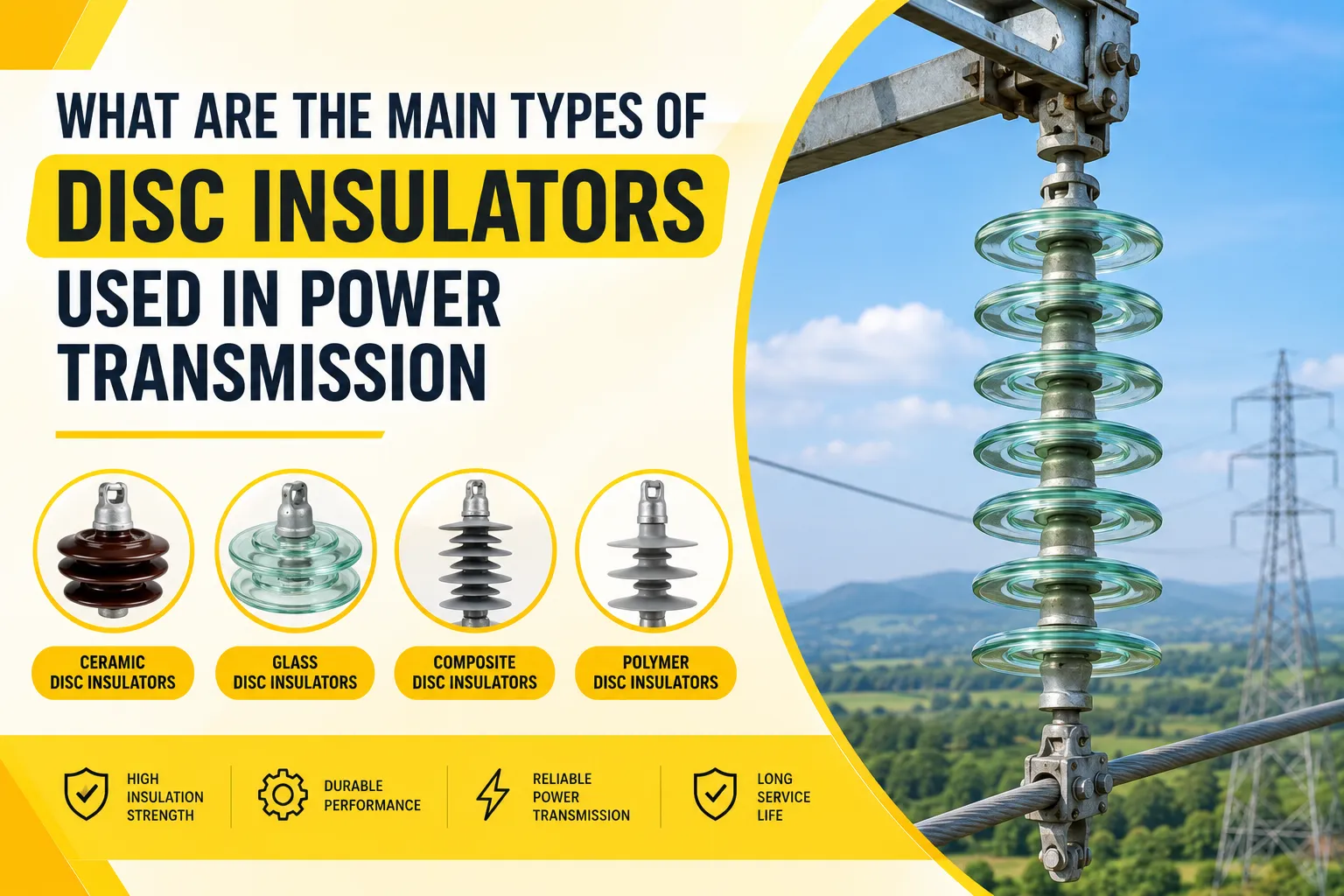
Porcelain insulators have been the standard for decades. They are mechanically strong, easy to clean, and dimensionally stable. However, they are brittle, heavy, and in high-pollution zones, they collect conductive deposits that lead to tracking and flashover.
Polymer (composite) insulators use a fiberglass-reinforced core with silicone rubber sheds. They are lighter, hydrophobic (water-repellent), and perform significantly better in polluted coastal or industrial areas. They are also harder to damage by vandalism in remote installations.
For most new substation projects in India, polymer insulators are the recommended choice unless the design specifically calls for porcelain.
Why SPKN India Is a Name Worth Knowing
SPKN India has established itself as a reliable Air Break Switch Manufacturer in India, supplying to power utilities, industrial plants, EPC contractors, and infrastructure projects across the country.
What makes SPKN India different is not just the product range but the engineering approach behind it.
Every air break switch manufactured at SPKN India is built to conform to IS 9921 (the Bureau of Indian Standards specification for alternating current disconnectors and earthing switches) and relevant IEC standards. Type test reports from recognized laboratories are available for review before order finalization.
SPKN India offers both manual and motorized gang-operated configurations across voltage classes from 11 kV to 33 kV and beyond. The manufacturing covers single break, double break, and centre break types, allowing customers to specify exactly what their substation layout demands.
The insulators used are available in both porcelain and high-grade polymer, selectable based on site pollution level. Hardware is hot-dip galvanized to IS standards, not just painted, ensuring corrosion resistance in humid and industrial environments.
For procurement managers dealing with large substation packages, SPKN India supports factory acceptance testing (FAT) with customer presence, dimensional drawings in AutoCAD format, and complete documentation packages required for utility approvals.
EPC contractors working with SPKN India appreciate the consistency in delivery schedules and the technical support available during installation and commissioning phases.
A Short Buyer's Checklist Before You Finalize Your Order
Use this before issuing a purchase order for air break switches:
- Confirm rated voltage and current match your system
- Specify break type (single, double, centre, or vertical)
- Define operation mode (manual or motorized)
- Mention pollution level of the installation site
- Ask for IS/IEC conformance and type test certificates
- Confirm insulator material (porcelain or polymer)
- Request dimensional drawing for bay fit check
- Clarify conductor material (copper or aluminium)
- Confirm earthing switch requirement (if needed)
- Check delivery lead time against your project schedule
Conclusion
The air break switch may not be the most complex item in your switchgear package, but it is among the most consequential. Getting the specification wrong means field modifications, re-testing delays, and in some cases, safety risks that no project manager wants to explain after commissioning.
Whether you are working on a distribution substation, an industrial feeder panel, or a renewable energy plant interconnection, partnering with an experienced Air Break Switch Manufacturer in India like SPKN India gives you the technical confidence and product reliability your project deserves.
Reach out to SPKN India with your project specifications and get a technically matched offer, not just a catalogue price.