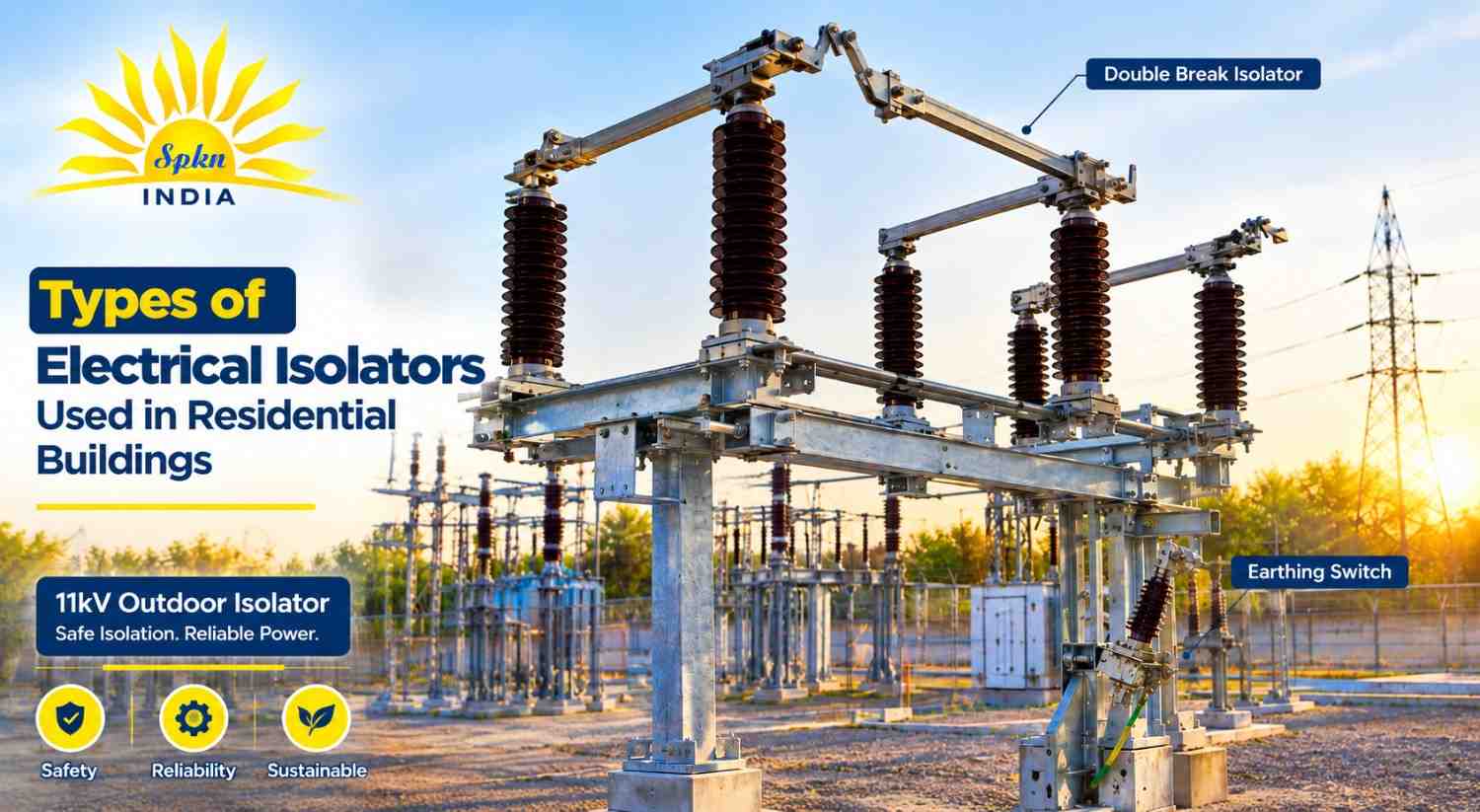
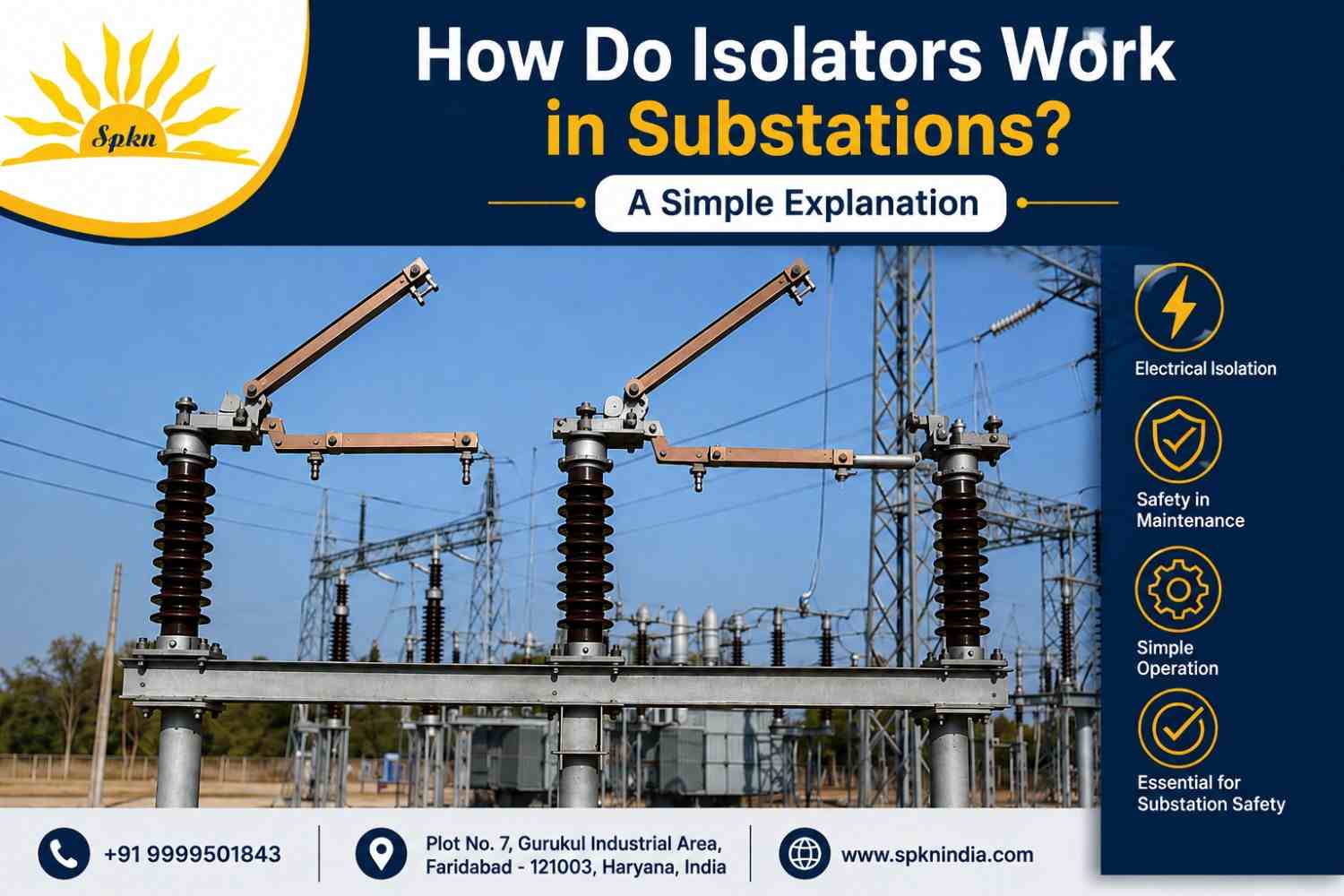
There is a reason experienced substation engineers treat a 132 kV High Voltage Isolator with absolute respect.
At 132 kV, the energy levels involved are not forgiving. A single procedural mistake, one bypassed interlock, one isolator operated out of sequence, and the consequences can range from a complete substation blackout to an arc flash incident that no one in the switchyard walks away from unharmed.
Yet across Indian substations, unsafe isolator operating practices remain one of the leading causes of switching incidents, equipment damage, and workplace accidents in the power sector.
This article is not a textbook procedure list. It is a collection of hard-learned, field-tested expert guidance drawn from real substation operating experience, designed to help electrical engineers, substation operators, EPC contractors, and maintenance teams operate a 132 kV High Voltage Isolator safely, confidently, and correctly every single time.
Understand What You Are Operating Before You Touch Anything
This sounds obvious. It is not always practised.
Before any switching operation involving a 132 kV High Voltage Isolator, the operator must have a clear, documented understanding of the following:
- The current network configuration and which circuits are energised
- The exact switching sequence authorised by the control room
- The location and status of all associated circuit breakers, earthing switches, and adjacent isolators
- The rated current, voltage, and mechanical operating parameters of the specific isolator being operated
- Any existing defects, flags, or maintenance observations recorded against that isolator
Operating a 132 kV isolator based on assumption or memory rather than verified, authorised information is one of the most dangerous habits in substation work.
Every switching operation at this voltage level must be carried out under a formal Switching Programme approved by the system control authority. No exceptions.
Tip 1: Never Operate a 132 kV High Voltage Isolator Under Load
This is the single most important rule in isolator operation and the one most frequently violated under pressure.
A 132 kV High Voltage Isolator is a no-load switching device. It is designed to open or close a circuit only after the associated circuit breaker has already interrupted the current. It is not built to break or make load current.
When an isolator is operated under load at 132 kV, the result is a sustained arc drawn between the opening contacts. At this voltage level, that arc carries enough energy to:
- Vaporise contact material instantly
- Shatter porcelain or composite insulators
- Cause a phase-to-phase or phase-to-earth fault
- Trigger protection tripping of the entire busbar section
- Create an arc blast that is lethal to anyone in the switchyard
The correct sequence is always:
- Open the circuit breaker first
- Confirm the circuit breaker is open and current is interrupted
- Only then operate the isolator
This sequence must never be reversed under any circumstances, regardless of operational urgency or time pressure from management.
Tip 2: Verify Interlock Status Before Every Operation
Modern substations use electrical and mechanical interlocking systems specifically to prevent dangerous out-of-sequence switching operations. These interlocks block isolator operation unless the associated circuit breaker is confirmed open.
Before operating a 132 kV High Voltage Isolator, always verify:
- The circuit breaker interlock is functional and not bypassed
- The earthing switch interlock is in the correct state
- No maintenance bypass keys are inserted or active on the interlock system
- The control room has confirmed the switching authority and interlock status
A functioning interlock system is your last line of defence against human error. Never treat an interlock as an inconvenience. If an interlock is preventing operation, find out why before overriding it. In many documented incidents, an interlock that seemed to be malfunctioning was actually preventing a catastrophic mistake.
If an interlock genuinely needs to be bypassed for a specific operational reason, this must only be done under a formal written permit with senior engineering authorisation. It must never be a field-level decision made under time pressure.
Tip 3: Carry Out a Full Pre-Operation Visual Inspection
Before touching the operating handle or energising the motor drive, walk the isolator visually. At 132 kV, what you see before you operate can prevent what you cannot undo after.
Check the following during your pre-operation inspection:
- Insulator condition: Look for cracks, chips, carbon tracking, or contamination deposits on the porcelain or composite insulator stack
- Contact condition: Check for visible signs of overheating such as discolouration, pitting, or melted contact material
- Operating mechanism: Confirm the linkage, pivot pins, and drive rods show no visible damage, corrosion, or missing fasteners
- Earthing connections: Verify the structure earth connections are intact and the earthing switch is in its correct position
- Foreign objects: Check the switchyard area around the isolator for any tools, birds' nests, vegetation, or debris that could create clearance problems during operation
- Position indicators: Confirm the mechanical position indicator on the isolator matches the expected open or closed state
Spending three minutes on this inspection before operation has prevented countless incidents in substations across India and worldwide.
Tip 4: Maintain Safe Approach Distances at All Times
At 132 kV, the minimum air clearance between a live conductor and a person or grounded object is significantly larger than most people instinctively appreciate.
As per Indian Electricity Rules and IS standards, the minimum safe working distance from a live 132 kV conductor for unprotected personnel is 1.2 metres for approach and considerably more for working positions.
Practical guidance for switchyard personnel:
- Always wear full arc flash personal protective equipment including arc-rated face shield, arc-rated gloves, and arc-rated clothing when working in a 132 kV switchyard
- Never reach over or under a live conductor to operate an isolator
- Keep all tools and equipment within designated work areas
- Position yourself on the designated operating side of the isolator before beginning operation
- Never stand directly in line with the isolator blades during operation in case of unexpected arc or mechanical failure
The switchyard is not a place for casual movement or shortcuts. Every step and every position matters.
Tip 5: Operate with Deliberate, Continuous Motion
This is a tip that separates experienced operators from inexperienced ones.
When operating a 132 kV High Voltage Isolator manually, the movement must be smooth, deliberate, and continuous from start to finish. Do not start the operation and then pause midway.
Here is why this matters:
A 132 kV isolator operating on a lightly loaded or capacitively charged line will draw a small charging current arc as the contacts begin to separate. This arc is manageable if the contacts move quickly through the arc zone. If the operator hesitates or slows down midway, the arc has time to establish itself, heat up the contacts, and potentially cause damage or a fault.
The same principle applies during closing. Move the contacts firmly and continuously into the fully closed, latched position. A partial closure leaves high resistance contact that overheats under load.
For motor-operated isolators: Do not interrupt the motor drive mid-operation. Allow the motor to complete the full stroke to the end position before any intervention. Monitor the position indicator to confirm full open or full closed status before proceeding with the next step in the switching sequence.
Tip 6: Confirm Final Position After Every Operation
After operating a 132 kV High Voltage Isolator, never assume the operation was successful. Confirm it.
Confirmation steps after operation:
- Check the mechanical position indicator on the isolator itself for open or closed confirmation
- For motor-operated units, confirm the position feedback signal in the control room or local control panel
- Visually confirm the blade position from a safe distance to verify the physical state matches the indicated state
- Record the operation in the substation switching log with time, operator identity, and confirmed final position
This step is not bureaucracy. Incorrect position assumptions have led to maintenance teams working on circuits that were not actually isolated, with fatal consequences.
If the position indicator and visual observation disagree, treat the isolator as potentially energised and do not proceed until the discrepancy is resolved by a qualified engineer.
Tip 7: Never Bypass Safety Interlocks in the Field
This point deserves its own dedicated section because it is violated more often than the industry likes to admit.
Field operators working under time pressure, commercial pressure, or instructions from non-technical supervisors sometimes bypass interlocks to complete switching operations faster.
At 132 kV this is unacceptable. The consequences of a wrong operation at this voltage level are not recoverable.
Real scenarios where interlock bypassing has caused major incidents:
- An operator bypassed the circuit breaker interlock believing the breaker was open. It was not. The isolator was operated under full load current, causing an arc flash that destroyed the isolator, damaged the busbar, and seriously injured the operator.
- An earthing switch interlock was bypassed to speed up a maintenance preparation sequence. The earthing switch was closed onto a live circuit, causing an immediate earth fault and tripping the entire 132 kV bus.
Every interlock on a high voltage isolator exists because someone, somewhere, learned the hard way why it was necessary. Treat every interlock as mandatory. Always.
Tip 8: Follow a Structured Switching Programme Every Time
Informal switching, where an operator makes decisions in real time without a pre-approved written programme, is one of the highest-risk practices in substation operation.
A formal Switching Programme for 132 kV operations must include:
- Step-by-step sequence of every switching action in exact order
- The name and designation of the authorising engineer
- The name of the executing operator
- Confirmation checkboxes for each step
- Provision for recording the time of each action
- A rollback or cancellation procedure if anything unexpected occurs
The programme must be prepared, reviewed, and approved before the work begins, not written on the back of a notebook while standing in the switchyard.
For EPC contractors commissioning new 132 kV substations, the first energisation switching programme is particularly critical and must be reviewed by both the project engineer and the utility representative before execution.
Tip 9: Inspect and Maintain Regularly, Not Just After Problems
The biggest mistake substation teams make with a 132 kV High Voltage Isolator is treating maintenance as a reactive activity. Something breaks, then you fix it.
At 132 kV, by the time a problem is visible, the damage is already done.
Recommended proactive maintenance schedule:
- Every 6 months: Visual inspection of insulators, contacts, and mechanism. Insulator cleaning in high pollution zones.
- Every 12 months: Thermal imaging of contacts under load. Contact resistance measurement. Mechanism lubrication. Fastener torque check.
- Every 3 to 5 years: Full mechanism overhaul. Contact surface inspection and re-plating if required. Insulator resistance testing. Operating force measurement.
- After any fault or abnormal event: Full inspection before returning to service regardless of scheduled maintenance interval.
Condition monitoring tools like thermal cameras, ultrasonic detectors, and online partial discharge monitors are increasingly affordable and give early warning of developing problems before they become failures.
Tip 10: Train Your Team, Not Just Your Engineers
Safe isolator operation is not just the responsibility of the senior engineer. Every person who enters a 132 kV switchyard needs to understand the equipment, the hazards, and the rules.
This includes:
- Substation operators and technicians
- Maintenance crew members
- EPC site supervisors and commissioning engineers
- Security and support staff who access the switchyard
Training must cover the working principle of the 132 kV High Voltage Isolator, the consequences of incorrect operation, the mandatory safety procedures, and the use of personal protective equipment.
Regular refresher training, tabletop switching exercises, and incident reviews are all effective tools for building a safety culture that prevents accidents before they happen.
A team that understands why the rules exist follows them far more reliably than a team that has simply been told what to do.
Why SPKN India Is Trusted for 132 kV High Voltage Isolator Supply Across India
Safe operation starts with equipment that is built right from the beginning.
SPKN India manufactures and supplies 132 kV High Voltage Isolators that are engineered specifically for the demands of Indian transmission and industrial substations, where the combination of high voltage, heavy load cycles, extreme weather, and varied pollution environments creates some of the most challenging operating conditions in the world.
What makes SPKN India the right choice:
- Full Standards Compliance: IS 9921 and IEC 62271-102 type tested and certified, with documentation available for every project
- Robust Contact Design: Silver-plated copper contacts with precision spring pressure assemblies for consistent low contact resistance throughout service life
- Pollution-Specific Insulator Options: Creepage distance configurations for pollution class II, III, and IV to match coastal, industrial, and high-altitude site requirements across India
- Reliable Operating Mechanisms: Manual and motor-operated variants with smooth, consistent operating forces across the full temperature range encountered in Indian conditions
- Integrated Earthing Switch Options: Factory-assembled earthing switch configurations with reliable interlock systems for maintenance safety
- SCADA-Ready Motor Drive Units: Motor-operated isolators with limit switches, position indicators, and control wiring designed for integration with modern substation automation systems
- Project-Specific Engineering Support: From specification review and drawing approval to factory acceptance testing and commissioning guidance, SPKN India's technical team supports your project at every stage
You can also explore SPKN India's range of 66 kV and 220 kV outdoor isolators, vacuum circuit breakers, current transformers, and complete substation switchgear packages for single-source project procurement.
Conclusion
A 132 kV High Voltage Isolator is one of the most safety-critical pieces of equipment in any transmission substation. Operating it safely is not a matter of following a checklist mechanically. It is a matter of understanding the equipment, respecting the energy levels involved, following structured procedures without shortcuts, and building a culture where safety is never compromised under operational or commercial pressure.
The ten tips in this article are not theoretical. They are the difference between a switching operation that completes without incident and one that ends careers, damages equipment worth crores, and in the worst cases, costs lives.
Invest in the right equipment. Train your team properly. Maintain proactively. And choose a manufacturer who understands what reliable, safe high voltage equipment actually means in the field.
Reach out to SPKN India today for expert guidance on 132 kV High Voltage Isolator specifications, technical datasheets, and project support tailored to your substation requirements.
Frequently Asked Questions
Q1. What is the correct sequence for operating a 132 kV High Voltage Isolator during a shutdown? The correct sequence is to first open the circuit breaker and confirm it has interrupted the current. Then confirm the interlock status. Then operate the isolator to the open position. Then close the earthing switch to ground the isolated section before any personnel enter the work area. This sequence must never be altered.
Q2. What personal protective equipment is required when operating a 132 kV High Voltage Isolator? At minimum, operators must wear arc-rated face shields, arc-rated gloves rated for the voltage level, arc-rated clothing, safety boots, and a hard hat. The specific arc flash PPE category required depends on the arc flash incident energy study for the specific switchyard location.
Q3. How do I know if a 132 kV High Voltage Isolator is fully open or closed? Check the mechanical position indicator mounted on the isolator structure. For motor-operated units, confirm the position feedback in the control panel or SCADA system. Always supplement indicator readings with a direct visual observation of the blade position from a safe distance before treating the circuit as isolated.
Q4. Can a 132 kV High Voltage Isolator be operated during a thunderstorm? No. Switching operations on high voltage equipment including 132 kV isolators should not be carried out during active thunderstorms or lightning conditions. Lightning-induced overvoltages can stress equipment during switching and create additional hazards for personnel in the switchyard.
Q5. What causes a 132 kV High Voltage Isolator to fail to open fully? Common causes include a worn or seized operating mechanism due to lack of lubrication, corroded pivot pins or drive rods, ice accumulation on the blade and contacts in cold conditions, or a mechanical obstruction in the operating linkage. Any partial operation must be reported and investigated before the isolator is returned to service.
Q6. How often should thermal imaging be carried out on a 132 kV High Voltage Isolator? Annual thermal imaging under normal load conditions is the recommended minimum. For substations in high pollution zones or those carrying sustained high loads, thermal imaging every six months provides better early warning of developing contact resistance problems.
Q7. Does SPKN India provide commissioning support for 132 kV High Voltage Isolators? Yes. SPKN India provides technical commissioning guidance including pre-energisation inspection checklists, contact resistance test acceptance criteria, operating mechanism adjustment procedures, and on-site support for first energisation switching programmes where required by the project.