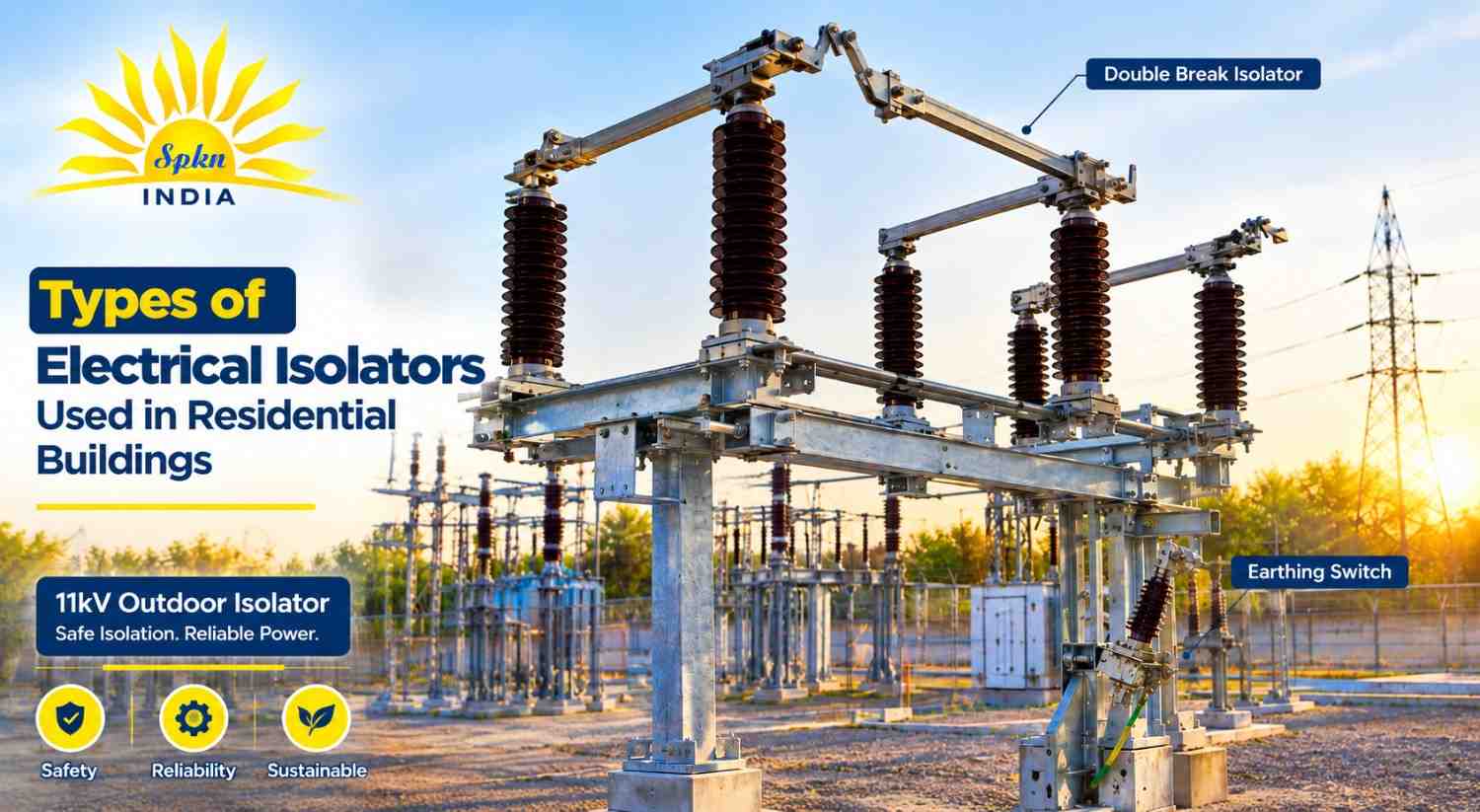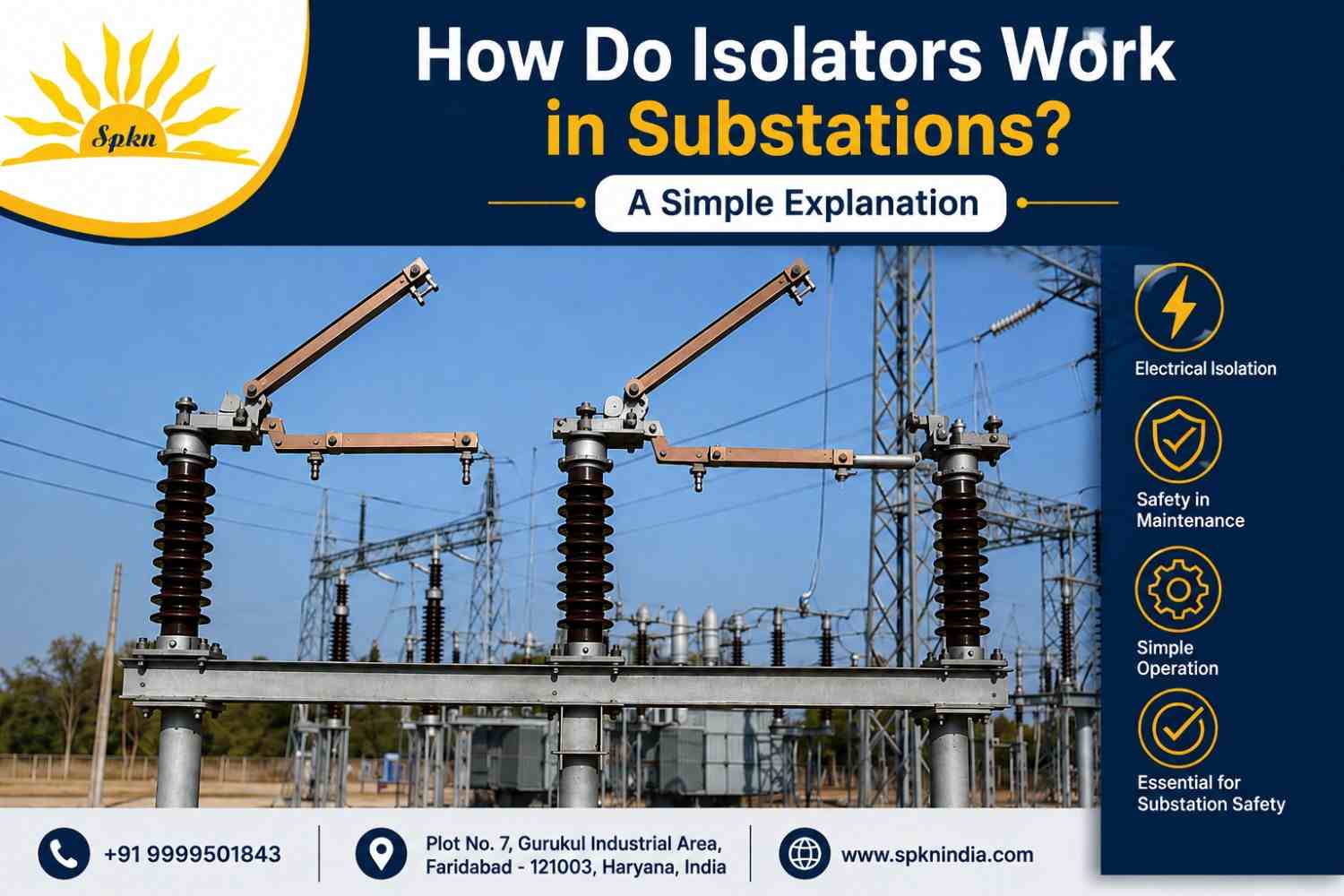
A well-specified and properly maintained 33kV substation isolator should last twenty-five to thirty years in normal operating conditions. Most do not come anywhere close to that.
Walk through the switchyard of any ageing grid substation in India and you will find isolators that are ten years old but look and perform like they are twenty-five. Corroded contact blades. Seized pivot bearings. Cracked insulator stacks held together with hope and deferred maintenance budgets. Operating mechanisms so stiff that technicians need two people and a cheater bar to complete a switching operation that should require one hand.
The frustrating truth is that most of this deterioration is avoidable. A 33kV substation isolator does not have to age badly. It ages badly because of specific, identifiable, and preventable causes that accumulate over years of neglect, wrong maintenance practices, and poor spare parts decisions.
This guide walks through the practical steps that actually extend isolator service life in real Indian substation conditions. Not theoretical recommendations from a textbook. Practical actions that maintenance engineers and asset managers can implement on their next maintenance visit and every visit after that.
Step One: Understand What Actually Causes a 33kV Substation Isolator to Deteriorate
Before talking about prevention, it is worth being precise about what you are actually trying to prevent. The major deterioration mechanisms in a 33kV substation isolator operating in Indian conditions are well understood.
Contact Surface Degradation
The current-carrying contact surfaces of an isolator are typically copper or copper alloy, often with silver plating. Over time, repeated mechanical operations cause micro-scratching and wear on these surfaces. Oxidation forms a resistive layer. In humid environments, galvanic corrosion accelerates the process.
As contact resistance rises, the joint generates more heat during load. Heat accelerates oxidation further. A gradual but self-reinforcing deterioration cycle begins that ends in contact failure if not interrupted by maintenance.
Insulator Stack Degradation
Porcelain insulator stacks accumulate pollution on their surface over time. In Indian environments, this pollution layer is a combination of dust, industrial particulates, agricultural residues, bird droppings, and in coastal areas, salt deposits. When this layer becomes wet during monsoon or morning dew, it becomes conductive and creates a leakage current path along the insulator surface.
Over years of pollution accumulation and repeated wet-dry cycles, the insulator surface develops tracking damage, the glazed surface erodes, and the dielectric withstand of the insulator is permanently reduced.
Mechanical Wear in Operating Mechanism
Every switching operation puts mechanical stress on bearings, pivot points, operating rods, and gearbox components. Without lubrication, these surfaces wear against each other. Wear increases operating effort. Increased operating effort puts more stress on insulator stacks and structural bolts. Eventually, a stiff mechanism leads to insulator cracking during a forced operation.
Corrosion of Structural Hardware
Galvanised or zinc-plated fasteners, base frame members, and mounting hardware slowly corrode in outdoor environments. Corroded fasteners lose their clamping force, leading to structural loosening of the entire isolator assembly. Misaligned contacts, vibrating components, and ultimately electrical failures follow.
Understanding these four mechanisms tells you exactly where to focus your maintenance effort.
Step Two: Set Up an Inspection Schedule That Actually Catches Problems Early
The single most effective thing any substation maintenance team can do to extend isolator service life is shift from reactive maintenance to scheduled preventive maintenance. This sounds obvious. It is not consistently practised.
Here is a practical inspection schedule framework for a 33kV substation isolator in typical Indian operating conditions:
Every Six Months
Visual inspection of insulator surfaces for cracks, chips, pollution deposits, and bird nest activity. Check for any visible corrosion on contact blades, terminal clamps, and hardware. Observe isolator operation during a scheduled switching event if possible and note any stiffness or unusual noise.
Annually
Full cleaning of insulator stacks using appropriate cleaning methods for the insulator type. Contact surface inspection and cleaning. Lubrication of all bearings, pivot points, and operating mechanism components. Torque check on all structural and terminal fasteners. Measurement of contact resistance using a micro-ohmmeter and comparison against baseline values recorded at commissioning.
Every Two to Three Years
Thermographic survey of all isolator contact locations under load. Detailed inspection of operating mechanism including gear condition, operating rod straightness, and crank arm security. Insulator dielectric inspection including ultrasonic detection of internal cracks in porcelain stacks. Review and replacement of any hardware showing significant corrosion.
At Any Time After a Fault Event
Immediate inspection of all isolators in the affected bay including contact condition check, insulator crack inspection, and operating mechanism function test before returning to service.
Step Three: Clean Insulators the Right Way, Not Just Any Way
Insulator cleaning is one of the most frequently done and most frequently done incorrectly maintenance tasks on a 33kV substation isolator.
The purpose of insulator cleaning is to remove the pollution layer that reduces surface resistance and creates flashover risk. The cleaning method must remove this layer without damaging the glaze surface of porcelain insulators or the hydrophobic silicone surface of polymer insulators.
For porcelain insulators, dry cleaning with a clean, dry cloth or soft brush is appropriate for light pollution deposits. For heavier deposits, damp cloth wiping followed by dry wiping gives good results. In substations where the live-line washing method is used, the water quality and pressure must be carefully controlled to avoid driving conductive water into the insulator disc gaps.
For polymer insulators, avoid abrasive cleaning materials entirely. The silicone surface is the source of the hydrophobic performance advantage of these insulators, and abrasive cleaning degrades it. Soft cloth wiping with clean water is appropriate. Many polymer insulator manufacturers recommend periodic application of silicone grease restoration compound to surfaces that have lost their hydrophobicity after extended service.
One thing to absolutely avoid: using compressed air blowing to clean energised insulator surfaces. This can drive conductive dust particles into surface defects and create worse contamination than was there before.
Step Four: Lubricate Correctly, With the Right Materials
This step is where well-intentioned maintenance teams frequently cause more harm than good.
Lubrication of a 33kV substation isolator is not just about applying any available grease to moving parts. The wrong lubricant in the wrong location actively shortens isolator life.
Contact Surfaces
Electrical contact surfaces should be treated with a specialised contact grease or oxide-inhibiting compound that is electrically conductive, resists oxidation, and does not harden or dry out over the expected maintenance interval. Standard bearing grease is not appropriate for contact surfaces. It can actually increase contact resistance by acting as an insulating film between contact surfaces.
Bearings and Pivot Points
Standard lithium-based or NLGI Grade 2 grease is appropriate for bearings, pivot bushes, and operating rod joints. In high-temperature environments like Rajasthan or in coastal environments with salt air, a high-temperature or marine-grade grease gives better longevity between maintenance intervals.
Gearbox and Operating Mechanism
If the isolator has a gearbox, check the manufacturer's recommendation for gear oil or grease type. Draining and replacing gearbox lubricant every three to five years prevents the lubricant from breaking down into a gritty, abrasive paste that accelerates gear wear rather than preventing it.
What Never to Lubricate
Insulator surfaces must never be coated with any lubricant unless it is a specifically designed anti-pollution silicone compound. General lubricants on insulator surfaces attract dust and pollution, creating a worse contamination problem than a clean dry insulator would have.
Step Five: Monitor Contact Resistance as the Key Health Indicator
If you had to choose just one measurement to track the health of a 33kV substation isolator over its service life, contact resistance is the one to choose.
A new, properly installed isolator in the closed position should have a contact resistance measured in micro-ohms, typically in the range of 50 to 150 micro-ohms depending on the isolator design and current rating. This baseline value should be measured and recorded at commissioning.
At each annual maintenance visit, repeat the measurement and compare against the baseline. A gradual increase over years is normal and expected as contact surfaces accumulate minor oxidation. A sharp increase from one measurement to the next is a warning sign that requires investigation.
The measurement is made with the isolator in the fully closed position using a calibrated low-resistance ohmmeter or micro-ohmmeter. The test current should be sufficient to overcome any surface film resistance, typically 10A or higher for a meaningful reading.
Trending contact resistance over years gives you an objective, data-driven basis for deciding when contact maintenance or replacement is needed, rather than relying on visual inspection alone or waiting for a thermal event to alert you.
Step Six: Address the Operating Mechanism Before It Becomes a Crisis
The operating mechanism of a 33kV substation isolator is the component that most consistently deteriorates without being noticed until it causes a serious problem.
A stiffening operating mechanism is easy to compensate for in the short term. The technician applies more force. The operation is completed. The problem is noted but not addressed. Over the next few operations, the required force keeps increasing until one day, the force required to complete the operation is enough to crack an insulator stack or bend an operating rod.
At that point, a maintenance issue has become an equipment failure requiring immediate unplanned repair.
The right approach is to address operating mechanism stiffness at the first sign of its development. Lubrication is the first step. If lubrication does not restore smooth operation, the source of the stiffness needs to be identified. Common causes include a bent operating rod, a worn or corroded bearing, a loose crank arm that is binding, or a misaligned pivot assembly.
Each of these is a straightforward repair when addressed early. None of them are straightforward after they have been allowed to develop for another two or three years.
Step Seven: Keep the Right Spare Parts Available Before You Need Them
The fastest way to extend the effective service life of a 33kV substation isolator is to address developing problems immediately when they are identified at inspection, rather than waiting for parts to be sourced.
Maintenance teams that find a worn contact blade during an annual inspection and then spend six weeks waiting for a replacement part have not extended the isolator's service life. They have allowed a known problem to persist under live operating conditions while procurement runs its course.
A basic spare parts inventory for a 33kV substation isolator should include contact blades and contact fingers, terminal connectors for the conductor interface, insulator stacks for the specific isolator model and voltage rating, bearing sets and pivot bushes for the operating mechanism, operating rod sections if the design uses replaceable rods, and a full set of structural fasteners in the correct grade and galvanising specification.
This inventory does not need to be large. It needs to be available. The difference between resolving a contact wear issue in one maintenance visit versus six weeks of deferred risk is simply whether the right part is in the stores or not.
Why Maintenance Teams Across India Rely on SPKN India for 33kV Substation Isolator Support
SPKN India manufactures and supplies 33kV substation isolators and a complete range of compatible spare parts to support the full service life of the equipment. Our isolators are manufactured as per IS 9921 and IEC 62271-102, type tested, and supplied with complete documentation including type test certificates, routine test reports, and dimensional drawings.
For maintenance teams managing existing isolator fleets, we supply compatible spare parts including contact assemblies, insulator stacks, operating mechanism components, and hardware sets. Our team can cross-reference your existing isolator make and model to confirm compatibility before supply, saving you the risk of receiving parts that do not fit.
We understand that substation maintenance teams in India operate under real constraints of budget, time, and geographic spread. Our focus is on providing the right product, the right documentation, and reliable delivery that supports your maintenance schedule rather than disrupting it.
Whether you are procuring new 33kV substation isolators for a grid expansion project or sourcing spare parts to support a maintenance programme on an existing fleet, SPKN India has the product range and technical capability to support your requirements.
You can also read about our complete range of substation hardware, earthing equipment, and overhead line fittings to support your full substation maintenance and procurement needs from a single reliable source.
Conclusion
A 33kV substation isolator that is properly maintained does not just last longer. It operates more safely, requires less unplanned intervention, and costs significantly less over its service life than one that is neglected until failure forces action.
The steps in this guide are not complicated or expensive. Scheduled inspection, correct cleaning, proper lubrication with the right materials, contact resistance monitoring, early attention to operating mechanism issues, and a basic spare parts inventory are the practical actions that separate a thirty-year isolator from a ten-year one.
If you are reviewing your substation maintenance programme or planning procurement for a new project, SPKN India is ready to support you with technically sound products and practical guidance. Contact our team today and let us help you get more life, more reliability, and more value from your 33kV substation isolator investment.
Frequently Asked Questions
What is the expected service life of a 33kV substation isolator in Indian operating conditions?
A properly specified, correctly installed, and regularly maintained 33kV substation isolator should achieve a service life of twenty-five to thirty years in normal operating conditions. In aggressive environments such as coastal or heavily polluted industrial sites, service life may be shorter without enhanced specification and more frequent maintenance.
How often should contact resistance be measured on a 33kV substation isolator?
Contact resistance should be measured and recorded at commissioning to establish a baseline, and then repeated at each annual maintenance visit. Any significant increase from the previous measurement warrants investigation of the contact surfaces before the next scheduled maintenance cycle.
What is the correct grease to use for lubricating isolator contact surfaces?
Contact surfaces require a specialised electrically conductive contact grease or oxide-inhibiting compound designed specifically for electrical contact applications. Standard bearing or machinery grease is not appropriate for contact surfaces and can increase contact resistance.
Can insulator stacks be repaired if they develop surface tracking damage?
Surface tracking damage on porcelain insulator stacks cannot be reliably repaired. Once the glaze surface has been damaged by tracking, the insulator's dielectric performance is permanently reduced and replacement is the appropriate action. Minor surface contamination can be cleaned, but physical surface damage requires replacement.
How do I know if my isolator operating mechanism needs attention?
The clearest indicator is increasing operating effort compared to previous maintenance visits or commissioning. Any stiffness, binding, unusual noise, or incomplete travel during operation is a sign that the mechanism needs inspection and lubrication at minimum, with further investigation if lubrication does not resolve the issue.
Does SPKN India supply spare parts for 33kV substation isolators made by other manufacturers?
Yes. SPKN India supplies compatible spare parts for a range of isolator makes and models used in Indian substations. Our team will verify compatibility against your isolator specifications including make, model, voltage rating, and current rating before confirming supply to ensure the parts will fit and perform correctly.
What documentation should be maintained for a 33kV substation isolator throughout its service life?
Maintain a record of the original commissioning test results including contact resistance baseline, type test certificate reference, installation date, and site location. Add to this record the results of each maintenance visit including inspection findings, contact resistance measurements, lubrication records, and any parts replaced. This history is invaluable for condition assessment and supports informed decisions about refurbishment versus replacement as the isolator ages.