Picture this. A 132kV substation in the middle of an industrial corridor. Scheduled maintenance is due. The maintenance team goes in to operate the isolator for de-energising a bus section. Halfway through the operation, the contact blade jams. The rotating insulator stack shows a hairline crack. The operating rod has developed a bend from years of mechanical stress.
Now the team has two choices. Either source the right isolator spare parts quickly and get the equipment back in service, or wait days for a complete isolator replacement while the substation limps along on reduced capacity.
This scenario plays out more often than most utilities and industrial plants care to admit. And in almost every case, the root cause is the same. Nobody paid attention to isolator spare parts until something broke.
This guide is written to change that thinking. Whether you are a substation engineer, a procurement manager at a DISCOM, or an EPC contractor building your first 220kV switchyard, understanding isolator spare parts is not optional. It is essential.
So What Exactly Is an Isolator, and What Parts Make It Work?
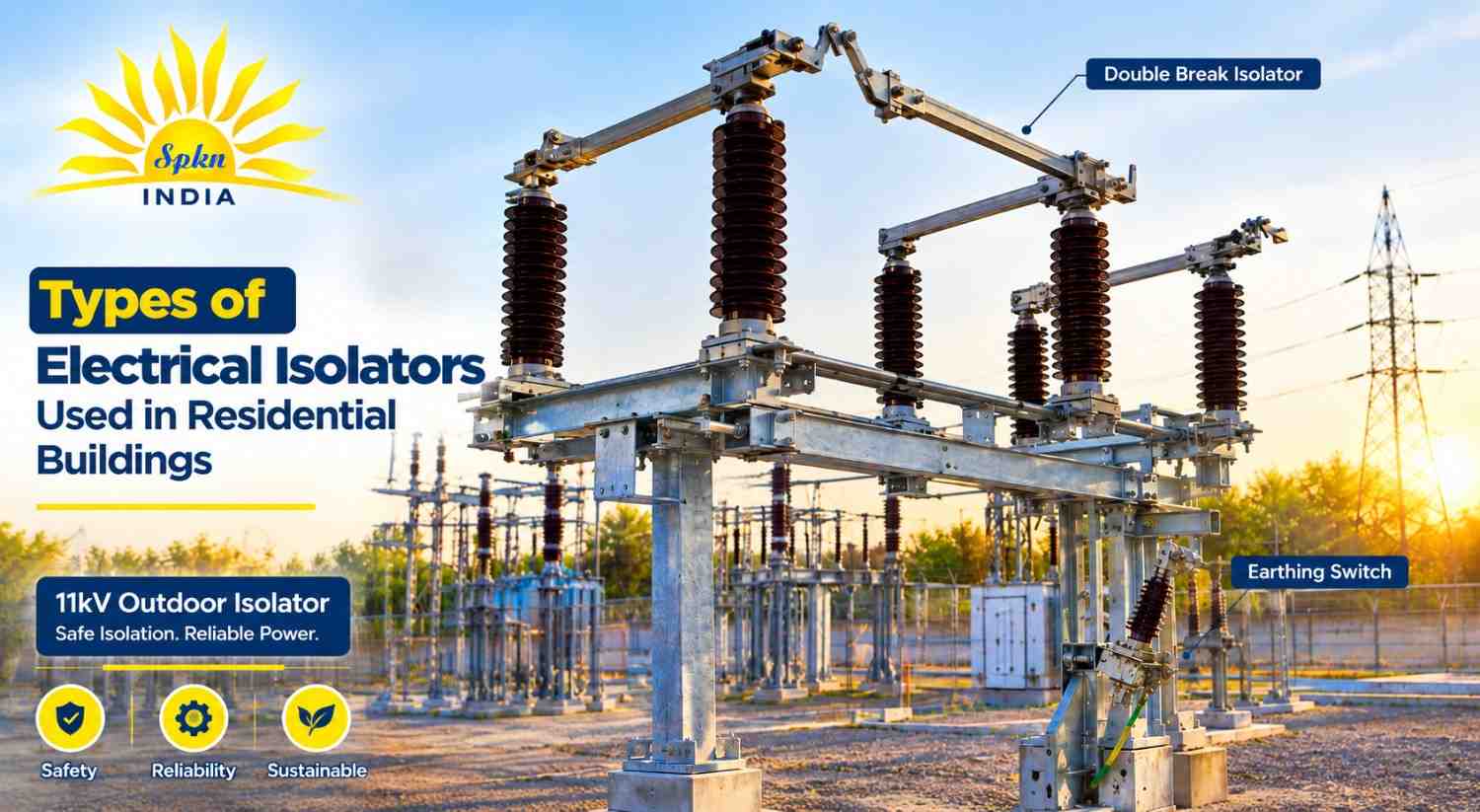
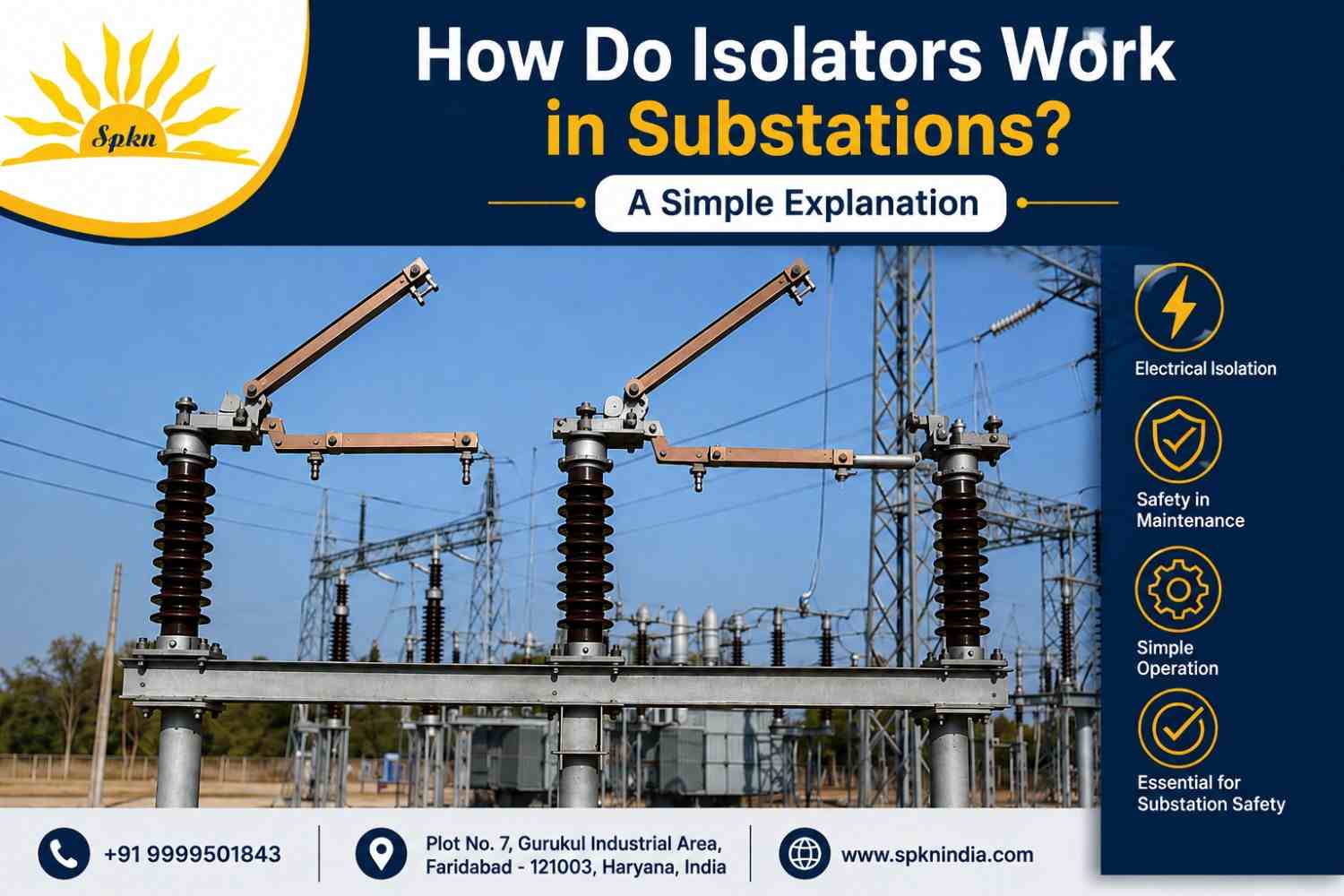
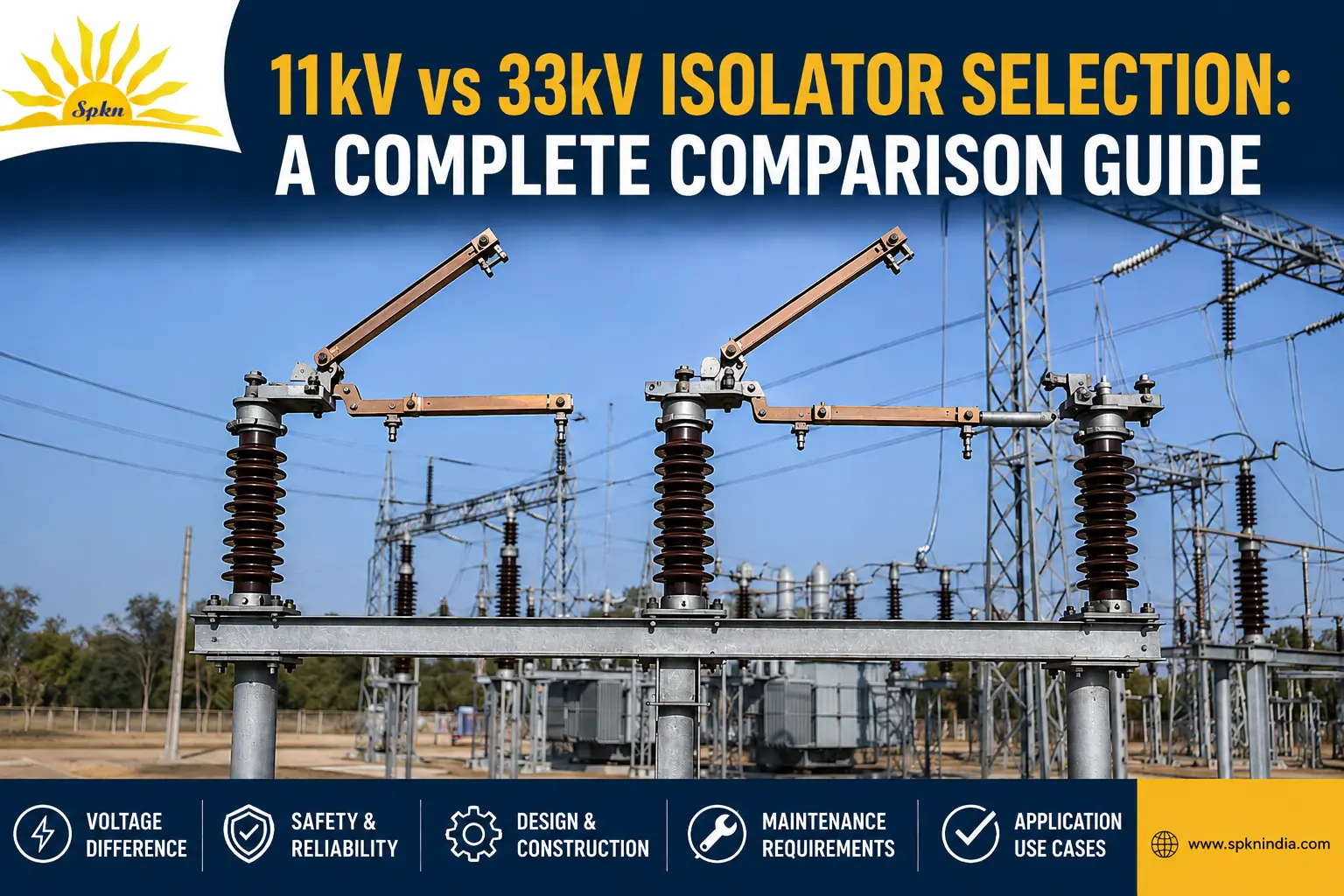
An isolator, also called a disconnector, is a mechanical switching device used in substations to isolate a section of the electrical network from the rest of the system. Unlike a circuit breaker, it operates under no-load conditions. Its job is to create a visible air gap that confirms safe isolation before maintenance work begins.
An isolator looks simple from the outside. But inside, it is a carefully engineered assembly of multiple components that must work together with precision every single time.
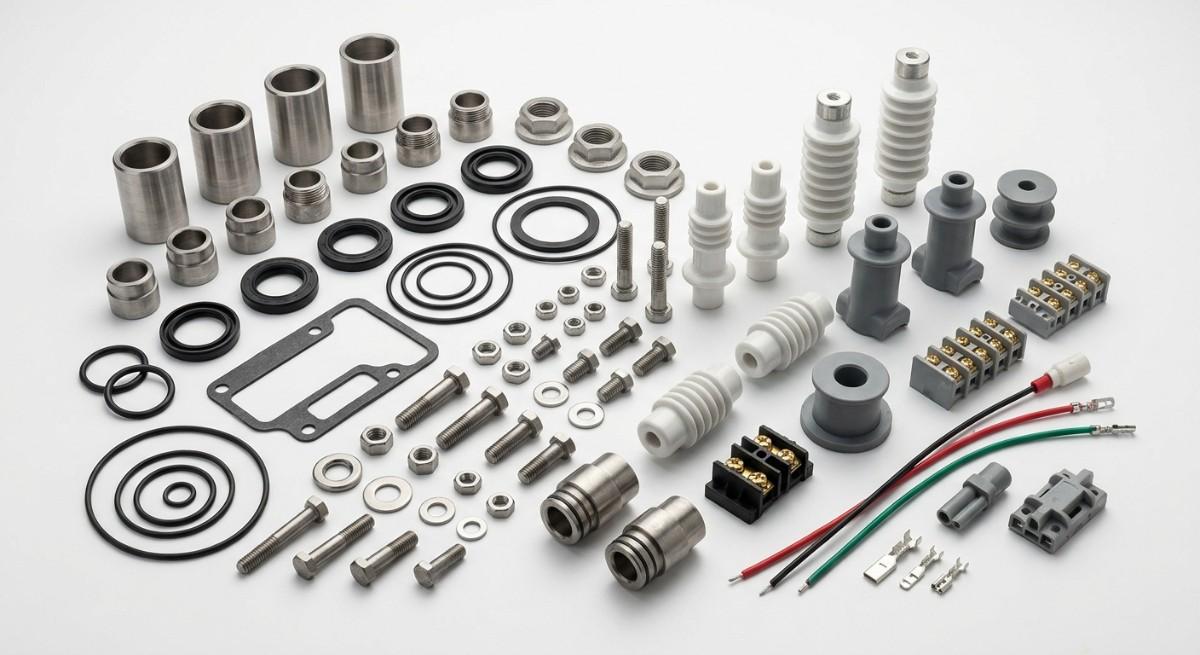
The main isolator spare parts that make up this assembly include:
Contact Blades and Fixed Contacts These are the current-carrying components that make and break the electrical connection. They are typically made from copper or copper alloy with silver plating on the contact surfaces to minimise contact resistance and prevent oxidation.
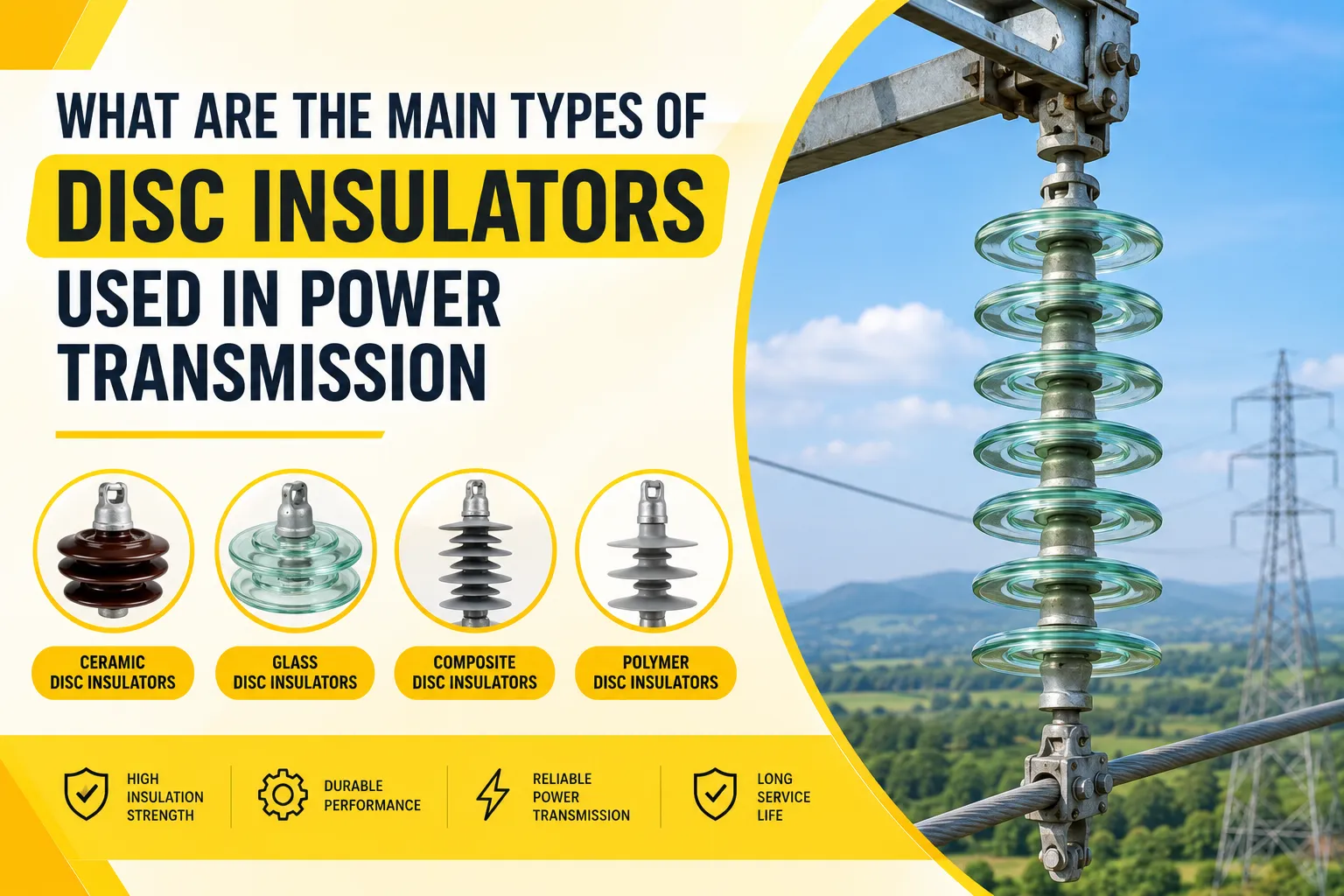
Insulator Stacks Porcelain or polymer insulators support the current-carrying parts and provide electrical insulation from the earthed structure. These are among the most vulnerable components in outdoor environments.
Operating Mechanism and Drive Shaft This is the mechanical system that rotates or slides the contact blade from the open to closed position. It includes gearboxes, operating rods, crank arms, and linkages.
Bearings and Pivot Assemblies These allow smooth rotation of the contact blade and insulator stacks. They take continuous mechanical stress during every operation cycle.
Terminal Connectors and Clamps These connect the isolator to the incoming and outgoing conductors or bus bars. Poor quality terminal connections are a leading cause of overheating at isolator terminals.
Fasteners, Nuts, Bolts and Spring Washers Structural fasteners that hold the entire assembly together. In outdoor environments, these are typically hot-dip galvanised or stainless steel.
Earthing Switch Components Many isolators come with an integrated earthing switch. Its contact blades, insulator supports, and operating linkages are separate spare components that need independent attention.
Why Isolator Spare Parts Matter More Than Most People Realise
Here is the honest truth. An isolator itself is a relatively simple device. It does not have the complexity of a circuit breaker or a transformer. This simplicity makes people underestimate how critical its components are.
But consider what an isolator does in a substation. It is operated every time maintenance is carried out. In a busy grid substation, that could be dozens of operations per year. Each operation puts mechanical stress on contact blades, bearings, insulator necks, and operating rods.
Over time, without proper maintenance and timely replacement of worn components, even the best isolator will develop problems. And those problems rarely announce themselves in advance.
Contact blade wear leads to increased contact resistance, which causes localised heating. In a 132kV or 220kV environment, that heat can escalate into a fault very quickly.
Cracked or contaminated insulators reduce the dielectric withstand of the isolator, creating a risk of flashover especially during monsoon or in polluted industrial environments.
Worn bearings and seized pivots make the isolator difficult or impossible to operate manually, which is a serious safety risk during emergency maintenance situations.
Corroded fasteners cause structural loosening of the entire assembly, which can lead to misalignment of contacts and incomplete isolation.
None of these failures happen overnight. They develop gradually. And they are entirely preventable with a proper spare parts inventory and a disciplined maintenance schedule.
The Real Cost of Not Stocking Isolator Spare Parts
Let us talk about what happens when a substation does not have the right spare parts available.
A contact blade fails during scheduled maintenance at a 33kV feeder substation. The maintenance team searches for the right replacement. The original equipment manufacturer has a lead time of three to four weeks. Local suppliers do not have the exact specification. The feeder stays out of service while the procurement process runs its course.
In an industrial plant context, every hour of unplanned downtime has a direct financial cost. In a DISCOM substation, extended outages affect thousands of consumers and invite regulatory scrutiny.
The cost of stocking a basic set of isolator spare parts for a typical substation is a fraction of what a single unplanned outage costs. This is not a theoretical argument. Every experienced substation engineer will tell you the same thing from their own field experience.
Which Isolator Spare Parts Should Be in Your Maintenance Inventory?
This depends on the voltage level, the type of isolator, and the operating environment. But as a general framework, here is what a well-prepared substation maintenance team should have available:
Fast-Moving Spares (Replace Regularly)
- Contact fingers and silver-plated contact blades
- Terminal connectors and bimetallic clamps
- Spring washers and locking hardware
- Lubrication grease for contacts and bearings
Condition-Based Spares (Replace on Inspection)
- Insulator stacks (porcelain or polymer)
- Bearings and pivot bushes
- Operating rods and crank arm assemblies
- Earthing switch contact blades
Insurance Spares (Replace on Failure)
- Complete operating mechanism assembly
- Gearbox unit
- Complete earthing switch assembly
Utilities managing large fleets of isolators across multiple substations often negotiate annual rate contracts with suppliers for fast-moving spares. This ensures price stability and guaranteed availability without tying up too much working capital in inventory.
Common Mistakes That Cost Maintenance Teams Dearly
Over years of working with substations across India, certain patterns of mistakes come up repeatedly when it comes to isolator spare parts.
Using Non-OEM or Unverified Spare Parts The contact blade of an isolator is not a generic item. It has specific dimensions, contact pressure requirements, and material specifications. Using a part from an unverified source to save cost often leads to faster wear, poor contact quality, and repeat failures.
Ignoring Insulator Condition During Routine Maintenance Insulators are often visually inspected and passed as acceptable even when they have micro-cracks or surface contamination that is not visible to the naked eye. Periodic cleaning, testing, and proactive replacement of aged insulators prevents flashovers that can trip entire bus sections.
Skipping Lubrication of Moving Parts Isolator bearings, pivot points, and operating mechanisms require periodic lubrication with the right grade of grease. Skipping this during maintenance visits because the isolator is still operating normally is a mistake that catches up quickly in dusty or high-humidity environments.
Buying Spare Parts Without Checking Compatibility Isolators from different manufacturers and different generations are not interchangeable in terms of spare parts. Always confirm the isolator make, model, voltage rating, and current rating before ordering replacement components.
How to Identify Quality Isolator Spare Parts Before You Buy
Not all spare parts are created equal. Here is what to look for when evaluating a supplier:
Material certification for contact blades should confirm copper or copper alloy grade and silver plating thickness. For insulators, ask for type test certificates confirming dry and wet flashover voltage, mechanical failing load, and cantilever strength as per IS 731 or IS 5350.
Dimensional compatibility confirmation is essential. The supplier should be able to confirm that the parts will fit your specific isolator make and model.
Corrosion protection on all structural hardware should be verified. Fasteners should be hot-dip galvanised or zinc-plated as a minimum for outdoor applications.
Traceability documentation including batch records, inspection reports, and material test certificates distinguishes a professional supplier from a trader pushing substandard parts.
Why Maintenance Teams and Procurement Managers Across India Trust SPKN India
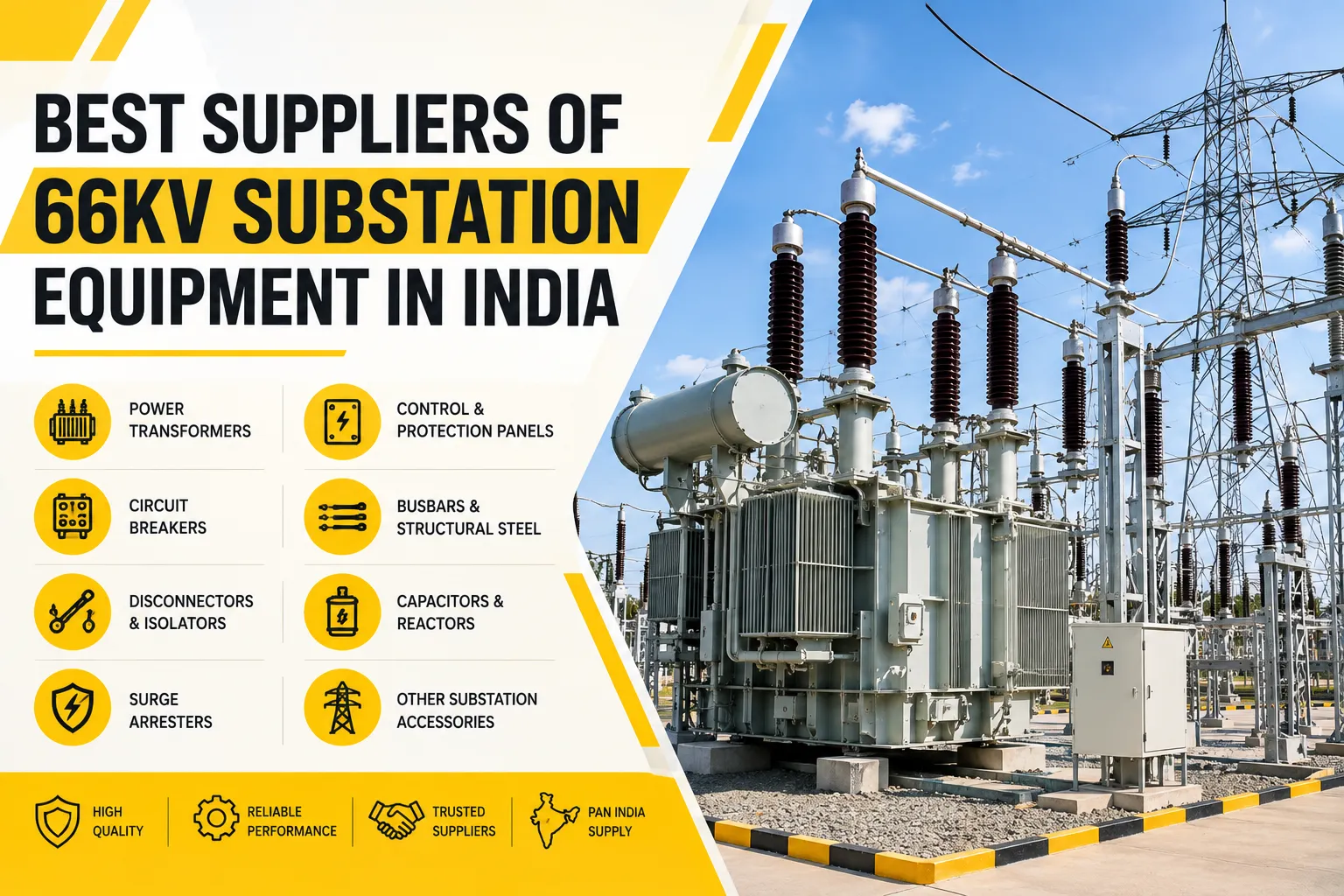
SPKN India manufactures and supplies a comprehensive range of isolator spare parts for isolators used in substations ranging from 11kV to 400kV. Our product range covers contact blades, fixed and moving contact assemblies, terminal connectors, insulator stacks, operating mechanism components, and earthing switch parts.
Every component we supply is manufactured to relevant IS and IEC standards and backed by material test certificates and dimensional inspection reports. We maintain ready stock of fast-moving spare parts to ensure that your maintenance team never faces a long wait when a critical component needs replacement.
Our team understands the specific requirements of Indian utilities, state DISCOMs, EPC contractors, and industrial plant maintenance departments. We do not just supply parts. We help you identify the right specification for your isolator type, confirm compatibility, and ensure that what reaches your site works correctly the first time.
We have supplied isolator spare parts to substation projects across multiple states in India, including projects in coastal zones requiring enhanced corrosion protection and industrial sites with high pollution levels demanding premium insulator specifications.
You can also read about our complete range of substation hardware, earthing equipment, and overhead line accessories to consolidate your maintenance procurement from a single reliable source.
Conclusion
Isolator spare parts are not glamorous. They do not feature in project presentations or equipment specifications the way transformers and circuit breakers do. But they are what keeps your isolators functioning safely, year after year, operation after operation.
The consequences of neglecting isolator spare parts are real. Unplanned outages, unsafe maintenance conditions, regulatory penalties, and equipment damage that could have been avoided with a small investment in the right components at the right time.
If you are reviewing your substation maintenance inventory or procuring spare parts for a new project, SPKN India is ready to support you with the right products, the right documentation, and the right technical guidance.
Get in touch with our team today and let us help you build a spare parts inventory that keeps your substations running without interruption.
Frequently Asked Questions
What are the most commonly replaced isolator spare parts in Indian substations?
Contact blades and contact fingers are the most frequently replaced components due to mechanical wear and oxidation over time. Terminal connectors and spring hardware are also replaced regularly during scheduled maintenance.
How do I know which isolator spare parts are compatible with my equipment?
You need to confirm the isolator manufacturer, model number, voltage rating, current rating, and year of manufacture. A reliable supplier like SPKN India can help cross-reference this information to confirm compatibility before supply.
What is the shelf life of isolator spare parts in storage?
Metal components like contact blades and fasteners have an indefinite shelf life if stored in a dry, clean environment. Polymer insulators and rubber gaskets have a limited shelf life and should be used within the manufacturer's recommended storage period.
Should I buy OEM spare parts or can I use alternatives?
OEM parts guarantee dimensional and material compatibility. However, quality alternative manufacturers who can confirm full compliance with the original specification and provide supporting test certificates are acceptable for most components. Always avoid unverified or uncertified parts regardless of price.
How often should isolator spare parts be inspected and replaced?
This depends on the operating environment and the number of operations per year. As a general guideline, contact surfaces should be inspected annually, insulators should be cleaned and inspected at least once a year, and bearings and pivot points should be lubricated every six months in normal environments and more frequently in coastal or high-pollution sites.
Can SPKN India supply spare parts for isolators made by other manufacturers?
Yes. SPKN India supplies compatible spare parts for isolators from a wide range of manufacturers used in Indian substations. Our team will verify compatibility against your isolator specifications before confirming supply.
What certifications should I ask for when buying insulator stacks as spare parts?
Ask for type test certificates as per IS 731 for porcelain insulators or IS 13573 for composite polymer insulators. These should confirm electrical withstand values, mechanical failing load, and temperature cycle performance.