It starts with a sound most substation engineers never forget.
A sharp crack. A flash of blue-white light. Then silence, followed immediately by alarms going off across the control room.
A 66 kV Substation Isolator has just failed.
In that single moment, what was a routine switching operation or a quietly ageing piece of equipment becomes the cause of a cascading series of events that can shut down entire feeders, trip transformers, black out industrial plants, and put maintenance crews in dangerous situations.
Isolator failures at 66 kV are not common. But when they happen, the consequences are serious, expensive, and sometimes irreversible.
This article walks you through exactly what happens when a 66 kV Substation Isolator fails, why it happens, what the real-world impact looks like, and most importantly, how to prevent it from happening in the first place.
First, Let Us Understand What a 66 kV Substation Isolator Actually Does
Before we talk about failure, it helps to understand what this equipment is responsible for.
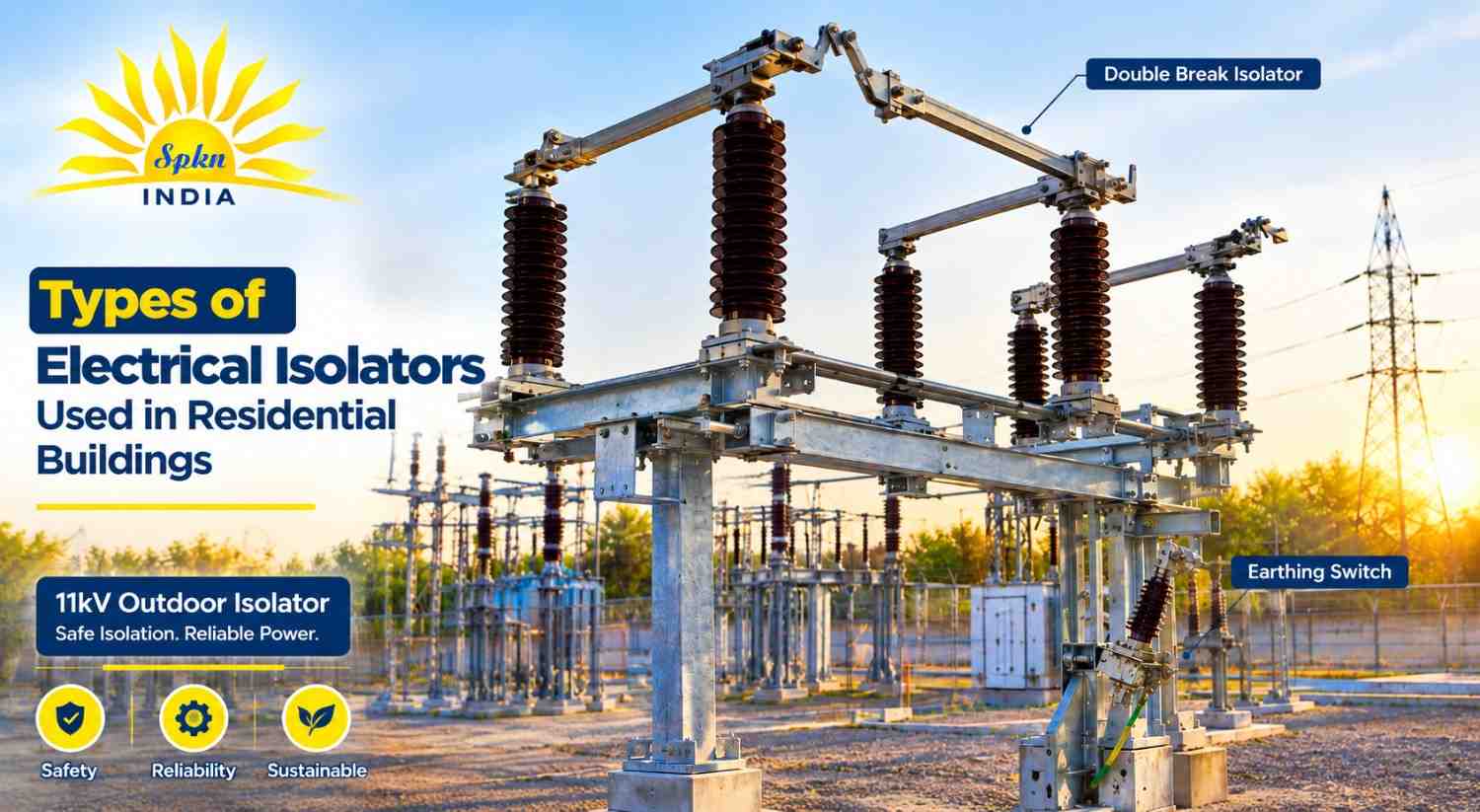
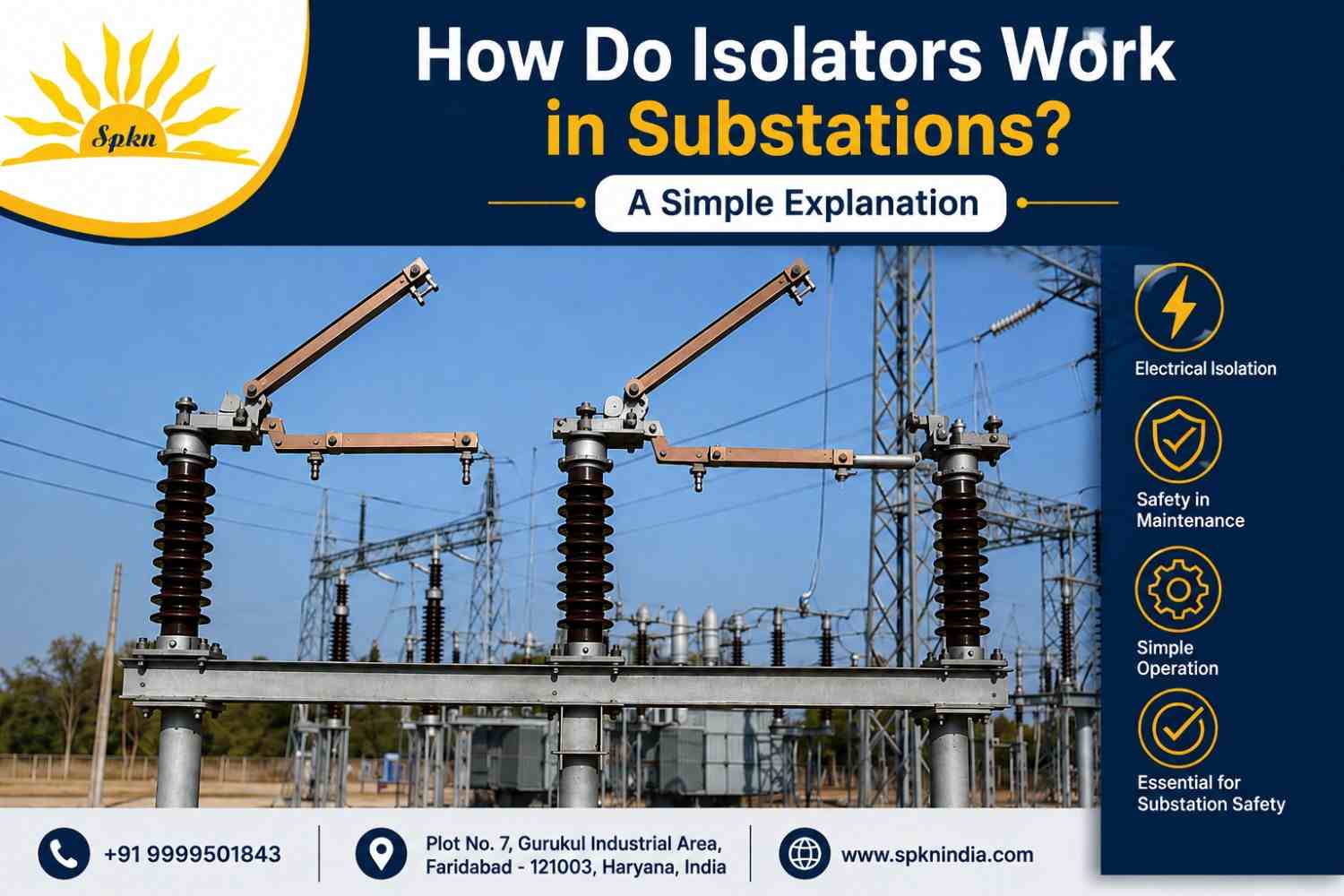
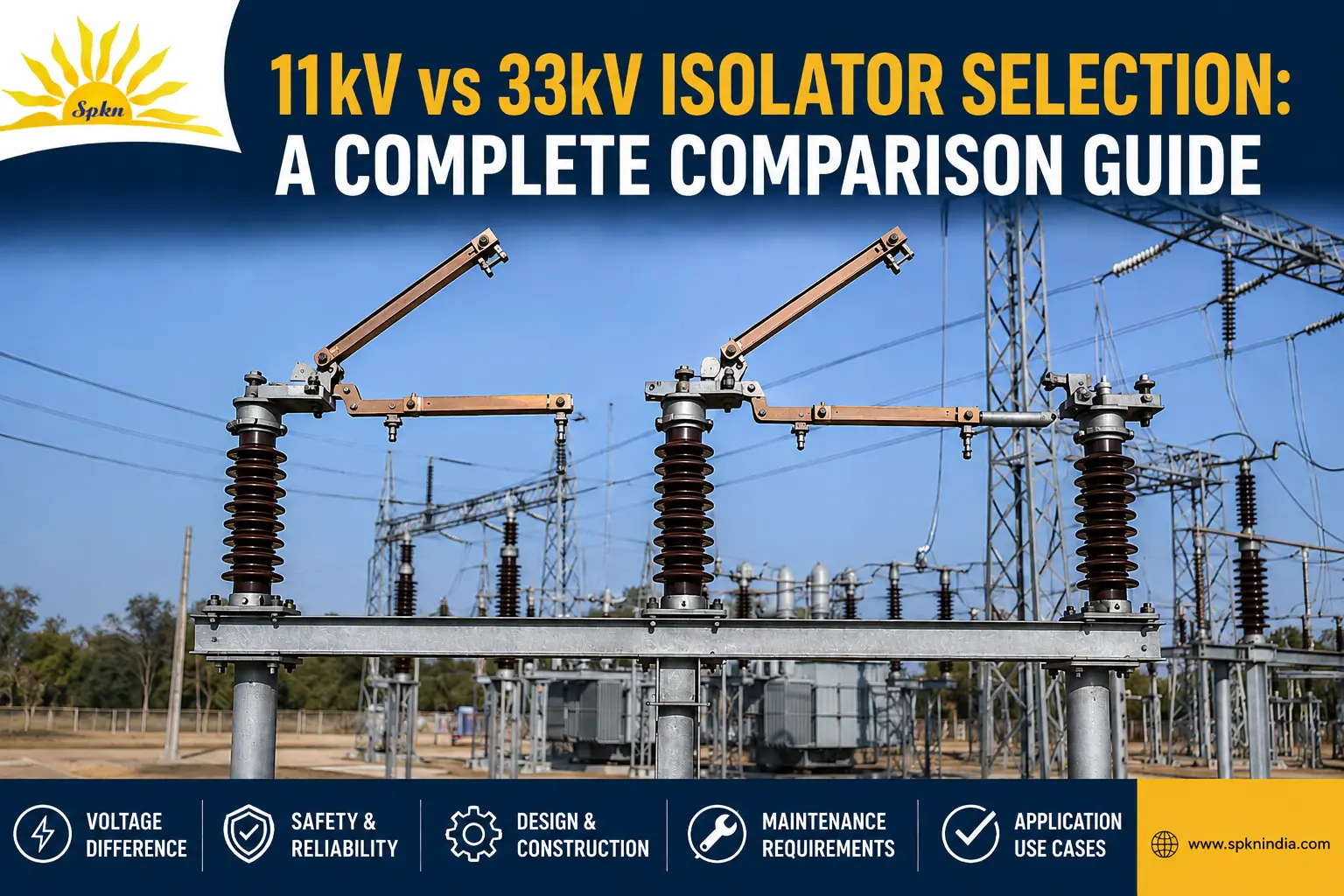
A 66 kV Substation Isolator is a high voltage disconnector used to create a visible, physical open gap in a circuit after the circuit breaker has de-energised the line. It does not interrupt load current. Its job is to confirm and maintain isolation so that engineers and technicians can work safely on downstream equipment.
At 66 kV, the energy levels involved are enormous. The isolator must maintain contact integrity under continuous load current, withstand lightning impulse voltages, survive environmental stresses like monsoon rain, coastal salt fog, and industrial pollution, and operate reliably when called upon after months or years of standing in the open switchyard.
When any one of these demands is not met, failure is the result.
The 7 Most Common Causes of 66 kV Substation Isolator Failure
Understanding why isolators fail is the first step toward preventing failures. Here are the most frequent root causes seen in Indian substations.
1. Contact Degradation and Overheating Over time, the silver or tin plating on isolator contacts wears away. Bare metal contacts oxidise, increasing contact resistance. Higher resistance means more heat during load current flow. Eventually the contacts overheat, weld together, or burn out completely.
Thermal imaging during routine inspections often catches this early. Without it, the damage progresses silently until failure.
2. Pollution and Contamination on Insulators India's diverse industrial landscape means many 66 kV substations operate in heavily polluted environments. Cement dust, fly ash, salt from coastal air, and chemical fumes deposit on insulator surfaces over time.
This contamination reduces the insulator's surface resistance. Under wet conditions like morning dew or light rain, the contaminated surface becomes conductive enough to trigger a flashover, creating a short circuit path through what should be solid insulation.
3. Loose or Corroded Connections Terminal connections and contact assemblies that are not properly torqued or that have corroded due to moisture ingress develop high resistance joints. These hot joints can cause localised melting, conductor damage, and in severe cases, complete mechanical failure of the contact assembly.
4. Mechanical Wear in the Operating Mechanism The operating mechanism of a 66 kV isolator goes through hundreds of open and close cycles over its service life. Without periodic lubrication and inspection, pivot pins wear, linkages develop play, and springs lose tension.
A worn mechanism may fail to fully close the contacts, leaving a high resistance partial contact that overheats. Or it may fail to fully open, leaving the circuit dangerously energised when the operator believes it is isolated.
5. Lightning and Switching Overvoltages A direct lightning strike near the substation or a switching surge on the transmission line can subject the 66 kV Substation Isolator to voltage levels far beyond its rated withstand capacity. Without adequate surge protection, the insulator can crack or shatter and the contact assembly can be destroyed in milliseconds.
6. Incorrect Operation Under Load This is a human error cause that should never happen but does. Operating an isolator while load current is still flowing creates a violent arc across the opening contacts. At 66 kV, this arc is powerful enough to vaporise contact material, destroy insulators, and in some cases cause an explosion.
Interlocking systems between the circuit breaker and isolator are specifically designed to prevent this. When interlocks are bypassed or fail, the consequences are severe.
7. End of Service Life Without Replacement Many isolators in Indian substations have been in service for 30 to 40 years, well beyond their designed service life. Aged insulators develop micro-cracks invisible to the naked eye. Aged mechanisms become stiff and unreliable. Aged contacts have lost their plating and their spring pressure. These are isolators waiting to fail.
What Actually Happens at the Moment of Failure
The sequence of events following a 66 kV Substation Isolator failure depends on the failure mode, but here is what typically unfolds.
Flashover Failure A flashover on the insulator creates a sudden low impedance path between the high voltage conductor and earth. This immediately draws enormous fault current from the system. The protection relays detect the fault within milliseconds and trip the associated circuit breaker. The substation section fed through that isolator goes dead instantly.
If the protection operates correctly, the fault is cleared quickly. If there is any delay, the fault current can damage the busbar, the transformer, and connected equipment far beyond the isolator itself.
Contact Failure Under Load A contact that has been deteriorating for months may reach the point of complete failure during a peak load period. The contact burns through, creating an arc inside the switchyard. This arc can spread to adjacent phases, causing a three-phase fault and tripping the entire busbar section.
In this scenario, multiple feeders and potentially the entire 66 kV bus goes out of service simultaneously.
Mechanism Failure During Operation If the operating mechanism jams midway through an opening operation, the isolator blades can remain in a partially open position. At this point the circuit is neither properly closed nor properly open. The partial air gap may not be sufficient to withstand the system voltage, leading to a re-strike across the gap.
This is one of the most dangerous failure modes because the operator may believe the isolator is open and the circuit is safe, when it is not.
The Real-World Consequences: What Does a Failure Actually Cost?
The impact of a 66 kV Substation Isolator failure goes far beyond the cost of replacing the isolator itself.
Unplanned Power Outages Industrial consumers fed from the affected substation lose supply without warning. For continuous process industries like steel plants, paper mills, chemical factories, and data centres, an unplanned outage causes production losses that can run into lakhs of rupees per hour.
Equipment Damage A fault triggered by isolator failure can cause collateral damage to transformers, busbars, current transformers, and cable terminations. Transformer repair or replacement alone can cost crores of rupees and take months.
Safety Risk to Personnel If a failure occurs during a switching operation with crew present in the switchyard, the arc flash and blast energy released at 66 kV poses a life-threatening risk. Arc flash incidents at high voltage are among the most serious workplace accidents in the power industry.
Regulatory and Compliance Consequences For licensed power utilities in India, unplanned outages trigger regulatory scrutiny from the State Electricity Regulatory Commission. Repeated outages due to equipment failures can attract penalties and compliance notices.
Reputation and Commercial Impact For industrial facilities supplying continuous processes or services, power outages affect customer commitments, contractual obligations, and commercial reputation.
How to Prevent 66 kV Substation Isolator Failure: A Practical Checklist
Prevention is always cheaper than failure. Here is what a robust maintenance and procurement strategy looks like.
During Procurement:
- Specify standards compliance with IS 9921 and IEC 62271-102
- Insist on type test certificates from accredited laboratories
- Select the correct pollution class insulator for the site environment
- Specify silver-plated contacts for long-term reliability
- Confirm hot-dip galvanised structures for outdoor Indian conditions
- Always include an integrated earthing switch for maintenance safety
During Installation:
- Follow manufacturer torque specifications for all terminal connections
- Verify correct contact alignment and contact pressure after installation
- Test operating mechanism through full stroke before energisation
- Confirm interlock integrity between circuit breaker and isolator
- Carry out insulation resistance and contact resistance tests before commissioning
During Operation and Maintenance:
- Schedule annual visual inspections of insulators and contacts
- Use thermal imaging cameras to detect hot contacts under load
- Clean insulators in high pollution zones at least twice a year
- Lubricate operating mechanisms as per manufacturer schedule
- Replace isolators that have exceeded their design service life
- Never bypass interlocks under any circumstances
Why SPKN India Is the Right Partner for Your 66 kV Substation Isolator Needs
When a critical component like a 66 kV Substation Isolator fails, the questions always come back to the same starting point. Was the equipment specified correctly? Was it manufactured to the right standards? Was the right supplier chosen?
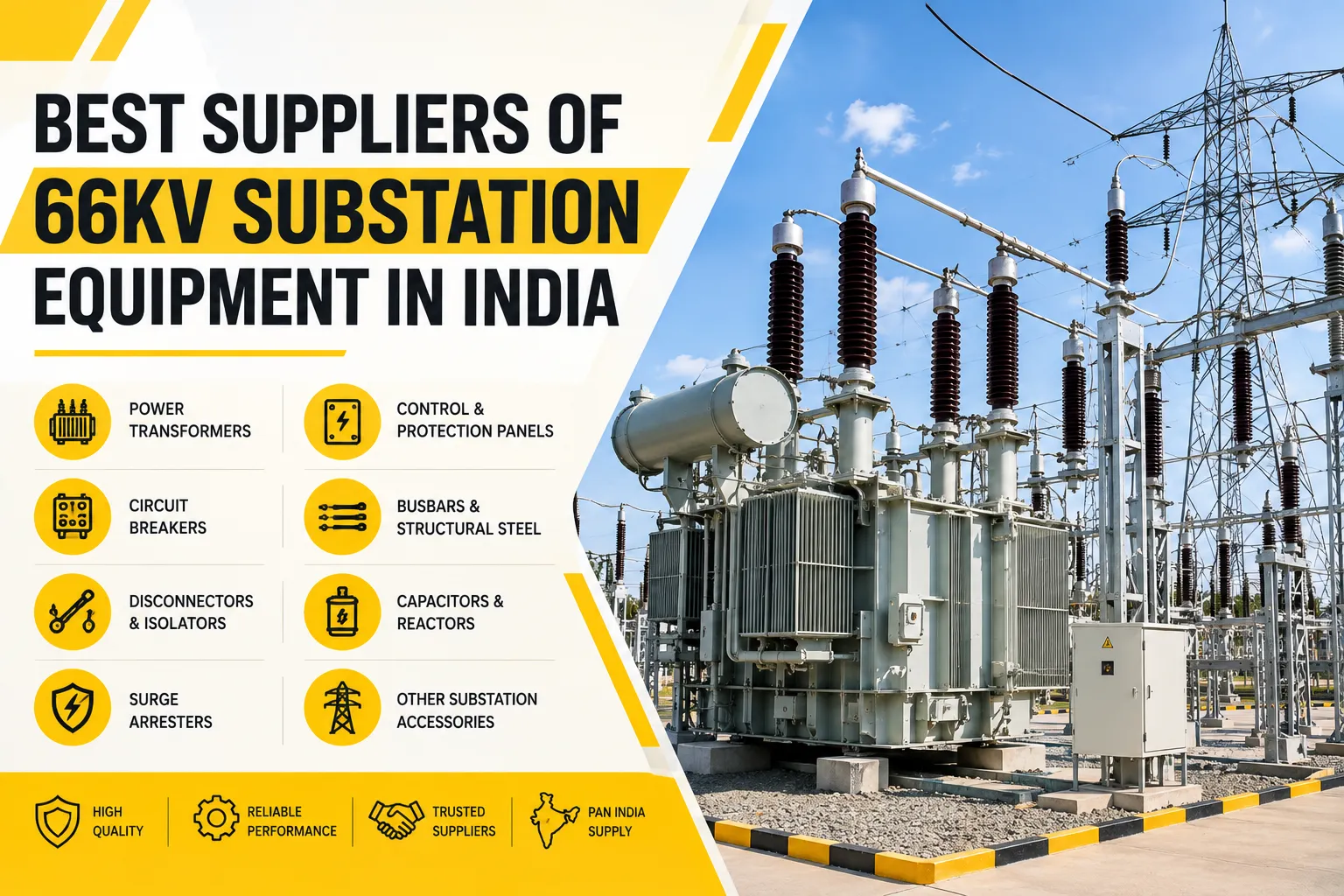
SPKN India is a trusted manufacturer and supplier of high voltage substation equipment including 66 kV Substation Isolators, with a strong presence across power utilities, EPC contractors, renewable energy projects, and industrial substations throughout India.
Here is what SPKN India brings to your project:
- Standards-Compliant Manufacturing: Every 66 kV isolator from SPKN India is built to IS 9921 and IEC 62271-102 with full type test documentation available.
- Environment-Specific Configurations: SPKN India offers isolators with pollution class III and IV insulators for coastal, industrial, and high-humidity sites across India where standard insulators fall short.
- Silver-Plated Contact Assemblies: All contact assemblies use high-grade silver plating to ensure long-term low contact resistance and resistance to oxidation under Indian field conditions.
- Motor-Operated Variants: For substations requiring remote or SCADA-controlled switching, SPKN India supplies motor-operated 66 kV isolators with position indication and control room integration.
- Integrated Earthing Switches: Safety-critical earthing switch assemblies are available as standard or optional additions depending on project requirements.
- Technical and After-Sales Support: SPKN India's engineering team provides specification assistance, installation guidance, and after-sales technical support to ensure trouble-free operation throughout the equipment's service life.
You can also explore SPKN India's complete substation switchgear range including 33 kV and 132 kV isolators, vacuum circuit breakers, and distribution transformers for your complete project sourcing needs.
Conclusion
A 66 kV Substation Isolator failure is never just a component failure. It is a chain reaction that triggers outages, damages equipment, creates safety hazards, and generates costs that dwarf the price of the isolator many times over.
The good news is that most failures are preventable. With the right equipment specification, quality manufacturing, proper installation, and a disciplined maintenance programme, a 66 kV isolator can deliver safe and reliable service for decades.
Start with a manufacturer you can trust. Specify correctly. Maintain diligently.
Contact SPKN India today to discuss your 66 kV Substation Isolator requirements and get expert guidance tailored to your project and site conditions.
Frequently Asked Questions
Q1. Can a 66 kV Substation Isolator be repaired after a flashover failure? In most cases of serious flashover, the insulator stack needs full replacement. Contact assemblies may be salvageable depending on the severity. However, for safety-critical equipment at 66 kV, a full replacement with a new certified unit is generally the recommended approach after a major failure.
Q2. How often should a 66 kV Substation Isolator be inspected? A minimum of one detailed annual inspection is recommended, including visual checks, thermal imaging under load, insulation resistance testing, and contact resistance measurement. In high pollution zones, more frequent insulator cleaning and inspection intervals are advisable.
Q3. What is contact resistance and why does it matter for a 66 kV isolator? Contact resistance is the electrical resistance at the point where the isolator blades meet the fixed contacts. Higher contact resistance means more heat generated during load current flow. Excessive contact resistance is one of the leading causes of isolator failure and can be detected during routine maintenance testing.
Q4. Is it safe to operate a 66 kV Substation Isolator manually during a fault condition? Absolutely not. An isolator must never be operated under fault or load conditions. During a fault, the circuit breaker must first clear the fault and de-energise the circuit before any isolator operation is attempted. Operating an isolator into a fault creates an extremely dangerous arc flash situation.
Q5. How does pollution affect a 66 kV Substation Isolator insulator? Pollution deposits on the insulator surface reduce its surface resistance. When moisture is present, these deposits become partially conductive, creating leakage current paths along the insulator surface. If leakage current builds up sufficiently, it triggers a flashover, which is a short circuit path along the insulator surface from the high voltage conductor to earth.
Q6. What is the difference between a routine failure and a catastrophic failure in a 66 kV isolator? A routine failure might be a worn mechanism that prevents smooth operation or a contact that shows early signs of overheating. These are caught during maintenance and corrected before they escalate. A catastrophic failure is a sudden insulator flashover or contact burnout that causes immediate loss of supply, equipment damage, and potential safety incidents. Routine maintenance exists specifically to catch problems before they become catastrophic.
Q7. Why should I choose SPKN India over imported isolators for my 66 kV substation project? SPKN India manufactures isolators specifically designed for Indian field conditions including monsoon weather, high pollution zones, and wide temperature variations. Local manufacturing means faster delivery, easier access to spares, and direct technical support without the lead times and logistics challenges associated with imported equipment.