Every year, somewhere between June and September, substation maintenance teams across India brace themselves. Not for scheduled outages or equipment upgrades. For the monsoon.
The rain arrives, humidity shoots up, and within weeks, the problems start surfacing. Overheating at bus bar joints. Tripping on feeder lines. Thermal scans showing hot spots at conductor terminations. In most cases, when engineers trace the fault back to its source, they find the same culprit sitting right there in plain sight.
Substation connectors that were never built to handle what the Indian monsoon actually throws at them.
This is not a dramatic overstatement. Substation connectors are the most moisture-exposed current-carrying components in any outdoor switchyard. They sit at junctions between conductors, bus bars, equipment terminals, and overhead lines. They are exposed to rain, wind-driven moisture, temperature cycling, and in coastal or industrial areas, corrosive airborne contaminants as well.
Most of the year, a mediocre connector gets away with it. But the monsoon does not forgive mediocrity. And that is exactly why it is the real test.
What Substation Connectors Actually Do and Why Their Location Makes Them Vulnerable
Before getting into what goes wrong, it helps to understand what substation connectors are responsible for.
A substation connector is a current-carrying hardware fitting used to join two or more conductors, connect a conductor to equipment terminals, or create T-junctions and dead-end terminations in overhead and bus bar systems. They are found across every voltage level from 11kV distribution substations right up to 400kV and 765kV transmission switchyards.
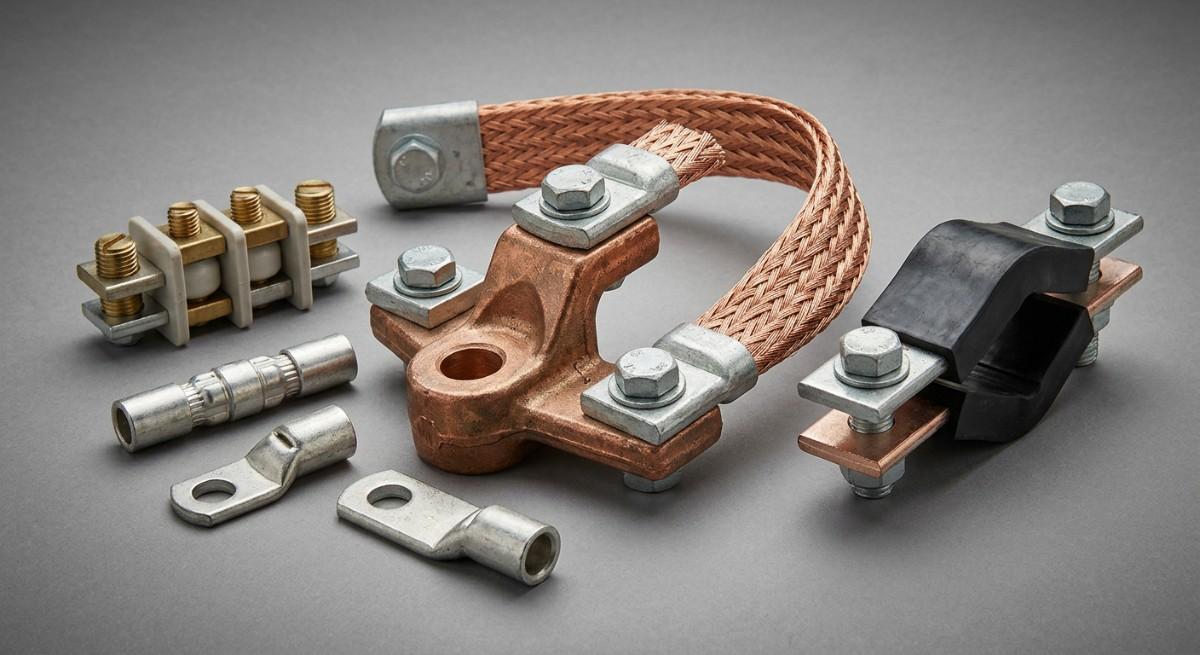
The most common types used in Indian substations include parallel groove connectors, compression connectors, bimetallic connectors, T-connectors, and equipment terminal clamps. Each type serves a specific purpose depending on conductor size, material, and the nature of the connection.
What makes them uniquely vulnerable is their location. Unlike equipment housed in panels or enclosures, substation connectors live permanently outdoors. They are clamped directly onto conductors or bus tubes, exposed to the full force of weather. Rain sits on them. Humidity penetrates into micro-gaps between the connector body and conductor surface. Temperature changes cause the metal to expand and contract repeatedly, slowly loosening the mechanical grip over time.
Under dry conditions, a connector with slightly elevated contact resistance might not show any visible symptoms. Add monsoon moisture into the equation and the situation changes fast.
The Science Behind Why Moisture Destroys Connector Performance
To understand why the monsoon is so damaging, you need to understand what happens at a connector joint at the microscopic level.
Every connector joint has a contact interface where the connector body meets the conductor surface. Even in a properly installed connector, this interface has microscopic asperities and air gaps. Under normal dry conditions, these gaps are benign.
When moisture enters, it acts as an electrolyte. If the connector is bimetallic, meaning it is joining copper and aluminium conductors, this creates a galvanic cell. Electrochemical corrosion begins at the contact interface. The aluminium side oxidises, forming aluminium oxide, which is an excellent electrical insulator. Contact resistance climbs. The joint starts generating heat during load.
The heat drives off some of the moisture, temporarily reducing the corrosion rate. But when the next rain comes, the cycle starts again. Each cycle leaves behind more oxide, more corrosion product, and a slightly worse contact interface than before.
This is why thermal imaging surveys carried out after the first monsoon rains so often reveal hot spots at connector locations that passed inspection the previous dry season.
Five Ways the Monsoon Specifically Attacks Substation Connectors
Understanding the specific failure mechanisms helps maintenance engineers and procurement teams make better decisions about what to specify and what to inspect.
Galvanic Corrosion at Bimetallic Joints
India's transmission and distribution network uses a mix of ACSR conductors with aluminium outer strands connecting to copper equipment terminals. This bimetallic interface is a natural site for galvanic corrosion whenever moisture is present. A connector without proper bimetallic transition material or without adequate joint compound will begin corroding the moment the monsoon arrives.
Crevice Corrosion Under Connector Bodies
Water that enters the narrow gap between the connector body and the conductor surface cannot easily escape. It remains trapped in this crevice, creating a locally aggressive corrosive environment. Over one or two monsoon seasons, this crevice corrosion can eat into the conductor strands themselves, reducing the effective cross-section of the conductor at the joint.
Oxide Layer Buildup on Contact Surfaces
Aluminium oxidises almost instantly when exposed to air and moisture. If connector installation did not include proper oxide removal and joint compound application, the oxide layer at the contact interface keeps building up through the monsoon. Resistance at the joint increases progressively.
Mechanical Loosening from Thermal Cycling
Monsoon weather means daily temperature swings. Equipment heats up under load during the day and cools at night with falling temperatures and rain. This repeated thermal cycling causes the connector and conductor to expand and contract at different rates, gradually relaxing the bolt torque at bolted connectors. A connector that was properly torqued at installation can develop a loose joint within a few seasons if the wrong bolt grade or washer specification was used.
Contamination-Assisted Flashover at Insulated Connectors
In distribution networks where insulated connectors are used near residential or semi-urban areas, the combination of monsoon moisture and airborne contamination from dust, pollution, and agricultural activity creates a conductive film on insulator surfaces. This significantly reduces the flashover voltage and increases the risk of phase-to-earth faults.
What Good Substation Connectors Do Differently
Not all connectors fail in the monsoon. The ones that do not fail share specific design and material characteristics that make them genuinely weather-resistant rather than just weather-tolerant.
Tinned or Silver-Plated Contact Surfaces
A tin or silver plating on the contact surface of the connector significantly reduces oxidation and provides a noble surface that resists galvanic attack. Tinned copper connectors maintain low contact resistance even after multiple monsoon seasons in humid environments.
Pre-Filled Joint Compound
Quality connectors for outdoor use come pre-filled with an oxide-inhibiting joint compound that displaces moisture and prevents oxygen from reaching the contact interface. This compound remains in place after installation, providing long-term protection against the mechanism that drives contact resistance increase.
Correct Bimetallic Construction
For copper to aluminium connections, a properly designed bimetallic connector uses a friction-welded or explosion-welded transition between the two metals, creating a fully sealed metallic bond that moisture cannot penetrate. This eliminates the galvanic cell entirely rather than just trying to slow it down.
High-Strength Stainless Steel or Hot-Dip Galvanised Hardware
The bolts, nuts, and spring washers used in bolted connectors must resist corrosion independently. Stainless steel A2 or A4 grade hardware, or hot-dip galvanised fasteners as a minimum, maintain bolt tension through monsoon conditions and prevent the loosening that leads to high-resistance joints.
Compression Rather Than Bolted Construction for Critical Joints
Compression connectors, where the connector body is hydraulically crimped onto the conductor, create a gas-tight mechanical bond that moisture cannot penetrate. For critical terminations in high-voltage substations, compression connectors are significantly more reliable in monsoon conditions than bolted alternatives.
What to Check on Your Substation Connectors Before the Monsoon Arrives
For maintenance engineers preparing for the monsoon season, here is a practical pre-monsoon checklist focused specifically on substation connectors:
Carry out a thermal imaging survey of all connector locations under load. Any joint showing a temperature differential of more than 10 degrees Celsius above the ambient conductor temperature needs immediate investigation.
Visually inspect all bolted connectors for signs of white or green corrosion product around the joint, which indicates active galvanic corrosion. Check for discolouration or burn marks that indicate previous thermal events.
Verify bolt torque on critical bolted connections. Compare against the manufacturer's specified torque values. Replace any hardware that shows rust or corrosion.
Check the condition of joint compound at connector interfaces. If the compound has dried out, cracked, or washed away, the joint needs to be disassembled, cleaned, and reinstalled with fresh compound.
Inspect bimetallic connectors for integrity of the transition zone. Any mechanical damage or corrosion at the bimetallic interface is a reason for replacement before the monsoon season begins.
The Procurement Decision That Most Teams Get Wrong
Here is where procurement managers and engineers need to have an honest conversation.
Substation connectors are typically one of the lowest unit-cost items on a project bill of materials. This makes them an attractive target for cost reduction during procurement. A cheaper connector saves a few hundred or a few thousand rupees per unit. Across a large project with hundreds of connector points, the saving looks meaningful on paper.
But the calculation changes entirely when you factor in field performance over a monsoon season or two.
A low-cost connector without proper tinning, without joint compound, with standard mild steel hardware, and without verified bimetallic construction will begin failing within the first or second monsoon season. Each failed joint requires a maintenance visit, a thermal survey, equipment de-energisation, connector replacement, and retesting. In a large substation, addressing twenty to thirty failing connectors post-monsoon costs far more in labour, downtime, and risk than the original saving on connector procurement.
Specify connectors properly from the beginning. It is one of the few procurement decisions where the upfront investment has a completely predictable and quantifiable return.
Why Power Engineers and EPC Contractors Rely on SPKN India for Substation Connectors
SPKN India manufactures and supplies a complete range of substation connectors designed specifically for Indian field conditions, including the demanding requirements of coastal zones, high-humidity regions, and industrial environments where the monsoon compounds existing contamination challenges.
Our connector range includes parallel groove connectors, compression connectors, bimetallic connectors, T-connectors, and equipment terminal clamps covering conductor sizes from small distribution conductors up to large ACSR and AAAC conductors used in EHV substations.
Every connector we supply is manufactured from high-conductivity copper or aluminium alloy with tinned or silver-plated contact surfaces as standard for outdoor applications. Our bimetallic connectors use verified transition technology to eliminate galvanic corrosion at copper to aluminium interfaces. All hardware is supplied in stainless steel or hot-dip galvanised specification.
We supply connectors that comply with relevant IS and IEC standards and provide test certificates and material documentation to support your project quality records.
Our experience across Indian substation projects means we understand the specific requirements of different environments. A connector specification that works well in Rajasthan needs to be evaluated differently for a coastal substation in Kerala or an industrial switchyard in Jharkhand. We help our customers specify the right product for their specific site conditions rather than offering a one-size-fits-all solution.
You can also read about our range of overhead line hardware, earthing materials, and substation structural components to complete your project procurement from a trusted single source.
Conclusion
The Indian monsoon is not just a weather event. For substation engineers and maintenance teams, it is an annual stress test that exposes every weak point in an outdoor electrical installation. And substation connectors, sitting at every critical current-carrying junction in the system, bear the brunt of that test year after year.
Specifying the right substation connectors is not complicated. It requires understanding the failure mechanisms, knowing what material and design features prevent those failures, carrying out honest pre-monsoon inspections, and working with a supplier who understands Indian field conditions.
SPKN India is ready to help you get that specification right before the next monsoon season arrives. Reach out to our technical team today for product recommendations, compliance documentation, and competitive pricing on substation connectors for your next project or maintenance requirement.
Frequently Asked Questions
Why do substation connectors fail more often during the monsoon than in dry seasons?
Monsoon conditions introduce persistent moisture, humidity, and temperature cycling that accelerate corrosion at connector joints, increase contact resistance, and loosen bolted connections through repeated thermal expansion and contraction. Connectors that are borderline acceptable in dry conditions fail visibly once monsoon stress is applied.
What is the best type of substation connector for high-humidity coastal locations in India?
For coastal locations, compression-type connectors with tinned or silver-plated contact surfaces and stainless steel hardware are the most reliable choice. Pre-filled joint compound and verified bimetallic construction for copper to aluminium interfaces are essential additional requirements.
How do I detect a failing substation connector before it causes a fault?
Thermal imaging under load is the most effective method. A failing connector will show elevated temperature at the joint location compared to the surrounding conductor. Regular thermographic surveys, ideally before and after the monsoon season, allow early identification of deteriorating joints.
What is a bimetallic connector and when is it needed?
A bimetallic connector is used when connecting aluminium conductors to copper equipment terminals or copper bus bars. It incorporates a friction-welded or explosion-welded copper to aluminium transition that creates a sealed metallic bond, preventing galvanic corrosion at the dissimilar metal interface.
Can I reuse substation connectors after removing them during maintenance?
Bolted connectors can sometimes be reused if they show no corrosion, the contact surfaces are clean and undamaged, and new hardware is used for reassembly. Compression connectors should never be reused once crimped. When in doubt, replacing with a new connector is always the safer and more cost-effective decision in the long run.
What IS or IEC standards apply to substation connectors?
Relevant standards include IS 5561 for electric power connectors, IS 617 for aluminium alloy ingots and castings used in connector manufacture, and IEC 61284 for overhead line fittings including connectors. For specific connector types, your supplier should be able to confirm which standards the product has been tested to.
How should substation connectors be installed to ensure maximum monsoon resistance?
Contact surfaces should be cleaned and abraded before assembly to remove oxide layers. Joint compound should be applied to all contact interfaces. Bolts should be torqued to the manufacturer's specified value using a calibrated torque wrench. For compression connectors, the correct die and hydraulic tool must be used to achieve the specified crimp dimensions. Proper installation is as important as product quality in determining long-term connector performance.