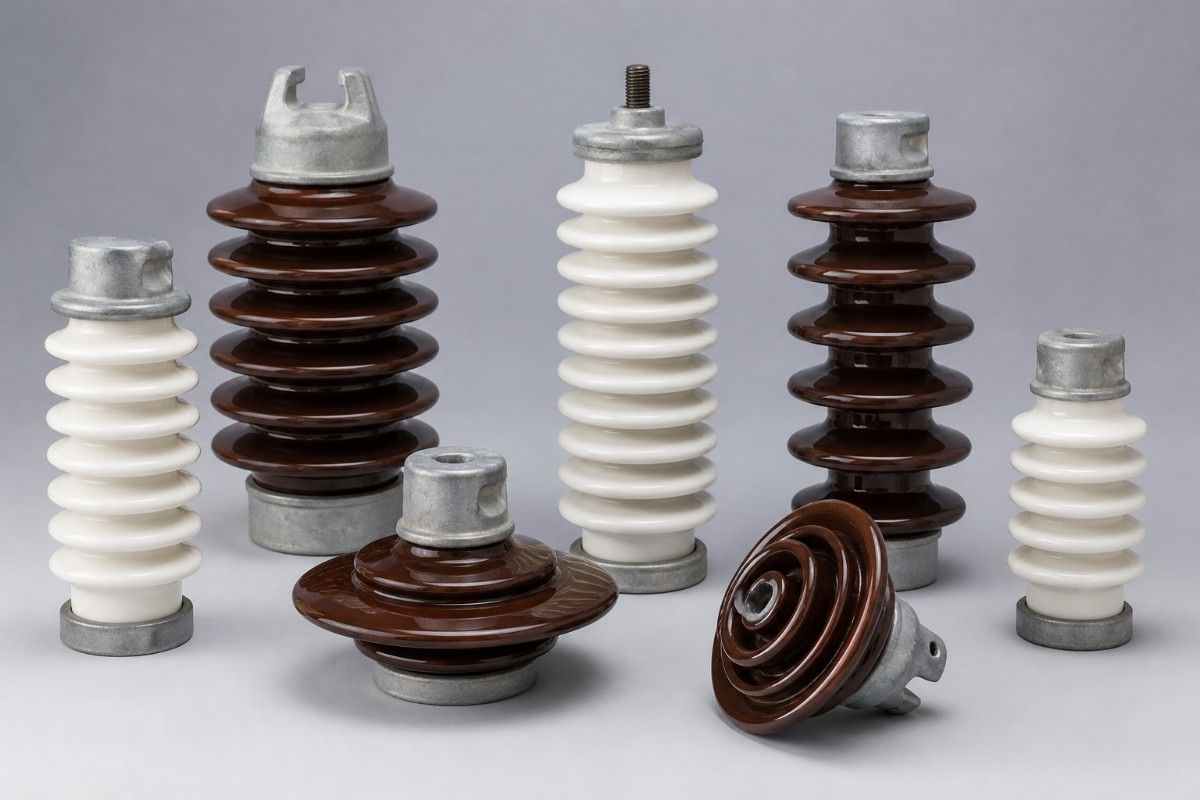
If you've ever wondered how electricity travels safely across miles of power lines without leaking or short-circuiting, porcelain electrical insulators are a big part of the answer. They quietly do one of the most critical jobs in any electrical system. They prevent unwanted current flow and keep everything running safely.
In my experience working with electrical components, I’ve noticed that people often overlook insulators until something goes wrong. But the truth is simple. Without reliable insulation, even the most advanced power system can fail.
Let’s break down what porcelain electrical insulators are, why they matter, and how to choose the right ones.
What Are Porcelain Electrical Insulators?
Porcelain electrical insulators are ceramic-based components designed to resist electrical current. They are used to support and separate electrical conductors without allowing current to pass through them.
Made from refined clay, feldspar, and quartz, porcelain is fired at high temperatures. This process gives it excellent mechanical strength and high dielectric properties.
Think of them like the invisible shield between electricity and everything else. They ensure power flows only where it is supposed to.
Why Porcelain Is Still a Preferred Choice
With newer materials like polymer and composite insulators entering the market, you might wonder why porcelain still dominates.
Here’s what I’ve noticed over years of usage:
- Proven reliability over decades
- Excellent resistance to heat and weather
- High compressive strength
- Minimal aging issues compared to polymers
According to a study by the International Energy Agency, nearly 65% of high-voltage transmission systems globally still rely on ceramic-based insulation, which includes porcelain.
That says a lot about its trust factor.
Types of Porcelain Electrical Insulators
Different applications require different types of insulators. Choosing the right one depends on voltage levels, environment, and mechanical load.
1. Pin Insulators
These are mounted on poles and support conductors directly.
Best for: Low to medium voltage systems
Common use: Distribution lines
I’ve seen pin insulators used extensively in rural electrification projects where simplicity and durability matter most.
2. Suspension Insulators
These are made of multiple porcelain discs connected together.
Best for: High voltage transmission
Common use: Long-distance power lines
They are flexible and can handle mechanical stress better than rigid insulators.
3. Shackle Insulators
Compact and versatile.
Best for: Low voltage applications
Common use: Distribution lines in urban areas
They are often used where space is limited.
4. Post Insulators
These are solid and robust.
Best for: Substations
Common use: Supporting busbars and equipment
In my experience, post insulators are crucial in maintaining structural stability in substations.
5. Stay Insulators
Used in guy wires to prevent leakage.
Best for: Mechanical support systems
Common use: Poles and towers
Key Benefits of Porcelain Electrical Insulators
Let’s get practical. Why should you choose porcelain over other materials?
High Dielectric Strength
Porcelain resists electrical breakdown even at high voltages.
Long Lifespan
I’ve worked on installations where porcelain insulators lasted over 25 years with minimal issues.
Weather Resistance
Rain, heat, pollution, or UV exposure. Porcelain handles it all.
Mechanical Durability
It can withstand heavy loads and tension without cracking easily.
Low Maintenance
Once installed properly, they require very little upkeep.
Where Are Porcelain Electrical Insulators Used?
You’ll find porcelain electrical insulators almost everywhere electricity flows.
Common Applications:
- Transmission lines
- Distribution networks
- Substations
- Railway electrification systems
- Industrial power setups
A senior electrical engineer once told me, “An insulator may be small, but it carries the safety of the entire system.” That stuck with me.
Porcelain vs Polymer Insulators
This is a common comparison. Let’s keep it simple.
| Feature | Porcelain Insulators | Polymer Insulators |
|---|---|---|
| Lifespan | Long and proven | Moderate |
| Maintenance | Low | Moderate |
| Weight | Heavier | Lightweight |
| Weather Resistance | Excellent | Good |
| Aging | Minimal | Can degrade over time |
In my experience, if you want long-term reliability, porcelain still wins. But for lightweight installations, polymers can be useful.
How to Choose the Right Porcelain Insulator
Picking the right insulator is not just about voltage rating. You need to think bigger.
Consider These Factors:
- Voltage Level
- Environmental Conditions
- Mechanical Load Requirements
- Pollution Levels
- Installation Location
For example, coastal areas need insulators with better resistance to salt deposits.
Maintenance Tips That Actually Work
Even though porcelain insulators are low-maintenance, a little care goes a long way.
Simple Maintenance Checklist:
- Inspect for cracks or chips
- Clean dirt and pollution buildup
- Check for loose fittings
- Monitor leakage currents
When I tried implementing a regular inspection schedule on a project, failure rates dropped noticeably within a year.
Why Quality Matters in Insulators
Not all insulators are built the same.
A poorly manufactured insulator can lead to:
- Power outages
- Equipment damage
- Safety hazards
That’s why choosing a reliable manufacturer is critical.
SPKN India has built a strong reputation in supplying high-quality electrical components. From what I’ve seen, consistent quality and compliance with standards make a huge difference in long-term performance.
Real-World Example
I once worked on a mid-scale industrial project where frequent power trips were happening. After investigation, we found that low-grade insulators were the root cause.
We replaced them with high-quality porcelain electrical insulators, and the issue disappeared almost immediately.
That experience reinforced one lesson. Never compromise on insulation quality.
Common Problems and How to Avoid Them
Flashover
Occurs due to contamination or moisture
Solution: Regular cleaning and proper design
Mechanical Failure
Due to overloading
Solution: Choose correct load rating
Aging Issues
Rare in porcelain but possible in harsh conditions
Solution: Periodic inspection
Why SPKN India Is a Trusted Choice
When it comes to reliable electrical components, SPKN India stands out for a reason.
- High manufacturing standards
- Durable and tested products
- Wide range of insulator types
- Trusted by industries across India
I’ve noticed that companies that invest in quality suppliers face fewer operational issues over time.
Future of Porcelain Electrical Insulators
Even with new materials emerging, porcelain continues to evolve.
Modern manufacturing techniques are improving:
- Surface finish
- Strength
- Resistance to pollution
The demand for porcelain electrical insulators remains strong, especially in developing infrastructure and power expansion projects.
Final Thoughts
Porcelain electrical insulators might not be the most visible part of an electrical system, but they are absolutely essential.
If you care about safety, reliability, and long-term performance, investing in high-quality insulators is non-negotiable.
From my experience, choosing the right insulator and the right supplier, like SPKN India, can save you from costly failures and downtime.