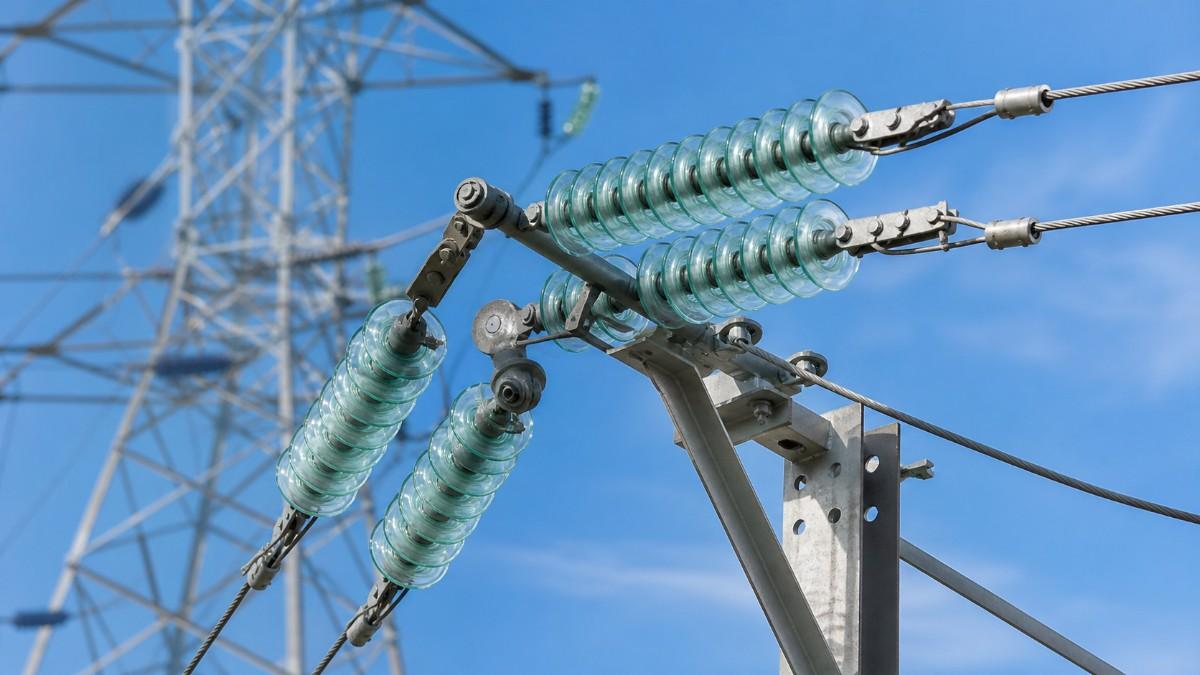
Electricity travels hundreds of kilometers before it reaches your home. But here’s the catch. If that current touches the tower or pole directly, everything fails instantly. That’s where transmission line insulators come in.
I’ve worked on projects where even a small insulator failure caused large-scale outages. It is surprising how something that looks so simple carries such a huge responsibility.
If you want to understand power transmission properly, this is a component you cannot ignore.
What Are Transmission Line Insulators?
Transmission line insulators are devices used to support electrical conductors while preventing current from flowing into the supporting structures like towers or poles.
They act as a barrier between live conductors and grounded structures.
Think of them as silent protectors. They hold the line in place while keeping electricity exactly where it should be.
Why Transmission Line Insulators Are Important
Without proper insulation, power transmission would not be possible.
In my experience, insulators play a critical role in maintaining both safety and efficiency.
What Happens Without Them?
- Electrical leakage
- Short circuits
- Equipment damage
- Power outages
According to industry data, a significant percentage of transmission faults are linked to insulation failures, especially in polluted environments.
Types of Transmission Line Insulators
Different transmission systems require different types of insulators.
1. Suspension Insulators
These consist of multiple discs connected in a string.
Best for: High voltage transmission lines
They are flexible and can handle heavy mechanical loads.
2. Pin Insulators
Mounted directly on poles.
Best for: Low to medium voltage lines
I’ve seen these commonly used in distribution networks rather than high-voltage transmission.
3. Strain Insulators
Designed to handle mechanical tension.
Best for: Dead-end lines and sharp turns
They ensure the conductor remains stable under stress.
4. Shackle Insulators
Compact and versatile.
Best for: Low voltage distribution systems
5. Composite (Polymer) Insulators
Made from modern materials like silicone rubber.
Best for: Polluted or coastal areas
In my experience, these perform better in harsh environments.
Materials Used in Transmission Line Insulators
The performance of insulators depends heavily on the material.
Common Materials:
- Porcelain
- Glass
- Polymer (Composite materials)
Each material has its own advantages.
Porcelain is known for durability. Glass offers transparency for easy inspection. Polymer provides lightweight and pollution resistance.
Key Functions of Transmission Line Insulators
Let’s keep it practical.
Main Functions:
- Support conductors mechanically
- Prevent leakage of current
- Maintain proper spacing between conductors and structures
- Ensure system safety and reliability
I’ve noticed that even minor defects in insulators can lead to major operational issues.
Advantages of High-Quality Transmission Line Insulators
Using reliable insulators makes a noticeable difference.
Major Benefits:
- Improved system reliability
- Reduced maintenance requirements
- Better resistance to environmental conditions
- Long service life
When I worked on upgrading a transmission line, switching to high-quality insulators significantly reduced faults.
Factors Affecting Insulator Performance
Not all insulators perform the same in every condition.
Key Influencing Factors:
- Voltage level
- Weather conditions
- Pollution levels
- Mechanical load
- Altitude and humidity
For example, coastal areas require insulators with better resistance to salt contamination.
Common Problems in Transmission Line Insulators
Even good insulators can face issues over time.
Typical Problems:
- Flashover due to contamination
- Cracking or mechanical damage
- Aging and material degradation
In my experience, contamination is one of the most common causes of failure.
Maintenance Tips That Actually Work
Regular maintenance ensures long-term performance.
Simple Checklist:
- Inspect for cracks or damage
- Clean pollution deposits
- Check fittings and connections
- Monitor leakage current
I’ve noticed that preventive maintenance reduces unexpected outages significantly.
How to Choose the Right Transmission Line Insulators
Selecting the right insulator requires careful consideration.
Important Factors:
- System voltage
- Environmental conditions
- Mechanical strength requirements
- Material type
- Installation location
Choosing the wrong insulator can lead to frequent failures.
Why Quality Matters
Not all insulators are created equal.
Low-quality insulators can result in:
- Frequent power interruptions
- Increased maintenance
- Safety risks
That is why selecting a trusted manufacturer is essential.
Why SPKN India Is a Trusted Name
When it comes to reliable transmission line insulators, SPKN India offers high-quality solutions designed for Indian conditions.
- Durable and tested products
- Suitable for various voltage levels
- Designed for long-term performance
From what I’ve seen, using products from SPKN India improves system stability and reduces failures.
Real-World Example
I once worked on a transmission project where insulators were failing frequently due to pollution buildup.
After replacing them with better-quality composite insulators, the fault rate dropped significantly.
That one change improved overall system performance.
Expert Insight
According to electrical industry experts, proper selection and maintenance of insulators can reduce transmission faults by up to 60%.
That shows how critical they are in power systems.
Future of Transmission Line Insulators
Technology is evolving rapidly.
Modern developments include:
- Improved polymer materials
- Better resistance to environmental stress
- Longer service life
The demand for advanced transmission line insulators will continue to grow with expanding power networks.
Final Thoughts
Transmission line insulators may not get much attention, but they are essential for safe and efficient power delivery.
From my experience, investing in high-quality insulators is one of the smartest decisions you can make in any power project.
They keep electricity flowing safely, and that makes all the difference.