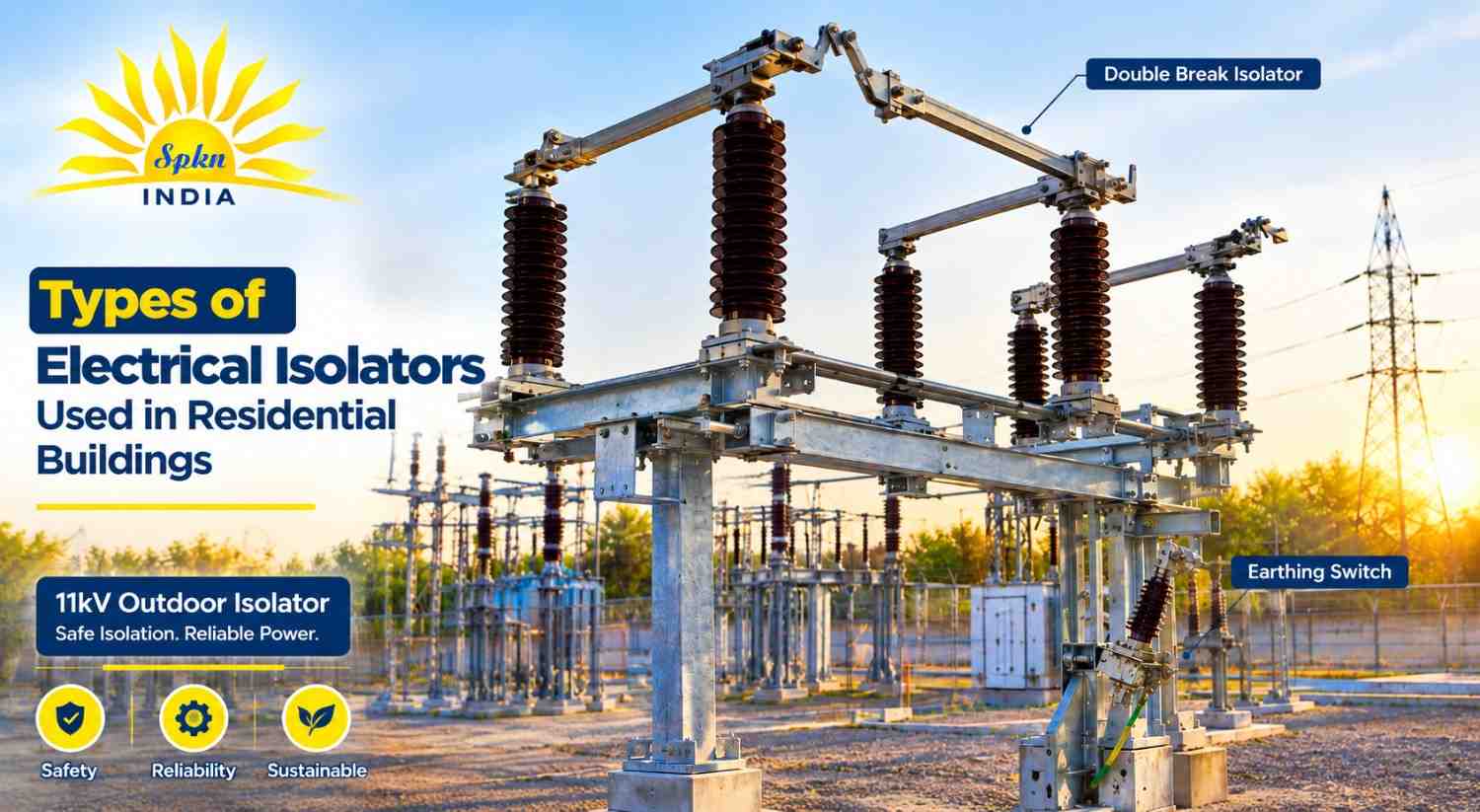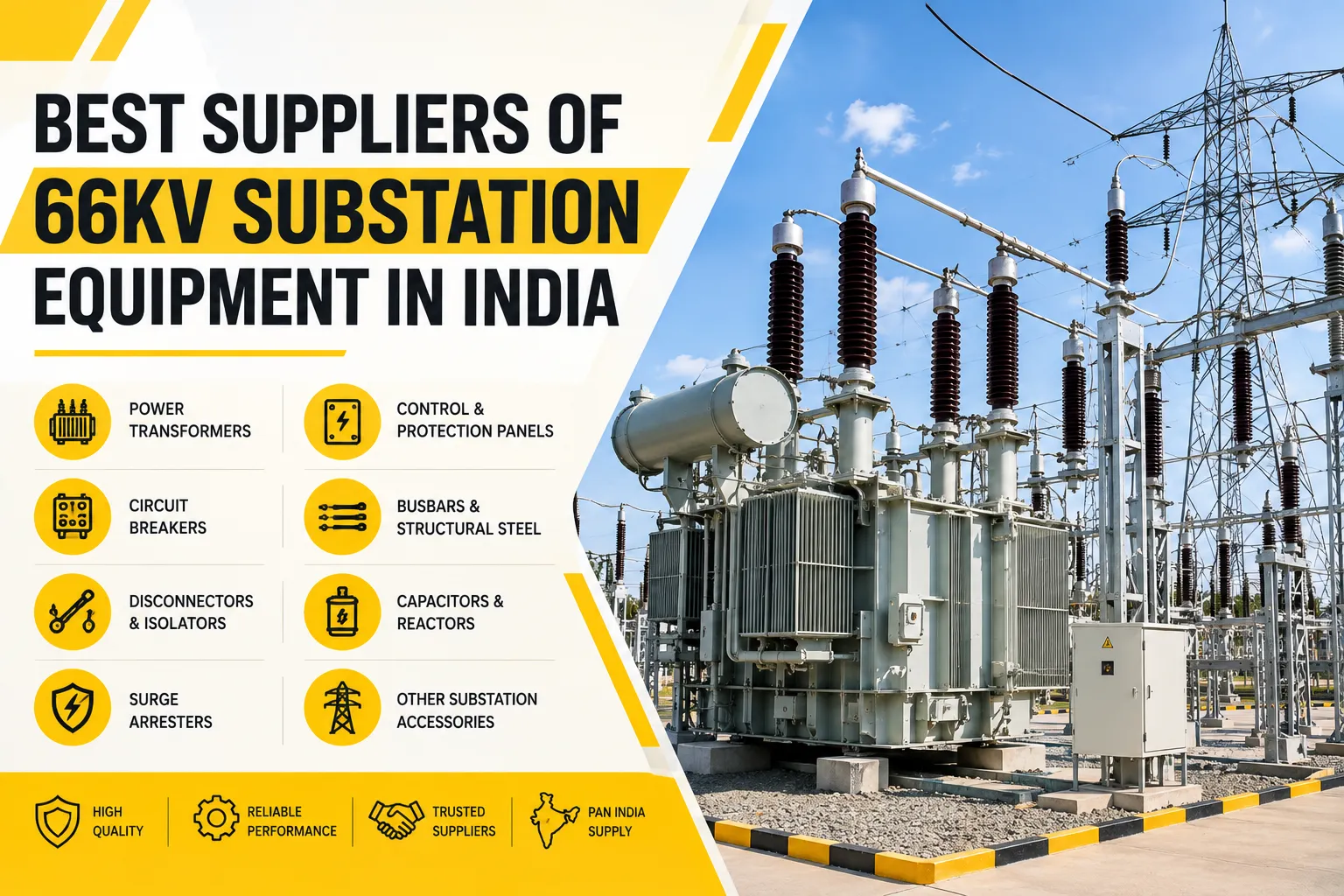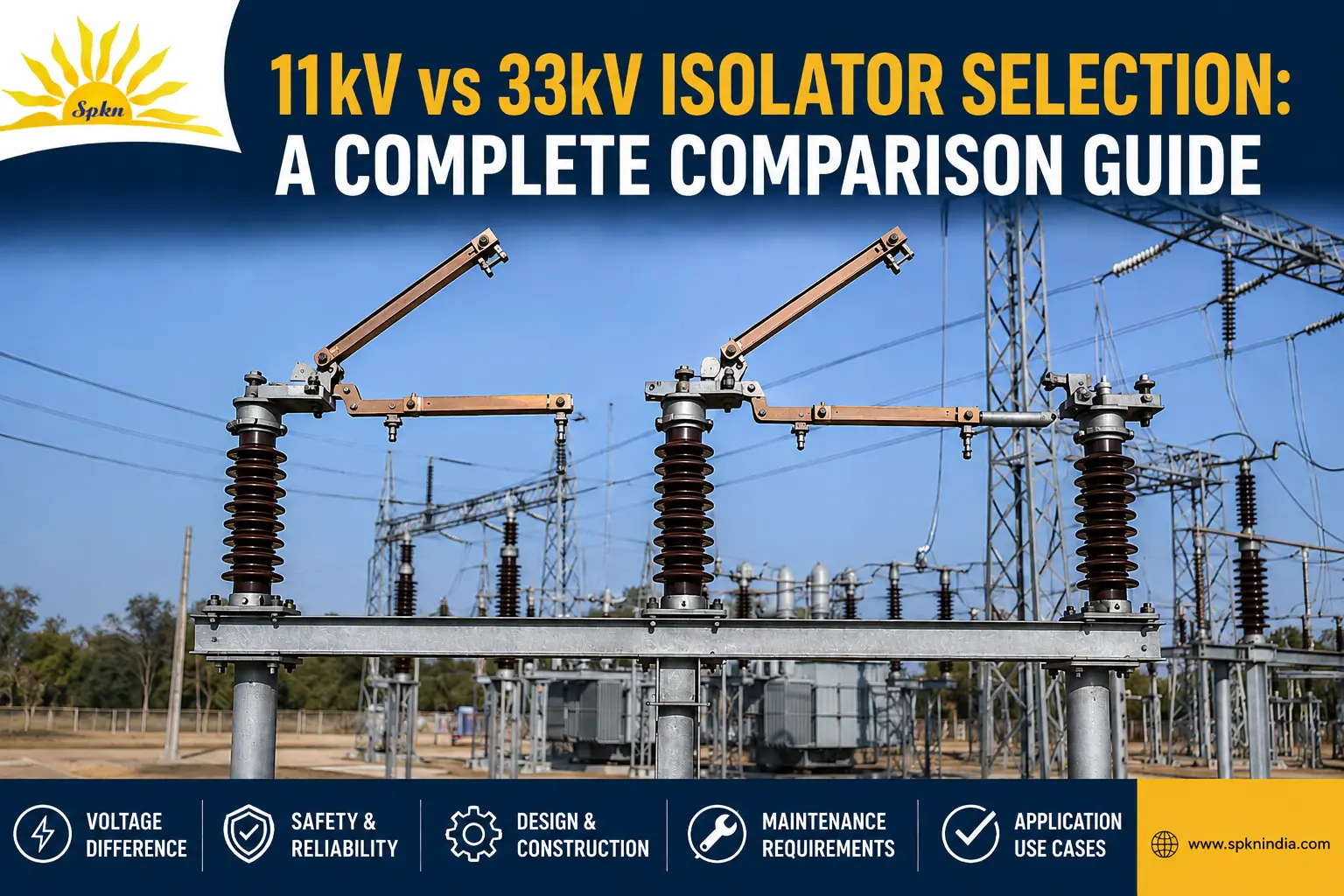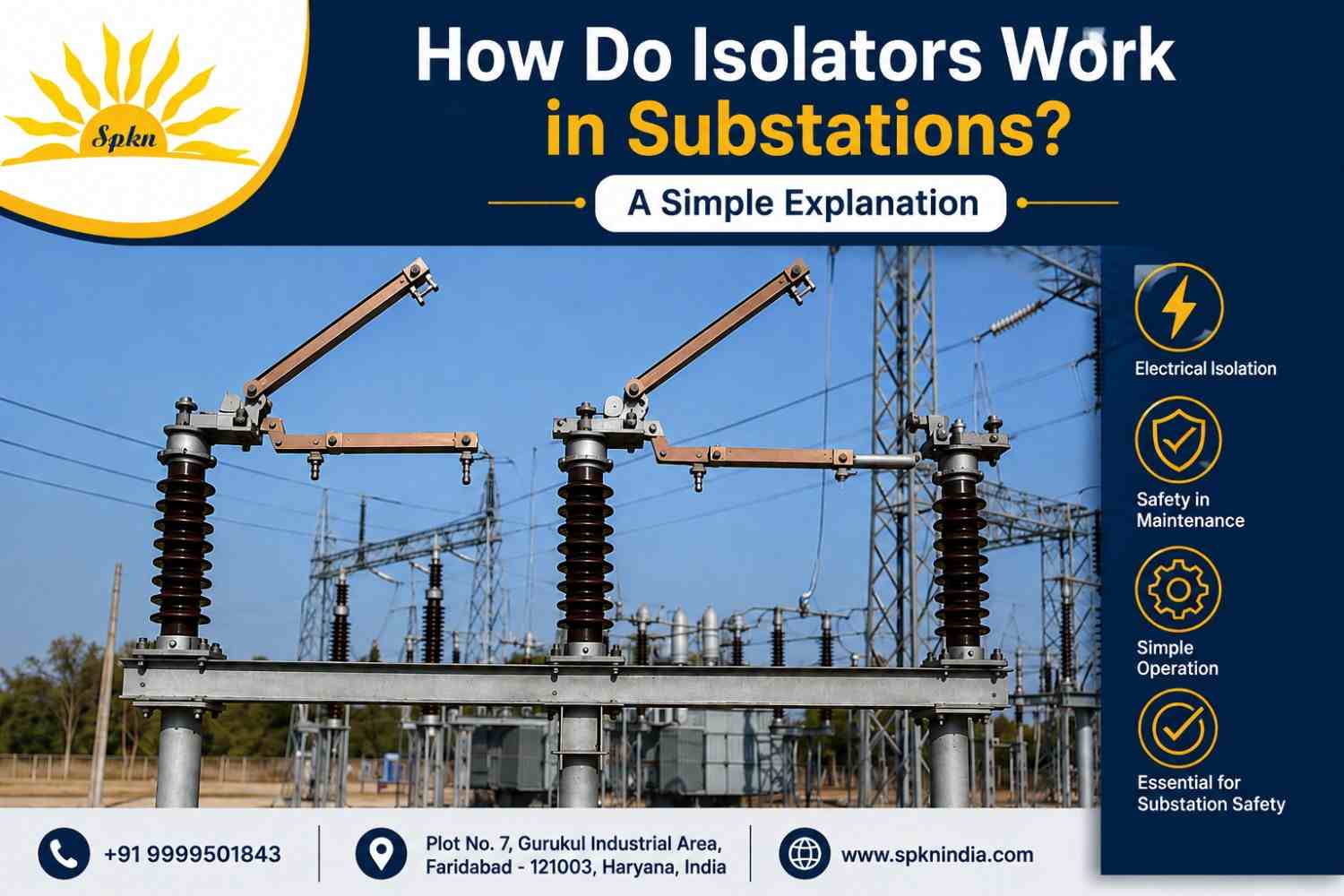
If you've ever walked past a substation and noticed a switch-like structure mounted high up on a steel frame, with visible metal arms that swing open — chances are, you were looking at an isolator.
A lot of people confuse isolators with circuit breakers, and honestly, that's a fair mix-up since both are switching devices. But they work very differently, and understanding that difference is important — especially if you're an electrical engineering student, a field technician, or just someone trying to understand how substations keep our power grid safe.
In this blog, we'll break down what is an isolator, how isolators in substation setups actually function, and why choosing the right one matters. We'll also touch on some reliable Isolator Manufacturers in India, including SPKN India, so you know where to look when sourcing equipment.
What Is an Isolator?
Let's start with the basics. What is an isolator? In the simplest terms, an isolator is a manually or mechanically operated switch used to physically disconnect a section of an electrical circuit — but only when there's no current flowing through it.
Unlike a circuit breaker, which can safely interrupt current even under load (like when a fault happens), an isolator is not designed to break live current. Its job is different — it creates a visible, physical air gap in the circuit so that anyone working on the equipment can literally see that the line is disconnected.
Think of it like this: a circuit breaker is like the emergency brake in a car, and an isolator is like physically removing the car battery once it's already parked and switched off. Both serve safety purposes, but in very different situations.
Why Isolators in Substation Setups Matter So Much
Substations are busy places — power flows in from generation sources, gets stepped up or down through transformers, and then moves out toward distribution networks. With so much high voltage equipment around, safety isn't optional; it's the whole point.
Here's where isolators in substation systems earn their importance:
- Visible confirmation of disconnection — Unlike internal breaker mechanisms, isolators show a clear physical gap, so maintenance staff can trust what they see.
- Protection during maintenance — Before any repair or inspection work begins, isolators ensure the section is completely de-energized.
- Isolating faulty sections — If part of the network needs to be taken offline (say, a faulty transformer), isolators help separate that section without affecting the rest of the grid.
- Supporting safe switching sequences — Isolators are always operated in coordination with circuit breakers, following a strict sequence to avoid accidents.
How Do Isolators Work in Substations? Step-by-Step
Now let's get into the actual working principle — explained simply.
- Circuit breaker opens first. Before an isolator is ever operated, the circuit breaker for that section is switched off first. This stops the current flow completely.
- Isolator is then opened. Once there's no load current, the isolator blades (the metal arms) are mechanically swung open — either manually with a lever or through a motorized/gang-operated mechanism.
- Visible air gap is created. This is the key safety feature. The open isolator creates a clear physical break that anyone can visually confirm — no guessing, no relying on indicator lights alone.
- Maintenance work begins safely. With the isolator open and the line confirmed de-energized, technicians can safely work on that section.
- Reverse sequence to restore power. Once work is done, the isolator is closed first, and only then is the circuit breaker switched back on to restore current flow.
This "breaker first, isolator second" (and reverse order when closing) sequence is a strict safety rule in every substation — skipping it can lead to serious accidents, since isolators simply aren't built to handle current under load.
Types of Isolators Commonly Used in Substations
- Single Break Isolators – Simple design, commonly used for lower voltage applications.
- Double Break Isolators – Offer two points of disconnection, often used in higher voltage systems.
- Pantograph Isolators – Space-saving vertical design, popular in busy substations with limited layout space.
- Gang-Operated Isolators – Multiple isolators operated together using a single mechanism, common in Indian utility networks.
Choosing the Right Isolator Manufacturer
Once you understand how isolators work, the next practical step is sourcing one that's reliable and properly certified. This is where working with established Isolator Manufacturers in India makes a real difference.
SPKN India is one name that regularly comes up in this space. Headquartered in the Delhi-NCR region, SPKN India has been manufacturing and supplying isolators, air break switches, and HT line materials for over a decade, serving power utilities, EPC contractors, and government electrification projects across the country.
A few things worth knowing about SPKN India:
- They manufacture isolators across multiple voltage classes, from 11kV distribution-level equipment up to higher transmission voltages.
- Their product range includes single break, double break, and gang-operated isolator configurations to suit different substation layouts.
- Manufacturing follows ISO 9001:2015 practices, with testing carried out in line with IS and IEC standards.
- They've supplied equipment to multiple state electricity boards and distribution companies, reflecting real field experience — not just catalog listings.
If you're evaluating Isolator Manufacturers in India for an upcoming project, it's worth checking beyond just pricing — look at certification, after-sales support, and whether the manufacturer has genuine utility-scale project history.
Common Mistakes to Avoid When Working with Isolators
- Operating an isolator under load. Never open an isolator while current is still flowing — always ensure the circuit breaker is off first.
- Skipping visual confirmation. Always physically verify the air gap; don't rely solely on control panel indicators.
- Ignoring interlocking systems. Many substations use mechanical or electrical interlocks between breakers and isolators — bypassing these defeats the safety purpose.
- Choosing uncertified equipment. Always confirm IS/IEC compliance and, where applicable, ERDA or CPRI approval.
Final Thoughts
At its core, an isolator is a simple but absolutely essential safety device. It doesn't do the heavy lifting of interrupting fault current like a circuit breaker does, but its job — creating a visible, trustworthy disconnection point — is what keeps maintenance staff safe every single day in substations across the country.
Understanding what is an isolator and how isolators in substation networks operate isn't just useful knowledge for engineers — it's a reminder of how much careful design goes into keeping our power grid safe. And when it's time to actually source this equipment, working with experienced Isolator Manufacturers in India like SPKN India can make the difference between a reliable installation and a recurring maintenance headache.