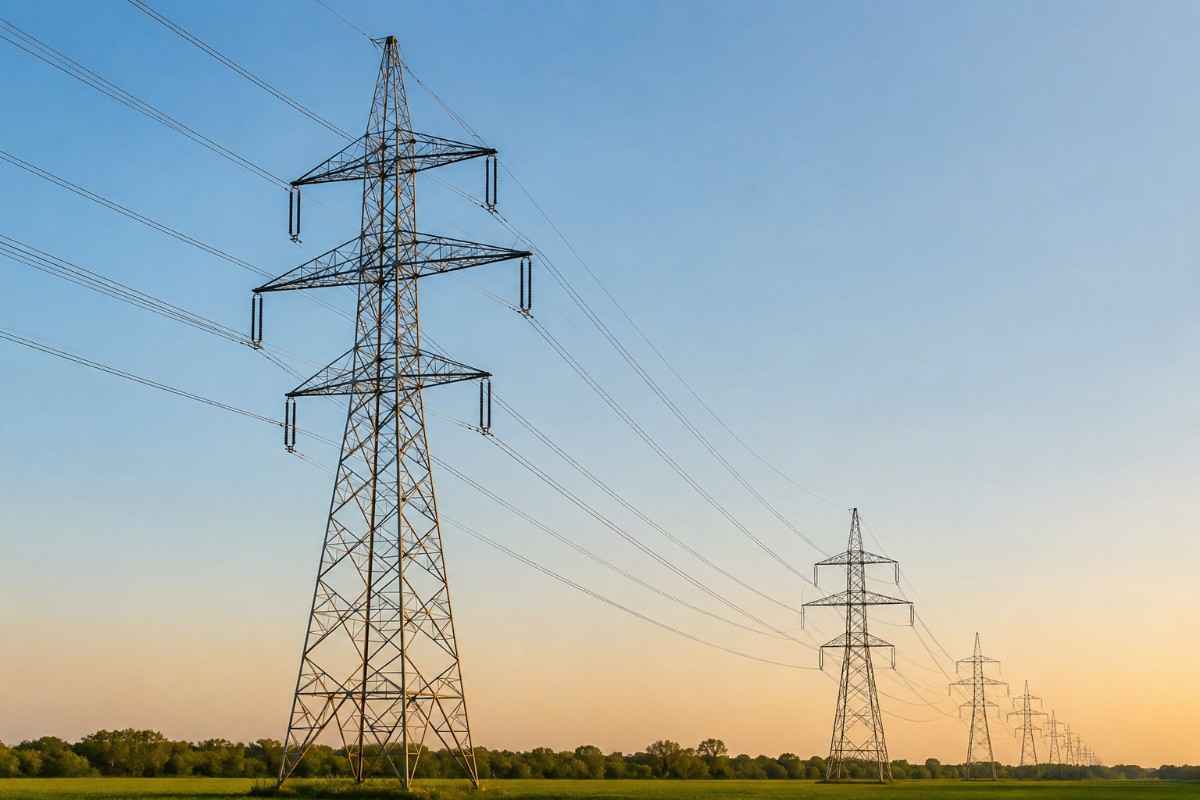
High Tension Line Voltage: Classes, Ranges and What They Mean in India
"High tension" is an old term that is still used every day in Indian electrical work. It refers to a line or equipment working at a voltage high enough to be dangerous and to need special insulation, clearances and safety rules. But how high is high tension? Is an 11 kV line high tension? Is 400 kV also high tension? The answer depends on whether you follow Indian electricity rules, international standards or plain field practice, and a wrong assumption can lead to a wrong equipment rating or a wrong safety distance.
This guide explains the voltage classes used in India, where each is found in the network, and what changes in equipment as the voltage goes up. It is written for contractors, plant engineers and students who need a clear map of high tension line voltage before they specify or work on a line.
What Does High Tension Mean?
"Tension" is an older word for voltage. A high tension (HT) line is therefore a high voltage line. In Indian electrical rules, supply voltages are grouped into bands, and the band decides the safety requirements. Low voltage covers supply up to 250 V. Medium voltage runs from above 250 V up to 650 V. High voltage runs above 650 V up to 33 kV, and extra high voltage covers anything above 33 kV. Many utilities and workers simply use "LT" for the 415 V network and "HT" for everything from 11 kV upward, which is why you will hear 33 kV and 132 kV lines called HT lines too.
Voltage Classes Used in India
| Class | Voltage | Where it is found |
|---|---|---|
| Low tension (LT) | 230 V single phase, 415 V three phase | Homes, shops, small workshops |
| High tension (HT) | 11 kV, 22 kV, 33 kV | Distribution feeders, factories, colonies |
| Sub-transmission and extra high voltage (EHV) | 66 kV, 110 kV, 132 kV | Town substations, large industry, railways |
| Transmission EHV | 220 kV, 400 kV | State and regional grids |
| Ultra high voltage (UHV) | 765 kV and above | Bulk power corridors between regions |
International standards use a different grouping. IEC treats 1 kV to 35 kV as medium voltage, and 35 kV to 230 kV as high voltage, while above 245 kV is extra high voltage. When you buy equipment, specify the exact system voltage and the highest system voltage, such as 36 kV for a 33 kV system, and do not rely only on the labels HT or EHV.
How Voltage Classes Differ in Equipment
As voltage goes up, insulation, clearances and equipment size all grow, and the design of each part changes. The main differences are these.
- Insulation level. The equipment must withstand a power frequency voltage and a lightning impulse voltage specified in the standard for its class. A 12 kV isolator is designed for far lower impulse levels than a 36 kV one.
- Air clearance. The gap between phases and to earth increases with voltage, so a 132 kV yard is much larger than an 11 kV one.
- Creepage distance. The surface path on insulators is set per kV, and increased for polluted sites.
- Conductor size and bundling. At 220 kV and above, larger or bundled conductors are used to control corona.
- Switching and protection. Higher voltage needs more advanced breakers, relays and surge protection.
Typical Equipment for Each HT and EHV Level
11 kV and 33 kV
Overhead lines on poles or short towers, drop-out fuses, air break switches, pin or disc insulators and 11 kV lightning arresters at transformers. The substations are simple, often with one or two transformers.
66 kV and 132 kV
Lattice towers or steel poles, disc or polymer insulators, circuit breakers and isolators in a proper yard. Our 33 kV and 66 kV isolator pages give the options for these classes.
220 kV and 400 kV
Heavier towers with bundled conductors, long insulator strings, SF6 or vacuum breakers, and instrument transformers rated for high impulse levels. The 220 kV outdoor isolator is a typical item here.
765 kV and above
Very large towers, quad or six-conductor bundles, and special equipment. These are built for bulk transfer of thousands of megawatts across regions.
Nominal Voltage and Highest System Voltage
Every system voltage has a matching "highest voltage for equipment", and this second value is the one printed on equipment ratings. Indian standard voltages and the matching equipment classes are shown below.
| Nominal system voltage | Highest system voltage (equipment rating) |
|---|---|
| 11 kV | 12 kV |
| 22 kV | 24 kV |
| 33 kV | 36 kV |
| 66 kV | 72.5 kV |
| 110 kV | 123 kV |
| 132 kV | 145 kV |
| 220 kV | 245 kV |
| 400 kV | 420 kV |
| 765 kV | 800 kV |
The highest system voltage allows for the normal rise above nominal that a real network sees, for example when load is light. Equipment bought to the nominal value, such as a 33 kV isolator, may not have enough margin, so always order to the highest voltage class.
Line Voltage and Phase Voltage
When someone says "a 33 kV line", they mean the voltage between two phases. The voltage between one phase and earth is lower by a factor of the square root of three, which is about 19 kV on a 33 kV system. This matters for insulation to earth, for the rating of lightning arresters in an effectively earthed system, and for the choice of potential transformers. A common error in tender papers is to mix the two values and ask for an arrester or insulator rated for the wrong one.
Choosing Between 11 kV, 22 kV and 33 kV for Distribution
Utilities choose the distribution voltage by balancing the line length against the load. At 11 kV, a feeder is cheap to build and works well up to about 10 to 15 kilometres for modest loads, beyond which voltage drop becomes a problem. Moving to 22 kV or 33 kV allows the same conductor to carry the load over a longer distance with lower loss, but the poles, insulators and switchgear cost more. Several states use 33 kV for rural feeders that would be too long at 11 kV, with small 33/11 kV or 33/0.415 kV transformers close to the load. A planner should compare the cost of the extra voltage against the saving in losses and in the number of substations before deciding.
Why High Voltage Is Used for Power Lines
Transmitting the same power at higher voltage needs less current, and the heat lost in the conductor falls with the square of the current. In plain terms, doubling the voltage cuts the line loss to a quarter for the same conductor. This is why the grid steps voltage up for long distances and steps it down again for local supply. The cost of higher voltage is more expensive insulation and bigger structures, so each line carries the lowest voltage that does the job economically. For a fuller view of the grid, read our page on the transmission system.
Voltage Regulation on HT Lines
Voltage at the consumer end of a line is always a little lower than at the source, because current flowing through the conductor causes a voltage drop. Utilities usually allow a variation of about plus or minus 6 percent at the consumer, so the drop along the HT line and the transformer must fit inside that limit. Long, heavily loaded 11 kV feeders are the usual trouble spots. Engineers fix them in four ways: use a larger conductor, shorten the feeder with a new substation, add capacitors near the load to improve the power factor, or use a transformer with an on-load tap changer to correct the voltage. Low voltage at the far end of a feeder hurts motors and pumps, so checking the drop at design stage saves complaints and equipment burn-outs later.
Safety Around High Tension Lines
High voltage can cause a flashover through the air, so a person does not need to touch a line to be hurt. Cranes, long pipes, ladders, kite strings and tall vehicles are common causes of accidents near lines. Follow these basic rules:
- Keep every person, tool and machine well away from overhead lines, and follow the minimum distances in the electricity safety regulations.
- Never assume that a line is dead. Treat every line as live until it has been isolated, tested and earthed by an authorised person.
- Do not touch a fallen conductor, and keep clear of the ground around it, because voltage can spread through the soil.
- Use only trained and licensed staff for work on or near HT equipment, with permits, insulated tools and personal protective equipment.
How to Specify Equipment for the Right Voltage
- State the nominal system voltage and the highest system voltage, for example 33 kV and 36 kV.
- State the insulation levels: power frequency withstand and lightning impulse withstand.
- State the fault level in kiloamperes and its duration.
- State the pollution level at site, so the creepage distance can be set.
- State the altitude if it is above 1,000 metres, because air is thinner and insulation must be derated.
- Ask for type test reports for the exact rating.
Common Mistakes
- Treating "HT" as one voltage. An 11 kV and a 132 kV system need very different equipment.
- Ordering a 33 kV rating instead of 36 kV when the standard class for a 33 kV system is 36 kV.
- Ignoring altitude and pollution, which both reduce the insulation margin.
- Mixing equipment of different insulation levels in one bay.
High Tension Equipment From SPKN India
SPKN India is a Faridabad-based manufacturer of high-tension equipment from 11 kV to 220 kV, including isolators, air break switches, lightning arresters, insulators and connectors. Tell us your voltage class, fault level and quantity, and we will prepare a technical offer. You can also call +91 9999501843.