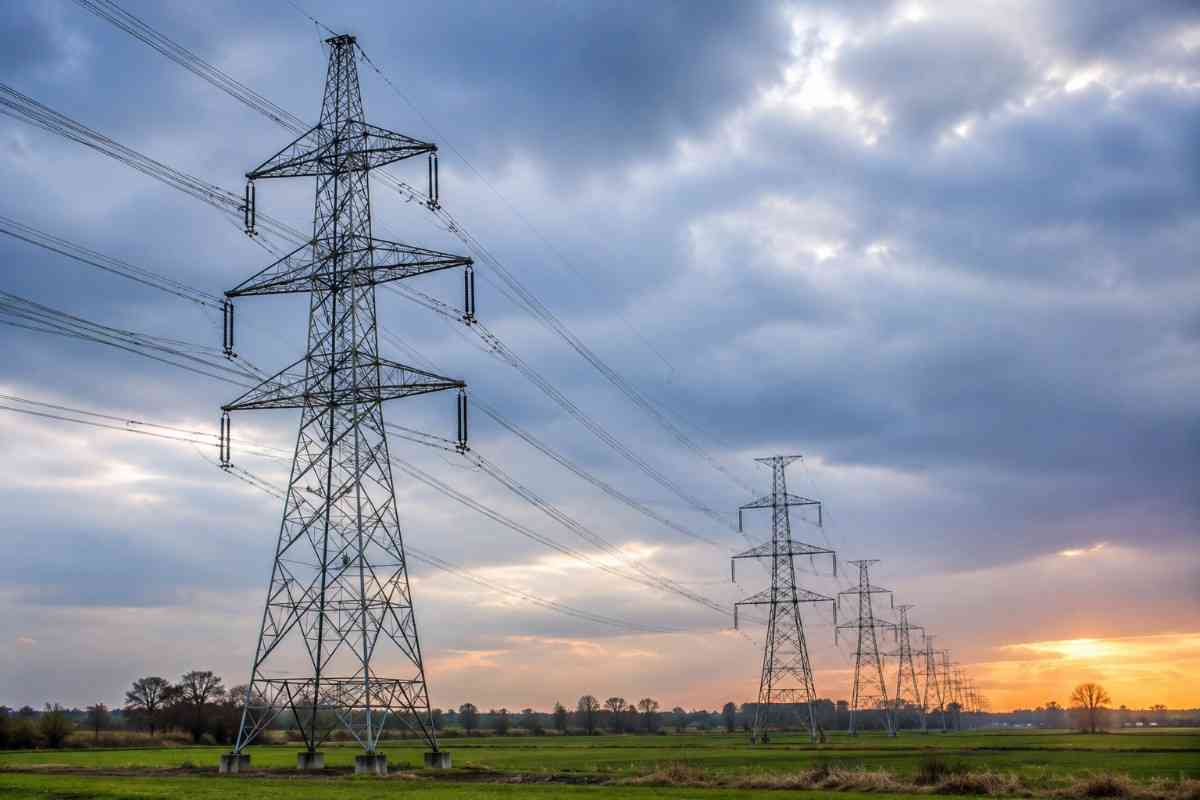
High Tension Wire Voltage: Bare Wires, Covered Conductors and HT Cables Explained
When people talk about a high tension wire, they usually mean the wire seen on poles and towers. But the word "wire" covers several different products: bare overhead conductors, covered conductors with a thin protective layer, aerial bunched cables, and fully insulated underground HT cables. Each one has a different voltage rating, a different use and a different set of safety rules. Confusing them is a common reason for wrong purchases and for accidents.
This guide explains the voltage of high tension wires in India. It covers what a voltage rating on a wire actually means, how bare, covered and insulated wires differ, which voltages each type is made for, and how to stay safe around them. It is written for contractors, electricians and site engineers who work with 11 kV and 33 kV networks.
What a Voltage Rating on a Wire Means
The voltage rating of an insulated cable has two numbers. For example, a cable marked 6.35/11 kV is designed for 6.35 kV between each conductor and earth, and 11 kV between conductors. A 19/33 kV cable is made for a 33 kV system. This rating tells you how much voltage the insulation can stand continuously. It does not make the cable safe to touch, and it does not describe the current the wire can carry. The current rating depends on the conductor size, the insulation temperature limit and how the cable is installed.
A bare overhead wire has no insulation, so it has no voltage rating of its own. Its safe voltage depends on the distance to earth and to the other phases, and on the insulators that hold it. This is why the support structure and insulators are rated for the line voltage, and the bare wire is simply sized for current and strength.
Types of High Tension Wires
Bare overhead conductors
These are the wires used on most 11 kV, 33 kV and higher lines. They are made of aluminium, with a steel core where more strength is needed. Without insulation, they are lighter and cheaper, and they cool well in the air. The line relies on air clearance for safety. Because they are bare, they must be kept out of reach and away from trees and buildings. Our guide to transmission line conductor types explains the common bare types.
Covered conductors
A covered conductor is a bare conductor with a thin layer of insulating material, such as cross-linked polyethylene, around it. The layer protects against brief contact with a tree branch or another phase, so it reduces outages in tree-heavy areas. It is not full insulation, and the wire must still be treated as live and dangerous. Covered conductors are used on 11 kV and 33 kV lines in forests, hilly areas and crowded streets, where fault rates on bare wire are high.
Aerial bunched cable (ABC)
Aerial bunched cables twist insulated conductors into a single bundle that hangs from a messenger wire. They are common at low voltage in crowded areas. HT versions exist for 11 kV in special cases. They are costly and heavier than bare wire, but they greatly reduce the risk of contact and theft.
Underground HT cables
Fully insulated XLPE cables are laid in ground, in ducts or in trenches, and are used in cities, industrial plants and where overhead lines are not allowed. Their insulation is designed for the system voltage with margin. For 11 kV, the typical rating is 6.35/11 kV, and for 33 kV it is 19/33 kV. Indian practice refers to IS 7098 for XLPE insulated cables. Cable joints and terminations need trained jointers, and they are the most common weak points.
Inside an HT Cable: The Layers
An 11 kV or 33 kV XLPE cable is built in layers, and each layer has a job. The copper or aluminium conductor carries the current. A semi-conducting layer over the conductor smooths the electric field. The XLPE insulation holds the voltage. A second semi-conducting layer and a metal screen keep the field inside the cable and carry earth fault current. Bedding, armour and an outer sheath protect against mechanical damage and moisture. If any layer is damaged, the cable can fail long before its rated life ends, so careful handling, correct bending radius and well-made terminations matter as much as the cable rating.
Testing HT Cables After Laying
Before a new HT cable is charged, it is tested to prove that the insulation and sheath are undamaged. A typical programme covers an insulation resistance test, a sheath integrity test, and a withstand test at high voltage, done either with a DC set or with a very low frequency AC set. Utilities increasingly prefer very low frequency testing, because DC stress can harm XLPE over time. The results should be recorded, and the same tests repeated after any repair or joint. A cable that passes only a quick insulation resistance test may still hide a fault that appears in the first monsoon.
Why Faults Happen on HT Wires
- Trees and branches touching bare wires in wind, causing phase-to-earth faults.
- Birds and animals bridging two phases or a phase and a cross-arm on compact lines.
- Lightning causing flashover across insulators, especially without arresters.
- Pollution on insulators in foggy, coastal or industrial areas.
- Conductor breakage due to fatigue near clamps, corrosion or overload.
- Cable joint failures due to poor workmanship or water ingress.
- Third-party damage by excavators and cranes.
Most of these can be reduced with better design, such as covered conductors in tree zones, arresters at exposed points, longer creepage insulators in polluted areas and a well-kept right of way.
Comparing the Four Types
| Type | Insulation | Typical voltage | Best use |
|---|---|---|---|
| Bare overhead conductor | None | 11 kV to 765 kV | Open country, long lines, low cost |
| Covered conductor | Thin cover, not full insulation | 11 kV, 33 kV | Tree-prone and hilly routes |
| Aerial bunched cable | Full insulation on each core | Mostly low voltage, some 11 kV | Crowded areas, theft-prone routes |
| Underground XLPE cable | Full insulation with screen and armour | 11 kV, 22 kV, 33 kV and above | Cities, plants, crossings |
Why Birds Sit on Wires and People Should Not Touch Them
A bird on a single bare wire touches only one phase, so no current flows through its body. The same bird would be killed if it touched two phases at once. A person standing on the ground is different. If they touch a live conductor or come close enough for an arc to jump, the current has a path through the body to earth. At 11 kV and above, the voltage is high enough to jump across air, so a person does not need to touch the wire to be hurt. The rule is simple: treat every overhead wire as live and stay well away.
Current Rating of HT Wires
Voltage and current are separate questions. A wire rated for 11 kV can carry anything from a few tens of amperes to several hundred, depending on its conductor size. For bare overhead wires, the permitted current depends mostly on the temperature the conductor may reach, the wind and the ambient temperature, so it varies by season. For underground cables, the current depends on how the cable is laid, because heat must escape through the soil. Cables laid in dry ground, in ducts or bunched together with others can carry noticeably less current than the catalogue value, and a derating factor must be applied. Using the catalogue current without these corrections is a common reason for overheated cables.
Safety Rules for Working Near HT Wires
- Do not touch, lean on or throw anything over an overhead wire, covered or not.
- Keep ladders, cranes, pipes and long tools well away. The electricity safety regulations set minimum distances for each voltage.
- Do not trust the colour or thickness of a covering. A covered wire is still dangerous.
- If a wire has fallen, stay back, warn others and call the utility. Do not try to move it.
- For work on the line, use authorised staff with permits, isolation, testing and earthing before anyone touches the conductor.
- Never cut or dig into an underground cable without a cable route plan and the owner's permission.
Selecting a High Tension Wire
- Voltage: State the system voltage and the highest system voltage, for example 11 kV and 12 kV.
- Current: Choose the conductor size from the load, including the effect of temperature and installation.
- Route: Choose bare wire for open land, covered wire for trees and hills, cable for cities and crossings.
- Fault level: Check that the conductor and screen can carry the short-circuit current for the clearing time.
- Environment: Consider pollution, salt, wind and ice.
- Standards and tests: Ask for the standard and the test reports for the exact product.
Hardware That Goes With HT Wire
A wire is only as good as the fittings that hold and join it. Clamps, joints, tension sets, insulators and cable terminations must match the wire diameter and voltage. For bare lines, see our substation connectors and the overhead electrical line guide. At line entries to substations and transformers, a lightning arrester protects the wire and the equipment from surges, and an air break switch gives a visible point of isolation.
Common Mistakes
- Assuming that a covered or insulated wire is safe to touch.
- Choosing a cable rating of 11 kV for a 33 kV system, or the reverse.
- Ignoring the short-circuit rating of cable screens and joints.
- Laying cable without a route plan, which leads to accidental damage by others.
- Using wrong-size clamps on bare wire, which causes hot joints and burn-downs.
High Tension Equipment From SPKN India
SPKN India is a Faridabad-based manufacturer of the equipment that connects to high tension wires, including connectors, isolators, air break switches, insulators and arresters. Send us your voltage and application and we will prepare an offer. You can also call +91 9999501843.