A transformer is one of the most expensive items on any line or substation, and it has no easy way to repair itself after a surge. A horn gap in a transformer is one of the oldest and simplest devices used to protect it. Two metal horns, separated by an air gap, give lightning and switching surges an easier path to earth than the transformer's own insulation. This guide explains the purpose of the horn gap, how it works step by step, where it is fitted, and how it compares with a modern surge arrester, so that you can decide what your transformer needs.
What Is a Horn Gap in a Transformer?
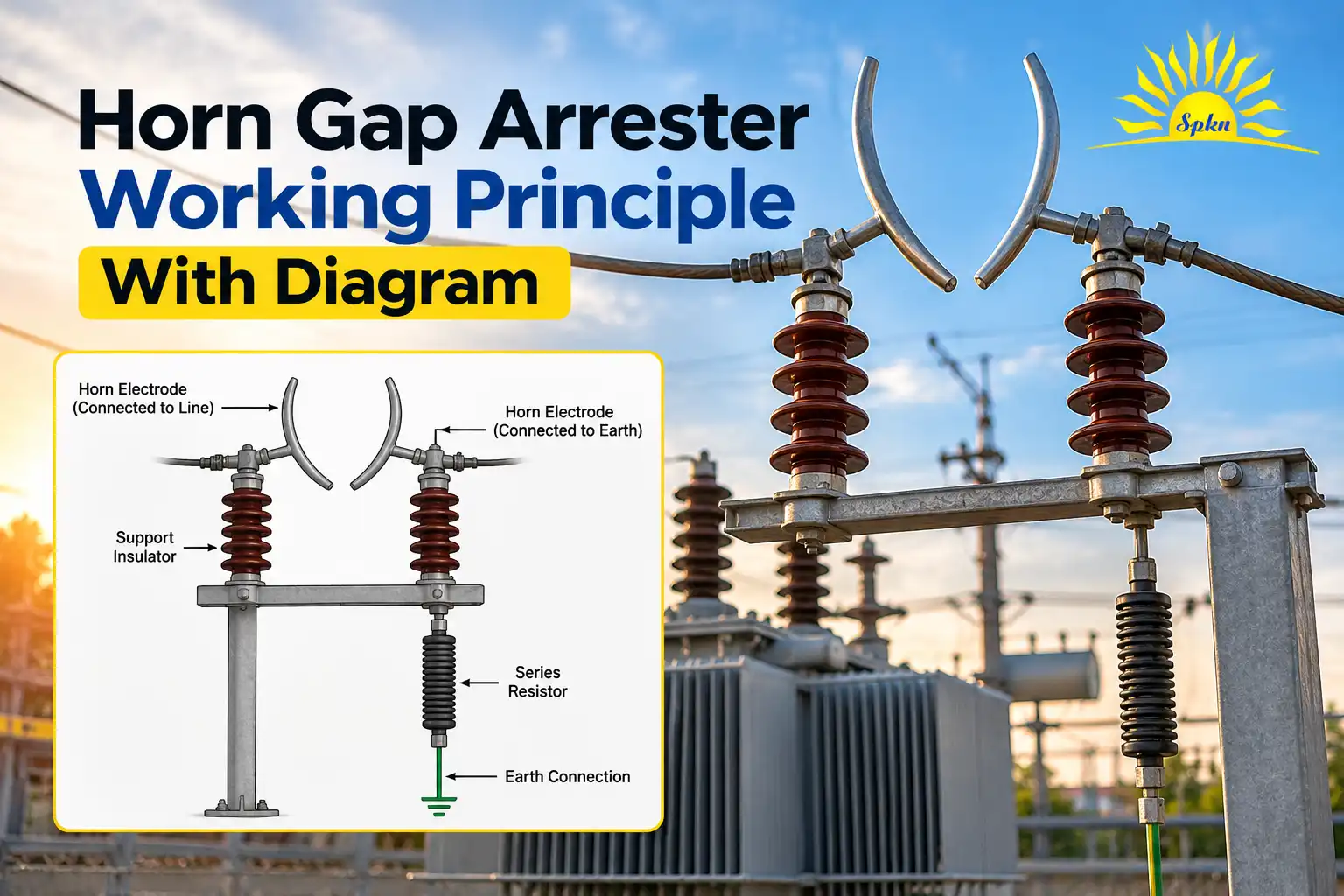
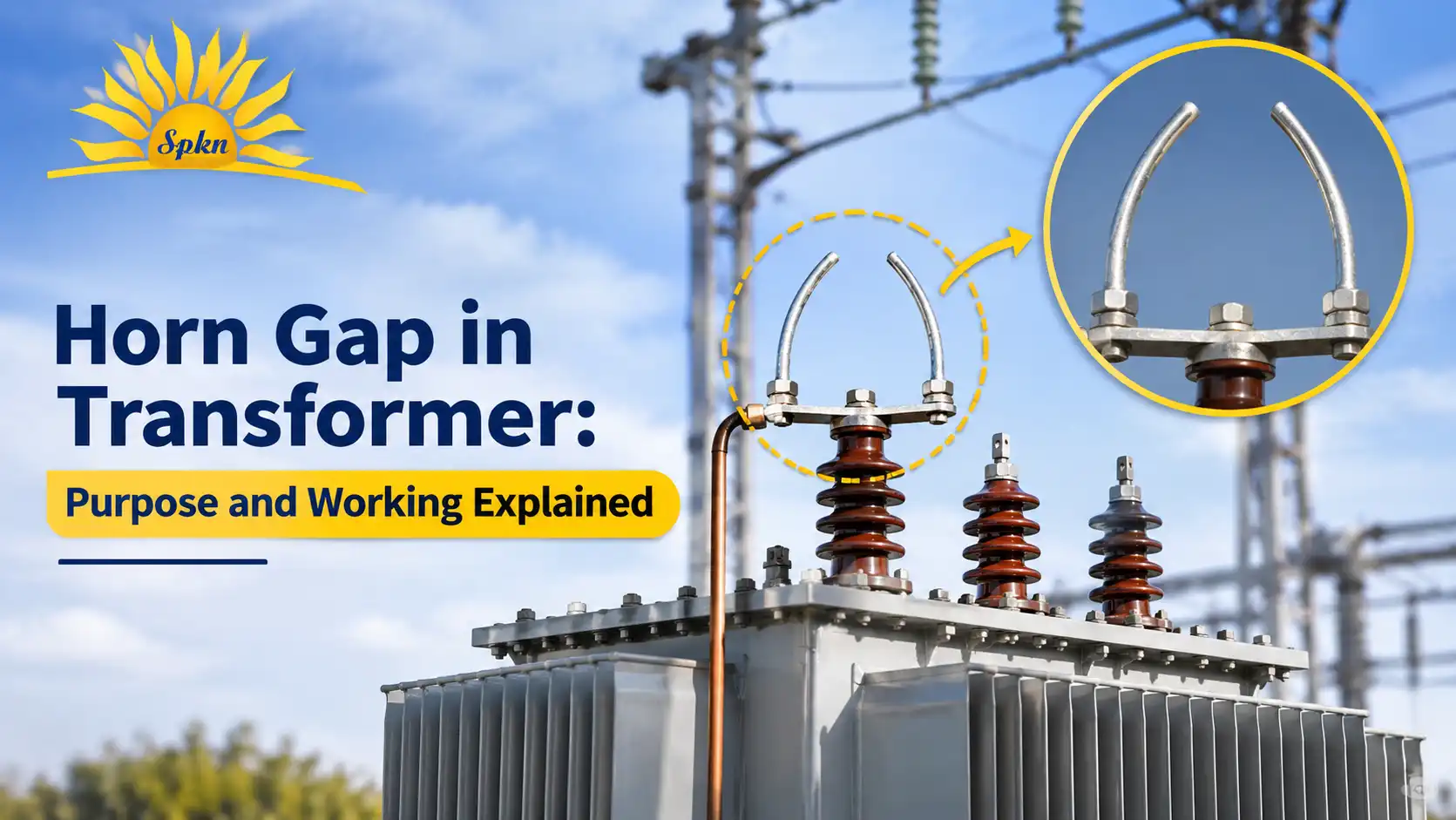
A horn gap, also called an arcing horn, is a pair of curved metal rods mounted across the high-voltage bushing of a transformer. One horn is connected to the live terminal of the bushing. The other horn is connected to earth. A fixed air gap separates the two horns, and the shape of the rods makes the gap narrow at the bottom and wider at the top.
The gap is set so that normal system voltage cannot jump across it. Only a voltage far above normal, such as a lightning surge or a switching surge, can break down the air. When that happens, the gap conducts, the surge flows to earth through the earth connection, and the transformer insulation never sees the full surge voltage.
Why a Transformer Needs This Protection
Transformer insulation is designed for the system voltage plus a margin for short, high overvoltages. It is not designed to survive every surge that can travel along an overhead line. A direct or nearby lightning strike can put a voltage on the line many times higher than the normal voltage. Switching operations and faults can also create sharp overvoltages. If such a surge reaches a winding, it can break down the insulation between turns or between the winding and the core. The damage may be instant, or it may weaken the insulation so that the transformer fails weeks later.
Protection therefore has one job: limit the voltage that reaches the transformer to a value its insulation can handle. The horn gap does this in the simplest possible way, by providing a path that breaks down first.
How a Horn Gap Works, Step by Step
- Normal operation. The line voltage is below the breakdown level of the air gap, so no current flows through the horns and the transformer runs normally.
- Surge arrives. A lightning or switching surge travels along the line and raises the voltage at the bushing.
- Gap breaks down. When the voltage across the gap exceeds its breakdown level, the air ionises and an arc forms between the horns. This happens before the bushing or the winding flashes over, because the gap is set to break down at a lower voltage than the transformer insulation can withstand.
- Surge flows to earth. The arc carries the surge current through the earth connection into the ground. The voltage at the bushing is held down to the arc voltage, which is low.
- Arc rises and stretches. The arc is hot, so it rises along the curved horns. As it climbs, the distance it must span grows longer.
- Arc goes out or the supply trips. If the arc stretches enough, it extinguishes. If power-frequency current keeps flowing, the line breaker or fuse operates and clears the fault.
The curved shape of the horns is the clever part. It lets the arc move upward on its own, without any moving parts, which gives it a chance to go out by itself.
Main Parts of a Horn Gap
Horns
The two horns are made from galvanised steel or similar rod, bent into a gentle curve. They must resist corrosion and survive repeated arcing.
Air gap and gap setting
The distance between the horns decides the breakdown voltage. It is set in line with the transformer's voltage class and the insulation level of its bushing, so that the gap always flashes first. If the gap is too wide, it will not protect the bushing. If it is too narrow, it may spark over on ordinary overvoltages and cause needless outages.
Earth connection
The earthed horn is joined to the tank or the earth system with a short, thick conductor. A long or thin lead adds voltage during a surge, which reduces the protection.
Series resistor in some designs
Some designs add a resistance in the earth path to limit the follow current after the gap flashes. This helps the arc go out, but it also reduces the surge current the path can carry, so the design must be matched to the application.
Where Horn Gaps Are Used
Horn gaps are common on overhead distribution transformers, especially on 11 kV and 33 kV lines in rural and semi-urban networks. They are low in cost, easy to install on a pole-mounted or plinth-mounted transformer, and simple to inspect from the ground. They are also used on bushings of older substation transformers and on some outdoor equipment where simple protection is acceptable. A related device, the horn gap fuse, combines the horn gap idea with a fuse element. You can read about it in our guide to what a horn gap fuse is good for and in our horn gap product range.
Advantages of a Horn Gap
- Simple construction. There are no discs or sealed parts that can age inside.
- Low cost. It costs far less than a metal oxide arrester of the same voltage class.
- Easy inspection. You can see the gap and check its setting with a gauge.
- No internal ageing. The device does not wear out in normal service, apart from erosion and rust on the horns.
Limitations of a Horn Gap
- Follow current. After the surge, the arc can keep carrying the system's power-frequency current. The line must trip to clear it, which causes an outage.
- Changing breakdown voltage. Humidity, dust, pollution and even a bird bridging the gap can change the voltage at which it flashes.
- Slower and less precise protection. The breakdown depends on how fast the surge rises, so the protection level is not as steady as that of a metal oxide arrester.
- Wear from arcing. Repeated arcs burn the horn tips and change the gap over time.
- Steep surges. A very fast surge can reach the transformer before the gap has time to break down.
Horn Gap vs Lightning Arrester
| Point | Horn gap | Metal oxide arrester |
|---|---|---|
| Working | Air gap breaks down | Metal oxide blocks conduct during a surge |
| After the surge | Arc may persist until the line trips | Returns to the insulating state on its own |
| Protection level | Varies with weather and surge shape | Steady and low |
| Cost | Low | Higher |
| Maintenance | Gap check and cleaning | Leakage current check |
| Best for | Simple, low-cost distribution protection | Valuable or exposed transformers and substations |
For a pole-mounted transformer on a lightly exposed rural line, a horn gap may be adequate. For a large distribution transformer, a substation transformer, or any unit that would be costly or slow to replace, a metal oxide arrester is the better choice, and many utilities fit both. Our guide on the lightning arrester in a transformer shows how the arrester is connected, and our lightning arresters page lists the range we supply.
Installation Tips
- Fit the horn gap as close to the bushing as possible, with short and straight connecting leads.
- Set the gap to the value specified by the transformer maker or your utility standard, and check it with a gauge.
- Connect the earthed horn to a low-resistance earth, and measure the earth resistance after installation. See our guide to earthing electrodes.
- Keep the horns clear of branches, wires and bird nests.
- Check the tightness of every clamp and connector. Our substation connectors range suits these joints.
Maintenance Checklist
- Check the gap with a gauge after every storm season and after any known flashover.
- Look for burn marks, pitting and rust on the horn tips, and replace worn horns.
- Clean dust or pollution from the supporting insulators.
- Test the earth connection and the earth resistance each year.
- Record any operation or trip so that you can see patterns on a feeder.
Common Mistakes
The most common mistake is a wrong gap setting, either copied from another transformer or changed during maintenance. Another is using a long or thin earth lead, which cancels much of the benefit. A third is relying on the horn gap alone for a high-value transformer on an exposed line. Finally, many sites forget to inspect the gap after a storm, so a burnt or bent horn remains in service and no longer protects the transformer.
Which Protection Should You Choose?
Match the protection to the risk. If the transformer is small, the line is not heavily exposed, and the cost of an outage is low, a horn gap gives basic protection at a low price. If the transformer is costly, feeds a critical load, or sits on a line with frequent lightning, fit a metal oxide arrester at the bushing, and consider keeping a horn gap as a simple backup. In both cases, a good earth and short leads matter as much as the device itself. To see how this fits into a complete yard, read our guide to the power substation and our article on the horn gap arrester working principle.
Get Horn Gaps and Arresters from SPKN India
SPKN India manufactures horn gaps, horn gap fuses, lightning arresters and other high-tension equipment in Faridabad. Share your transformer rating, system voltage and quantity, and our team will recommend the right protection and send an itemised quotation. You can also call +91 9999501843.
Get a Free Quote from SPKN India WhatsApp Us