That distinction matters more than most buyers initially realize. A transformer sitting at a factory waiting for type test documentation can hold up an entire substation commissioning. A unit delivered without proper routine test reports gets rejected by the electrical inspector. These are not rare edge cases. They happen regularly on Indian infrastructure and industrial projects, and they are almost always avoidable with the right supplier selection upfront.
This page gives you the practical framework to evaluate any transformer company properly before you commit.
What Mumbai's Industrial Landscape Actually Demands from a Transformer Company
Mumbai and the wider Maharashtra region run on electrical infrastructure. The port complexes at Nhava Sheva, the pharmaceutical clusters in Thane and Navi Mumbai, the textile mills in Bhiwandi, the automotive supply chain around Pune, the data centres expanding across the Mumbai Metropolitan Region: all of these depend on reliable transformer performance, and all of them have different technical requirements.
A pharma plant in Thane needs a dry-type transformer with low partial discharge levels and the ability to operate in a controlled indoor environment. A port handling yard needs a robust oil-cooled unit that can handle heavy cyclic loading and outdoor coastal conditions simultaneously. A data centre needs an ultra-reliable unit with extremely tight voltage regulation.
When I tried evaluating transformer suppliers for a coastal industrial project, I found that most companies quoted standard catalogue products without asking a single question about the site environment. The one supplier who asked about ambient temperature, altitude, pollution level, and loading profile before quoting was the one who deserved serious attention. That kind of application-first approach is what separates a genuine transformer company from a trader with a catalogue.
The Transformer Types a Capable Company Should Cover
Before shortlisting any transformer company in Mumbai, verify that they actually manufacture or have genuine supply relationships for the specific type you need. Here is what the main categories look like in practice.
Oil-Cooled Distribution Transformers
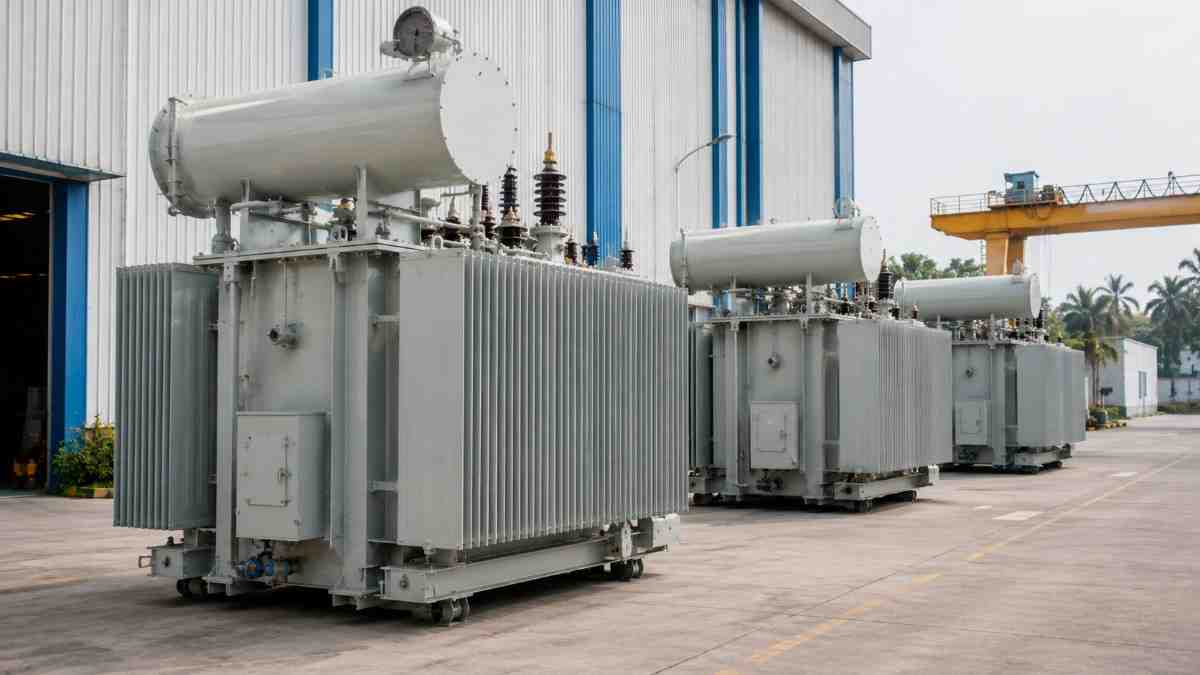
The backbone of industrial power supply across Maharashtra. These step down 11 kV to 433 V for distribution to factories, commercial complexes, and infrastructure facilities. Rated under IS 1180, with ONAN (oil natural air natural) cooling being the most common configuration for standard applications.
Dry Type Transformers
Cast resin or VPI (vacuum pressure impregnated) units for indoor and environmentally sensitive applications. Required in metro stations, hospitals, commercial high-rises, and manufacturing facilities where fire risk makes oil-filled units unsuitable. Governed by IS 11171 and IEC 60726.
Power Transformers for Sub-Transmission
These operate at 33 kV to 132 kV and above, connecting industrial captive power systems and large infrastructure projects to the grid. More complex to specify and manufacture, with longer lead times and more demanding documentation requirements. Conformance to IS 2026 and IEC 60076 is mandatory.
Furnace and Rectifier Transformers
Specialized units for steel plants, electroplating facilities, and arc furnace operations across Vidarbha and the industrial belt around Nagpur and Aurangabad. These require heavy-duty winding construction to handle the extreme secondary current and thermal cycling of furnace duty.
Renewable Energy Transformers
Solar plant step-up transformers and wind farm turbine transformers designed for the variable loading profiles of renewable generation. Maharashtra's solar capacity in Vidarbha and Marathwada creates steady demand for these specialized units.
Five Things to Verify Before You Shortlist Any Transformer Company
This is the part of the buying process most buyers either rush through or skip entirely. Do not skip it.
- Type test certificates from CPRI or an NABL-accredited laboratory for the exact transformer rating and design being quoted. A certificate from a different rating class or from many years ago on a redesigned product is not acceptable.
- Routine test reports for your specific unit. These should include voltage ratio, polarity and phase relationship, winding resistance, no-load loss, load loss, impedance voltage, and dielectric tests at minimum.
- Material traceability documentation. What grade of CRGO silicon steel is used for the core? Is the winding conductor certified electrolytic copper? These affect both efficiency and long-term reliability significantly.
- Factory acceptance testing availability. Can your team or a third-party inspector witness the routine tests before dispatch? A company confident in its manufacturing quality welcomes this.
- After-sales support and spare parts availability. For critical transformers, on-site support during commissioning and availability of spare parts and accessories over the transformer's operational life (typically 25 to 30 years) matters enormously.
Why Documentation Is Not Just Bureaucracy
I have noticed that buyers new to capital equipment procurement sometimes treat documentation as a formality to deal with after the purchase decision is made. That approach creates problems that are entirely avoidable.
Maharashtra State Electricity Distribution Company (MSEDCL) and other state utilities have specific documentation requirements for transformers connected to their networks. The Chief Electrical Inspector's office requires routine test reports and type test certificates before issuing installation approval. For projects with any degree of government or utility involvement, documentation gaps translate directly into commissioning delays.
According to assessments by the Bureau of Indian Standards on transformer quality in the Indian market, non-compliance with testing requirements at the manufacturing stage is one of the top contributors to premature transformer failures in service. The documentation trail is not just for the regulator. It is your evidence that the transformer was built correctly.
Working with a transformer company that treats documentation as a standard deliverable rather than an optional extra saves you significant time and avoids the frustrating back-and-forth of chasing certificates after a unit has already been delivered.
How Location Affects Transformer Sourcing for Mumbai Projects
Mumbai buyers naturally gravitate toward Maharashtra-based transformer companies for perceived logistical convenience. That instinct is understandable, but it can narrow your options in ways that hurt the project outcome.
Some of the most technically capable transformer manufacturers in India are based outside Maharashtra, in states like Gujarat, Haryana, Uttar Pradesh, and Tamil Nadu. The transformer market in India is genuinely national, and quality-conscious buyers look at manufacturing capability and documentation standards first, geography second.
SPKN India operates from Faridabad in Haryana, which puts it squarely within the Delhi NCR manufacturing corridor, one of India's most established industrial equipment production zones. From there, SPKN India supplies transformers and associated electrical equipment to projects across Maharashtra, including Mumbai, Thane, Nashik, Pune, Nagpur, and Aurangabad, with complete documentation packages suited to Maharashtra utility and inspector approval requirements.
In my experience, the logistics of supplying a transformer from Faridabad to a Mumbai project site are straightforward and well-established. The documentation quality and manufacturing standards are what actually determine whether the project stays on schedule.
Matching the Right Transformer to Your Mumbai Application
Getting this right requires a conversation, not just a specification form. Here are the key application parameters that should shape any transformer inquiry for a Mumbai or Maharashtra project.
Site environment: Coastal proximity increases the requirement for corrosion-resistant fittings, paint systems, and sealing. Mumbai's humidity and salt-laden air are genuine design considerations for outdoor oil-cooled transformers.
Load profile: Is the load continuous, cyclic, or highly variable? Continuous industrial loads, arc furnaces, and renewable energy applications all impose different thermal demands on the transformer winding and core.
Indoor versus outdoor installation: This determines whether an oil-cooled or dry-type unit is appropriate and what enclosure and cooling configuration is needed.
Voltage class and system configuration: The system voltage, earthing arrangement (solidly earthed, resistance earthed, or unearthed), and fault level at the installation point all affect transformer insulation design and neutral configuration.
Future expansion plans: If your load is likely to grow in the next five to ten years, specifying a transformer with adequate capacity margin upfront avoids the cost and disruption of replacement before the end of design life.
What SPKN India Offers as a Transformer Company for Mumbai and Maharashtra
SPKN India has built a supply record across industrial and utility projects in Maharashtra by combining standards-compliant manufacturing with the application engineering support that complex projects require.
The transformer range covers distribution transformers under IS 1180, power transformers under IS 2026, dry-type units under IS 11171, and specialized application transformers for renewable energy and industrial process duty. All products are backed by type test documentation from recognized laboratories and routine test reports for each unit supplied.
For EPC contractors managing complete substation packages in Maharashtra, SPKN India's broader product range covering isolators, switchgear, lightning arresters, earthing systems, and substation accessories means that multiple product categories can be sourced from a single technically accountable supplier. That coordination reduces documentation complexity and interface risk on tight project schedules.
Technical support is available from inquiry through to commissioning, including specification review, application guidance, and assistance with the documentation packages required for MSEDCL connectivity approvals and Chief Electrical Inspector sign-off.