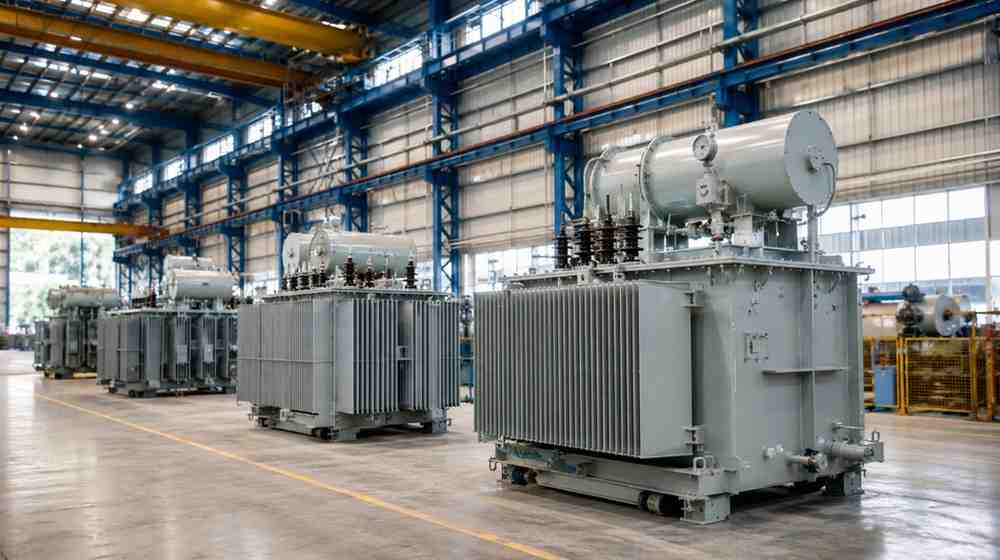
This page is for buyers, engineers, procurement managers, and contractors who are researching transformer manufacturers in Mumbai and want to make a well-informed decision before committing. There is a lot to consider beyond just the kVA rating on a spec sheet, and this guide walks through all of it.
Why Mumbai Is a Major Centre for Transformer Procurement
Mumbai and the broader Maharashtra region represent one of the largest concentrations of industrial activity in India. From petrochemical complexes in Raigad to textile manufacturing in Bhiwandi, automotive plants in Pune, and large-scale infrastructure development across the Mumbai Metropolitan Region, the demand for transformers of every type and voltage class is continuous.
That demand has naturally attracted a significant number of transformer manufacturers, stockists, and distributors to the region. The challenge for buyers is not finding a supplier. It is finding the right one.
In my experience, the density of options in Mumbai actually makes procurement harder in some ways. When you have twenty suppliers all claiming to manufacture to IS 2026 standards, sorting genuine capability from confident marketing requires some real digging.
Understanding What Type of Transformer You Actually Need
Before you can meaningfully evaluate any transformer manufacturer, you need to be clear on your own requirement. This sounds basic, but I have noticed that a surprising number of procurement inquiries land with suppliers in vague form, which leads to vague quotes and mismatched products.
Here is a practical breakdown of the main transformer types and their typical applications in Indian industrial and utility contexts.
Distribution Transformers
These are the most commonly procured transformers in India. They step down voltage from 11 kV to 433 V (LT) for distribution to industrial and commercial loads. Available in oil-cooled (ONAN) and dry-type configurations. Conformance to IS 1180 is the applicable Indian standard.
Power Transformers
Used at higher voltage classes, typically 33 kV to 220 kV, for transmission and sub-transmission applications. Power transformers for grid substations conform to IS 2026 and IEC 60076. These are more complex to specify and manufacture, and lead times are typically longer.
Dry Type Transformers
Cast resin or vacuum pressure impregnated (VPI) transformers used in indoor applications where fire risk makes oil-filled units unsuitable. Common in commercial buildings, hospitals, data centres, and metro rail projects. Conformance to IS 11171 and IEC 60726.
Furnace Transformers
Specialized units for steel plants, foundries, and arc furnace applications. These handle extremely high secondary currents and require robust mechanical construction to withstand the dynamic loading of arc furnace cycles.
Solar and Renewable Energy Transformers
Transformers designed for the specific duty cycle of solar and wind power plants, where loading is highly variable and thermal cycling is more demanding than standard industrial applications.
What to Actually Check When Evaluating Transformer Manufacturers in Mumbai
This is where most buyers need to focus their attention. The checklist below comes from real procurement experience, not a textbook.
When I tried evaluating three transformer manufacturers for a 33 kV substation project, the differences in what they could actually demonstrate versus what they claimed in their brochures were significant. Here is what I looked at:
- Type test certificates from CPRI or an NABL-accredited laboratory for the specific transformer rating and design you are procuring. Not a certificate from a decade ago on a different rating.
- Routine test reports for the actual unit being delivered. Temperature rise tests, voltage ratio tests, impedance tests, and dielectric tests at minimum.
- IS 2026 or IS 1180 conformance declaration with the relevant part numbers clearly cited.
- Core and winding material documentation. Is the winding conductor certified electrolytic copper? What grade of CRGO (cold rolled grain-oriented) silicon steel is used for the core?
- Oil quality certificate for oil-filled transformers. The insulating oil must conform to IS 335.
- Factory inspection capability. Can you or your representative witness factory acceptance testing before dispatch?
A manufacturer who hesitates on any of these points is telling you something worth paying attention to.
The Documentation Problem That Trips Up Projects
According to a review published by the Central Electricity Authority on transformer failure analysis in Indian utilities, a significant proportion of transformer failures in the field can be attributed to substandard materials and inadequate quality control at the manufacturing stage, problems that proper documentation and factory inspection should catch before dispatch.
That statistic stays with me every time I see a procurement team skip the documentation verification step to save time during vendor finalization.
For projects requiring utility approval, electrical inspector sign-off, or CEA compliance, transformer documentation is not optional. Type test reports, routine test reports, material certificates, and dimensional drawings all need to be in order before your electrical inspector will sign off on energization.
Sourcing from a manufacturer who understands this and provides complete documentation as standard is genuinely worth prioritizing over the supplier with the lowest quote who will scramble for documents after dispatch.
How Geography Affects Your Transformer Sourcing Decision
Buyers in Mumbai typically start their search with local Maharashtra-based manufacturers, which makes practical sense for shorter logistics and easier factory visits. But the Indian transformer manufacturing landscape is genuinely national, and some of the most capable manufacturers are based in other states.
Faridabad and the broader Delhi NCR region, for example, host several strong transformer and electrical equipment manufacturers who regularly supply to projects across Maharashtra, Gujarat, Karnataka, and other major industrial states. The quality of the product and the completeness of the documentation often matter more than whether the factory is a two-hour drive from your project site.
SPKN India, based in Faridabad, regularly supplies transformers and associated electrical equipment to projects in Mumbai, Nashik, Pune, and across Maharashtra. The combination of manufacturing capability, standards-compliant documentation, and logistics to major project sites across India makes the geography a secondary consideration for buyers who are focused on getting the right product with the right paperwork.
Working with Transformer Manufacturers for Substation Projects
Substation projects have specific transformer requirements that go beyond the transformer unit itself. The transformer must be specified in coordination with the substation's protection system, the bus configuration, the cable connections, and the earthing design.
A transformer manufacturer who only supplies the unit and leaves everything else to the contractor creates coordination gaps. The best procurement outcomes happen when the transformer manufacturer can also advise on accessory specifications like on-load tap changers (OLTC), Buchholz relays, winding temperature indicators, oil level gauges, and marshalling boxes.
I have noticed that manufacturers who manufacture their own accessories or have established supply relationships for them tend to provide better-coordinated product packages than those who treat the accessories as an afterthought.
For EPC contractors managing complete substation packages in Maharashtra and elsewhere, working with a supplier like SPKN India who covers multiple product categories within a coordinated supply scope reduces interface problems and simplifies the project documentation package.
Transformer Applications Across Maharashtra Industries
To give this some practical grounding, here are the transformer applications most commonly procured for Maharashtra-based industrial projects.
Petrochemical and Refinery Plants
These require transformers rated for continuous high-load operation with special attention to thermal performance. Hazardous area classifications near process plant equipment sometimes dictate dry-type transformers or specially housed oil-cooled units.
Textile and Manufacturing Units in Bhiwandi and Ichalkaranji
Distribution transformers for 11 kV to 433 V supply are the most common procurement in these areas. Units need to be robust, easy to maintain, and supported by a supplier who can provide replacement units quickly if needed.
Infrastructure and Metro Projects in Mumbai
Large metro rail and infrastructure projects require dry-type transformers for tunnel and station environments, combined with power transformers for traction substations. The documentation and testing requirements for these projects are typically more demanding than standard industrial applications.
Solar Power Plants in Vidarbha and Marathwada
The solar-rich regions of eastern Maharashtra have seen significant renewable energy investment. Solar plant transformers face unique thermal cycling demands and require careful specification to ensure reliable long-term performance.
What SPKN India Brings to Transformer Buyers Across India
SPKN India manufactures and supplies transformers conforming to IS 2026, IS 1180, and IEC 60076 across a range of ratings and voltage classes. The manufacturing process is backed by in-house quality control and third-party type test documentation from recognized laboratories.
For buyers in Mumbai and Maharashtra, SPKN India provides complete product documentation packages suitable for utility and electrical inspector approvals, factory acceptance testing with customer witness available, and technical support for specification development when the project requirement is complex or unusual.
The product range extends beyond transformers to include isolators, switchgear, lightning arresters, earthing systems, and substation accessories, which means SPKN India can serve as a coordinated supply partner for complete substation packages rather than just a single-product vendor.