Lightning Arrester Price in Kolkata: How to Read a Quotation
Quick answer: The lightning arrester price in Kolkata is set by the voltage class, the discharge current rating, the housing material and the pollution class of the site. Because Kolkata is humid, close to the coast and heavily industrial, creepage distance and housing choice affect both price and service life more than they do inland. Compare technical ratings first, then compare rupees.
Kolkata and its industrial belt face a demanding mix of conditions. The pre-monsoon months bring violent Nor'westers locally known as Kalbaishakhi, with frequent lightning. The monsoon keeps humidity high for months. The air near Howrah, Haldia, Kharagpur and the riverside industrial areas carries salt, dust and chemical pollution. All of this lands on the insulating surface of an arrester, so a buyer who looks only at a headline price can end up with a unit that tracks, ages early or fails in its first few seasons.
This guide is written for plant engineers, utility contractors and purchase teams in and around Kolkata. It explains what is inside the price of a lightning arrester, which specifications matter for West Bengal conditions, and how to compare quotations on equal terms.
Why Kolkata Conditions Change the Specification
Frequent storms and high ground flash density
Eastern India sees many thunderstorm days each year. Overhead 11 kV and 33 kV feeders that run through open land, ponds and paddy fields are exposed to direct and nearby strikes. For these lines, a 10 kA arrester is usually preferred over a 5 kA unit, and the arresters should be fitted at transformer terminals, cable transitions and line ends.
Humidity, salt and industrial pollution
Standards describe pollution by site class, from light to very heavy. A line near the river or an industrial zone with chemical or cement dust may need a longer creepage distance than a line in a clean suburb. A longer creepage housing is a bigger, more costly unit. Choosing the wrong class is the commonest reason for flashover on a wet, polluted surface. Ask the supplier to state the specific creepage distance in mm per kV for your quoted model.
Soft ground and variable earth resistance
The alluvial soil around Kolkata holds moisture, which often helps earth resistance, but the water table moves through the year. Earth resistance must still be measured at commissioning and in the dry season. For good practice, read our guide to earthing electrodes.
What Goes Into the Price
| Factor | Effect on price | What to ask |
|---|---|---|
| Rated voltage and MCOV | Higher class means more blocks and a longer housing | Ur and MCOV for your system and earthing |
| Nominal discharge current | 10 kA and 20 kA cost more than 5 kA | Line discharge class and energy handling |
| Housing | Polymer and porcelain differ by length and voltage | Material, creepage in mm per kV |
| Metal oxide quality | The main hidden cost | Routine and type test reports |
| Accessories | Brackets, terminals, counter, disconnector add up | Itemised list in the quotation |
| Quantity and delivery | Batches reduce unit cost, freight to Kolkata adds | Delivered price with GST shown |
Polymer or Porcelain for Kolkata
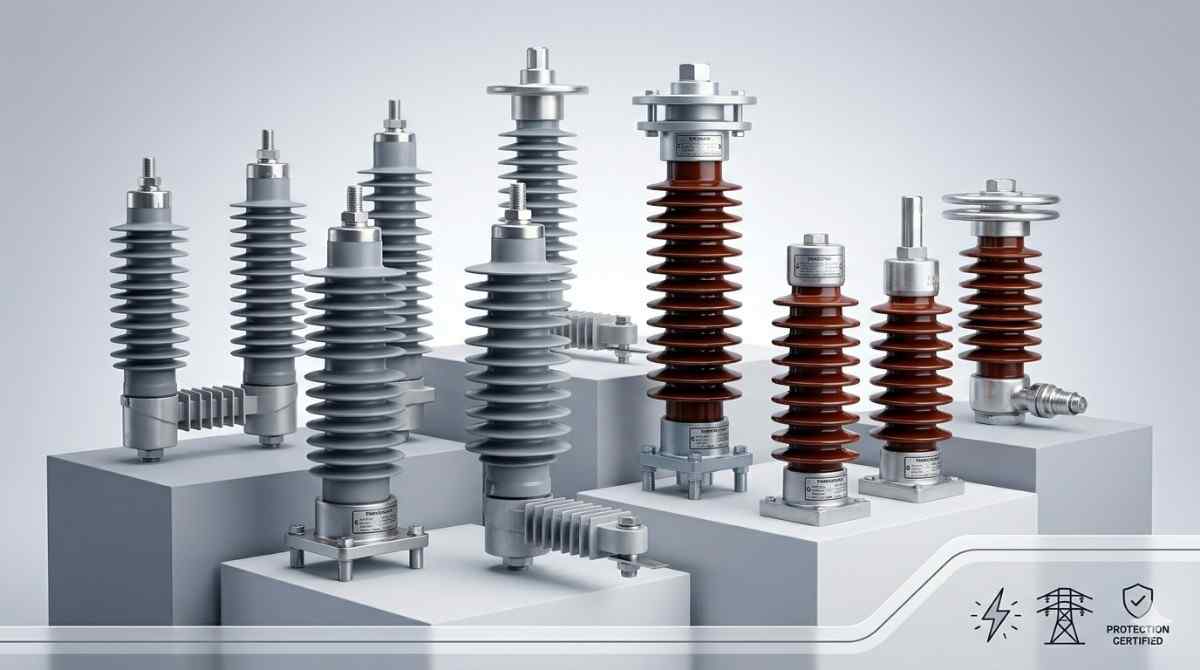
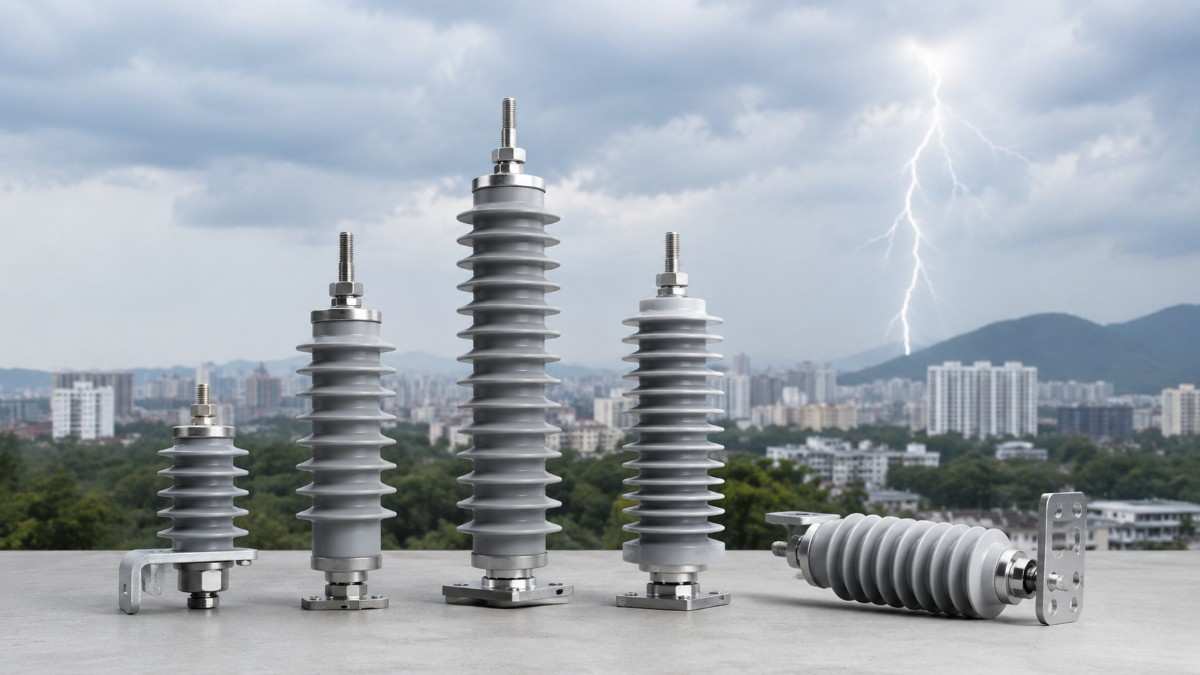
Polymer (silicone rubber) housing sheds water well and keeps a water-repellent surface even when dirty, which suits humid and polluted sites. It is also light and does not shatter in a fault, which makes handling and pole mounting easier. Porcelain is heavy and rigid, but it has a long record and is common in older substations. Neither is always right. For polluted riverside and coastal-influenced locations, polymer is often the practical choice. For a yard with existing porcelain equipment, matching material can simplify spares. Our pages on polymer insulators and porcelain insulators explain the same trade-off in line hardware, and the porcelain insulator guide covers how the ceramic behaves.
Rated Voltage and MCOV: Do Not Cut Corners
The rated voltage (Ur) is the highest voltage at which the arrester can do its duty. The maximum continuous operating voltage (MCOV) is the highest voltage it can hold indefinitely. West Bengal networks can see temporary overvoltages during earth faults, especially on systems that are not solidly earthed. If the arrester is rated too close to the normal voltage, it will run warm, draw more leakage current and age quickly. A slightly higher rated voltage costs more, but it protects the arrester itself. Confirm the system earthing with your design engineer before you finalise the rating.
Typical Applications Around Kolkata
- Distribution transformers on 11 kV feeders in dense city and suburban areas.
- Industrial plants in the Howrah, Dankuni, Kalyani and Haldia belts where one surge can stop production.
- Substations at 33 kV, 66 kV and 132 kV, protecting transformers, circuit breakers and 33 kV isolators.
- Railway and metro supply where long cable and overhead runs pick up surges.
- Ports and warehousing with exposed outdoor switchgear.
Our lightning arresters page lists the ranges we supply. For how an arrester is connected beside a transformer, read about the lightning arrester in a transformer, and for the 11 kV selection logic, see our 11 kV lightning arrester guide.
Comparing Two Quotations Fairly
- Put the rated voltage, MCOV and discharge current side by side.
- Check the housing material and the creepage distance in mm per kV.
- Confirm the test standard, IS 3070 or IEC 60099-4, and ask for the latest routine test report.
- List the included accessories: line and earth terminals, bracket, counter, disconnector.
- Check the delivered price to Kolkata, GST, lead time and warranty period.
If one quotation leaves any of these blank, the lower price may reflect a lower grade of metal oxide block, fewer fittings or a shorter creepage path. A fair comparison takes five minutes and can avoid a replacement a few years later.
Common Mistakes Buyers Make
- Choosing by voltage class alone. Pollution class and MCOV also decide whether the unit survives in humid air.
- Long lead wires. A long connection adds voltage across the equipment during a surge, so keep the line and earth leads short and straight.
- No earth test. A good arrester on a poor earth still lets a high voltage reach the equipment.
- Replacing only one unit in a set. Mixed types in a three-phase set can behave differently under the same surge.
- Accepting a price without ratings. A rupee figure without Ur, MCOV and kA cannot be compared.
Test Reports and Standards
A report turns a claim into evidence. The routine test report should list the reference voltage, the residual voltage at the rated discharge current and the leakage current at the continuous operating voltage. The type test report should confirm the long-duration current impulse test, the operating duty test and the pressure relief or short-circuit test where it applies. Reports from a recognised laboratory carry more weight than a datasheet alone. If a report is for another rating or model, ask for the correct one before you place the order.
A serial number on the arrester that links back to its test record also helps. In the third or fifth year, when a leakage current reading looks high, that record lets you judge whether the unit is ageing normally or has a manufacturing issue.
Installation and Maintenance Before the Storm Season
Mount the arrester as close as practical to the equipment it protects, and use properly sized clamps from our substation connectors range. After commissioning, inspect the housing for tracking marks and cracks, read the discharge counter if fitted, and have leakage current measured as part of routine maintenance. In Kolkata, schedule the check before the Nor'wester season starts, not after it. A rising leakage current is an early sign that the blocks are ageing, and it is far cheaper to replace one arrester than a transformer. The step-by-step method is in our lightning arrester installation guide, and the layout of a whole yard is covered under power substation.
Choosing Between 5 kA, 10 kA and 20 kA
The discharge current rating describes the size of the standard surge the arrester is designed to carry repeatedly. A 5 kA unit is common on lightly exposed distribution lines and in areas with low lightning activity. A 10 kA unit is the usual choice for exposed 11 kV and 33 kV lines, transformer terminals and substation bays, and it is a sensible default for most of the Kolkata region. A 20 kA unit is normally reserved for important substations, long exposed lines and places where a single failure would be very costly. The step up in rating adds metal oxide volume, which is why the price rises. Spending that extra on a high-value transformer is usually easier to defend than saving it and then explaining a failure.
Questions Purchase Teams Should Ask Before Ordering
A short checklist saves time. First, ask whether the unit is gapless metal oxide or an older gapped type. Second, ask for the guaranteed protective level at the rated discharge current, because a lower value means the equipment sees a lower surge. Third, ask how the disconnector behaves if the arrester fails, since a good disconnector drops the failed unit off the line and prevents a prolonged outage. Fourth, ask for the weight and mounting details so the pole, crossarm or structure can carry it. Fifth, ask about the warranty terms and whether replacement is on site or against return. Written answers to these five questions tell you more about a supplier than a price list does. For substation work, our substation erection services and turnkey projects pages show how we handle supply and installation together.
Budgeting for the Whole Protection Scheme
The arrester is only one part of surge protection. A complete scheme also includes a low-resistance earth, short connection leads, correctly rated insulators and well-clamped connectors. If the budget is tight, it is better to buy a correctly rated arrester with a proper earth than a larger arrester on a poor earth. Plan the total cost of the scheme, not only the line item for the arrester, and ask your supplier to quote the related fittings together so that dimensions and ratings match.
Request a Lightning Arrester Quotation for Kolkata
SPKN India is a Faridabad-based manufacturer of high-tension electrical equipment and supplies customers across India, including West Bengal. Send us your voltage class, discharge current, preferred housing, site pollution level and quantity, and we will return an itemised quotation. You can also call +91 9999501843.