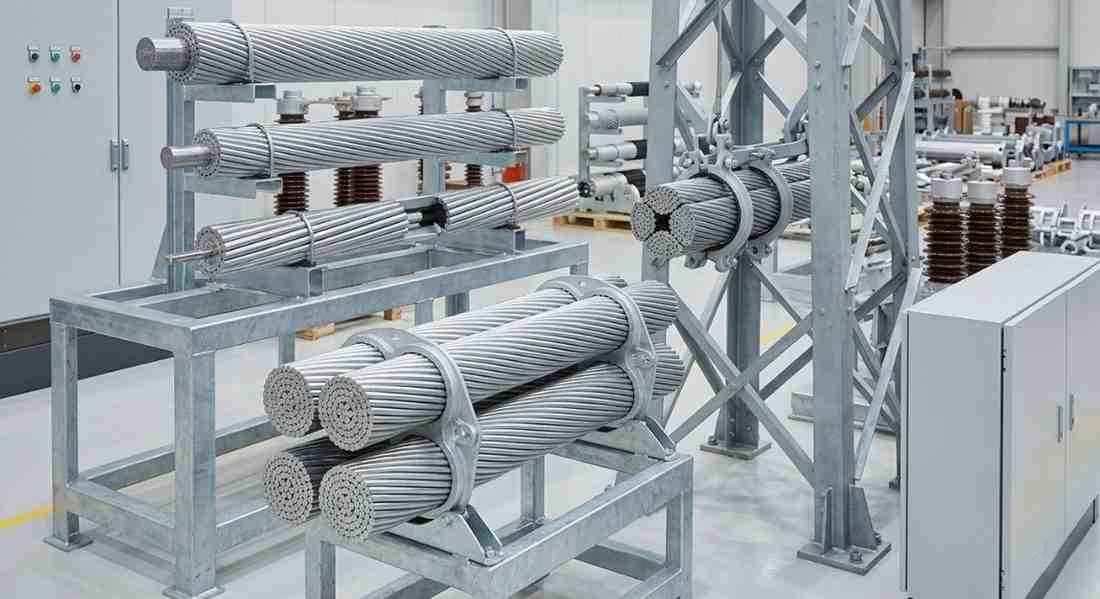
That is why understanding the types of conductor in transmission line systems matters more than most people realize. Whether you are involved in electrical infrastructure, industrial projects, or simply curious about how electricity travels across long distances, knowing the basics helps you appreciate the engineering behind modern power networks.
At SPKN India, we understand how critical reliable transmission components are for maintaining stable electrical infrastructure across industries and utility systems.
What Is a Transmission Line Conductor?
A conductor in a transmission line is the material used to carry electrical current from one point to another. These conductors are installed on transmission towers or poles and form the backbone of overhead power transmission systems.
The ideal conductor should have:
- High electrical conductivity
- Strong mechanical strength
- Lightweight properties
- Resistance to corrosion
- Long operational life
No single conductor type is perfect for every application. That is why engineers choose different conductors based on voltage level, environmental conditions, distance, and load requirements.
Why Conductors Matter in Power Transmission
A transmission system is only as reliable as its conductor performance.
Poor conductor selection can lead to:
- Excessive power loss
- Increased maintenance
- Voltage drop
- Overheating
- Mechanical failure
In my experience, conductor choice becomes especially important in regions with harsh weather conditions. Coastal humidity, industrial pollution, and extreme temperatures can significantly affect long-term performance.
According to the International Electrotechnical Commission, conductor efficiency and material quality play a major role in minimizing transmission losses in high-voltage systems.
Main Types of Conductor in Transmission Line
There are several commonly used conductors in overhead transmission systems. Each has unique properties and advantages.
AAC Conductor
AAC stands for All Aluminum Conductor.
This conductor is made entirely from aluminum strands.
Key Features of AAC Conductors
- Excellent conductivity
- Lightweight
- Good corrosion resistance
- Economical for short-distance transmission
Common Applications
- Urban distribution networks
- Short-span transmission lines
- Coastal areas with moderate load conditions
AAC conductors are widely used where mechanical strength requirements are not extremely high.
When I worked on a local electrical infrastructure project years ago, AAC conductors were preferred because the installation area had shorter spans and lower mechanical stress.
ACSR Conductor
ACSR stands for Aluminum Conductor Steel Reinforced.
It combines aluminum strands with a steel core.
Why ACSR Conductors Are Popular
The steel core provides:
- High tensile strength
- Better sag control
- Longer span capability
The aluminum layers carry the electrical current efficiently.
Advantages of ACSR Conductors
- Excellent mechanical durability
- Suitable for long-distance transmission
- Performs well under heavy loads
- Widely used in high-voltage transmission systems
Common Uses
- 132 kV transmission lines
- 220 kV transmission lines
- 400 kV transmission systems
- River crossing transmission corridors
I've noticed that ACSR conductors are often the first choice for extra high voltage projects because they balance electrical performance and mechanical reliability effectively.
AAAC Conductor
AAAC stands for All Aluminum Alloy Conductor.
Instead of pure aluminum, these conductors use aluminum alloy materials.
Key Benefits of AAAC Conductors
- Better corrosion resistance
- Improved strength compared to AAC
- Lightweight design
- Longer lifespan in polluted environments
Ideal Applications
AAAC conductors are commonly used in:
- Coastal regions
- Industrial zones
- Humid environments
Their corrosion resistance makes them highly suitable for challenging environmental conditions.
ACAR Conductor
ACAR means Aluminum Conductor Alloy Reinforced.
This conductor combines aluminum strands with aluminum alloy reinforcement.
Advantages of ACAR Conductors
- Good conductivity
- High mechanical strength
- Better current carrying capacity
- Reduced line losses
Where ACAR Conductors Are Used
- High-capacity transmission systems
- Long-span installations
- Utility power networks
ACAR conductors offer a strong balance between conductivity and mechanical durability.
Copper Conductors
Copper was once the dominant conductor material in power transmission systems.
Even today, copper remains highly respected for its conductivity.
Benefits of Copper Conductors
- Excellent electrical conductivity
- High thermal performance
- Strong corrosion resistance
Limitations
Copper conductors are:
- Heavier than aluminum
- More expensive
- Less practical for large overhead spans
Because of weight considerations, copper is now more commonly used in specialized applications rather than large-scale overhead transmission systems.
Galvanized Steel Conductors
Steel conductors are mainly used where mechanical strength is more important than conductivity.
Typical Applications
- Ground wires
- Shield wires
- Lightning protection systems
These conductors provide structural strength and help protect transmission systems from lightning strikes.
High Temperature Low Sag Conductors
Modern transmission systems increasingly use HTLS conductors.
These are designed for:
- Higher current carrying capacity
- Reduced sag under high temperatures
- Better thermal performance
Advantages of HTLS Conductors
- Supports grid modernization
- Increases transmission capacity
- Improves efficiency without building new towers
Utilities are increasingly adopting these advanced conductors to meet rising electricity demand.
Comparison of Different Types of Conductors
Here is a simplified comparison of the most commonly used conductors:
| Conductor Type | Conductivity | Mechanical Strength | Corrosion Resistance | Common Use |
|---|---|---|---|---|
| AAC | High | Moderate | Good | Short-distance lines |
| ACSR | High | Excellent | Moderate | Long-distance transmission |
| AAAC | Good | Good | Excellent | Coastal and industrial areas |
| ACAR | Very Good | High | Good | High-capacity systems |
| Copper | Excellent | Good | Excellent | Specialized applications |
Factors Considered While Selecting Conductors
Choosing the right conductor requires careful engineering analysis.
Voltage Level
Higher voltage systems require conductors capable of handling increased electrical stress.
Mechanical Strength
Long transmission spans require stronger conductors with lower sag characteristics.
Environmental Conditions
Coastal regions, deserts, and industrial areas require different conductor properties.
Current Carrying Capacity
The conductor must safely carry expected electrical load without overheating.
Cost and Maintenance
Long-term operational reliability is just as important as initial installation considerations.
In my experience, many transmission failures can be traced back to poor material selection or inadequate environmental assessment during project planning.
Importance of Sag Control in Transmission Conductors
Sag refers to the downward curve of conductors between towers.
Excessive sag can:
- Reduce safety clearance
- Increase mechanical stress
- Create operational hazards
Conductors with higher tensile strength help maintain proper clearance even under high temperatures.
This is one reason why ACSR conductors are widely preferred for high-voltage transmission projects.
Corona Effect and Conductors
At high voltages, air around conductors can ionize and create corona discharge.
Effects of Corona
- Energy loss
- Audible noise
- Radio interference
- Power inefficiency
Engineers reduce corona effects by:
- Using bundled conductors
- Increasing conductor diameter
- Optimizing conductor spacing
Large transmission systems such as 400 kV lines commonly use bundled conductors to minimize corona loss.
Maintenance of Transmission Conductors
Conductors require regular inspection to maintain reliable performance.
Common Maintenance Activities
- Thermal scanning
- Corrosion inspection
- Tension checking
- Vibration monitoring
- Hardware replacement
Modern utilities now use:
- Drone inspection
- Infrared cameras
- AI-based monitoring systems
When I observed a drone inspection program at a transmission corridor, it was impressive how quickly engineers could identify damaged strands and hotspots without shutting down the entire line.
Role of Conductors in Renewable Energy Projects
Renewable energy projects depend heavily on efficient transmission conductors.
Wind farms and solar parks are often located far from urban centers. Conductors must transfer large amounts of electricity over long distances with minimal loss.
Advanced conductor technologies are helping utilities:
- Improve efficiency
- Increase transmission capacity
- Integrate renewable power more effectively
India's renewable energy expansion is driving significant upgrades in transmission conductor infrastructure.
Common Problems Faced by Transmission Conductors
Corrosion
Environmental exposure gradually weakens conductors.
Vibration Damage
Wind-induced vibration can damage conductor strands over time.
Thermal Expansion
High temperature increases conductor sag.
Pollution Accumulation
Industrial pollution affects electrical performance and insulation coordination.
Mechanical Fatigue
Long-term stress reduces structural integrity.
SPKN India recognizes the importance of reliable transmission infrastructure and supports industries with dependable electrical solutions designed for demanding operating conditions.
Future Trends in Transmission Conductors
The transmission industry continues evolving rapidly.
Smart Conductors
Some modern conductors now include embedded monitoring capabilities.
Composite Core Conductors
Advanced materials reduce weight while increasing strength.
Higher Capacity Transmission
Utilities are upgrading conductor technology to handle growing power demand.
Environmentally Optimized Designs
Modern conductors focus on reducing losses and improving efficiency.
I've noticed that utilities are becoming much more proactive about adopting advanced conductor technologies instead of waiting for older systems to fail.
Final Thoughts
Understanding the types of conductor in transmission line systems helps you appreciate the engineering decisions behind modern electrical infrastructure. Each conductor type offers different advantages depending on transmission distance, environmental conditions, voltage level, and mechanical requirements.
From AAC and ACSR to advanced HTLS conductors, every design plays a specific role in ensuring reliable power delivery. As electricity demand continues increasing and renewable energy projects expand, conductor technology will remain central to building stronger and more efficient transmission networks.
SPKN India continues supporting the electrical infrastructure sector by understanding the growing need for dependable transmission solutions designed for long-term performance.