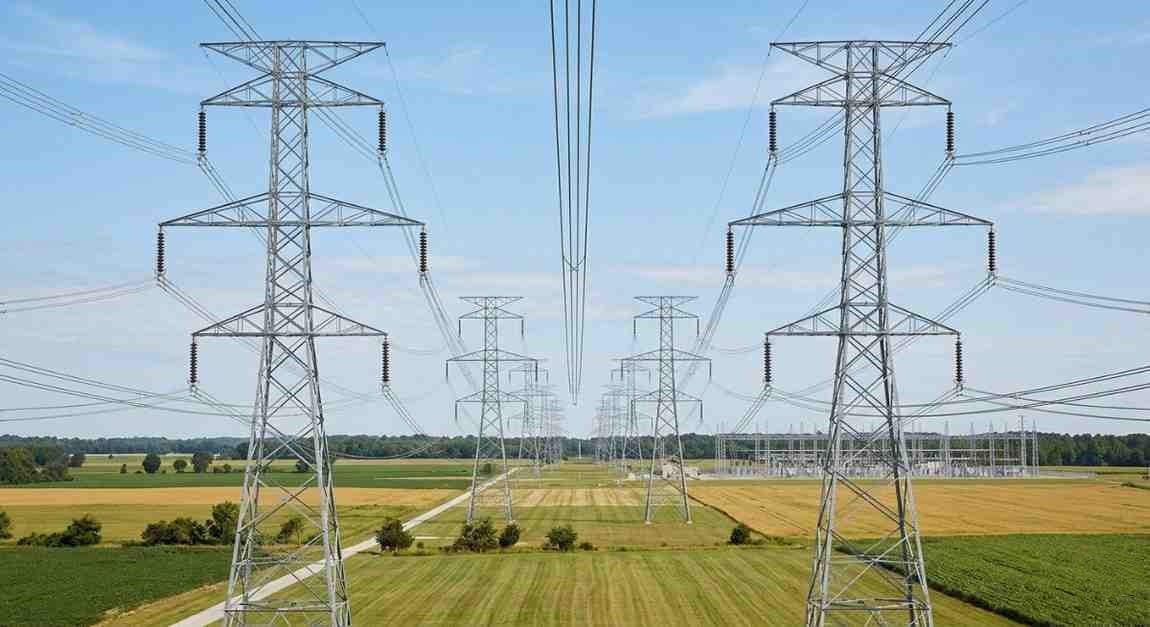
You see these massive towers stretching across highways and open land all the time. They may look simple from a distance, but they carry enormous amounts of power with carefully engineered precision. Without 400 kV transmission lines, modern cities, industries, metro systems, hospitals, and manufacturing plants would struggle to maintain stable electricity supply.
At SPKN India, we closely follow the evolution of high-voltage infrastructure because dependable transmission systems are the backbone of every growing economy.
What Is a 400 kV Transmission Line?
A 400 kV transmission line is an extra high voltage electrical transmission system designed to carry large quantities of electricity across long distances.
The term "400 kV" stands for 400 kilovolts. That equals 400,000 volts.
These lines are mainly used for:
- Interstate power transmission
- Large industrial power supply
- Grid interconnections
- Renewable energy integration
- Bulk electricity transfer
The reason such high voltage is used is simple. Higher voltage reduces current for the same power transfer, which significantly lowers transmission losses.
Think of it like transporting water through a pipeline. Higher pressure allows water to travel farther more efficiently. Electricity behaves in a somewhat similar way when voltage increases.
Why 400 kV Transmission Lines Matter
Power generation often happens far away from where electricity is consumed. Thermal plants, hydroelectric stations, solar parks, and wind farms may be located hundreds of kilometers from major cities.
This is where 400 kV transmission lines become essential.
They help:
- Transfer electricity efficiently over long distances
- Reduce transmission losses
- Improve grid reliability
- Support industrial growth
- Stabilize regional power networks
According to a report published by the Central Electricity Authority of India, extra high voltage systems such as 400 kV networks play a major role in strengthening national grid stability and supporting future renewable energy expansion.
Main Components of a 400 kV Transmission Line
A transmission system may appear straightforward, but every component has a highly specialized role.
Conductors
Conductors carry electrical current from one location to another.
Common conductor materials include:
- Aluminum
- Aluminum alloy
- ACSR conductors
For 400 kV systems, bundled conductors are often used to reduce corona losses and improve efficiency.
Transmission Towers
These tall steel structures support the conductors and maintain safe clearances.
Tower height depends on:
- Terrain
- Voltage level
- Wind load
- Safety standards
- River or highway crossings
In my experience, tower design becomes especially critical in coastal and high-wind regions where environmental stress can affect long-term performance.
Insulators
Insulators separate live conductors from grounded tower structures.
For 400 kV systems, insulators must handle:
- High electrical stress
- Pollution exposure
- Rain and humidity
- Mechanical load
Porcelain, glass, and composite polymer insulators are commonly used.
Ground Wire
Ground wires are installed above conductors to protect transmission lines from lightning strikes.
They safely divert fault current to the earth.
Hardware and Fittings
Even smaller components matter greatly.
Transmission hardware includes:
- Clamps
- Connectors
- Dampers
- Spacers
- Suspension fittings
- Tension assemblies
SPKN India understands how crucial durable hardware and insulation systems are for maintaining reliable electrical infrastructure.
How a 400 kV Transmission Line Works
The working process becomes easier to understand when broken into steps.
- Electricity is generated at a power plant.
- Transformers increase voltage to 400 kV.
- The transmission line carries electricity across long distances.
- Substations reduce voltage levels gradually.
- Distribution systems deliver electricity to consumers.
The higher voltage allows utilities to move massive amounts of power efficiently while minimizing energy loss.
Why Extra High Voltage Is Used
You might wonder why engineers do not simply transmit electricity at lower voltage.
The answer comes down to efficiency.
Lower Transmission Losses
Power loss in transmission lines depends heavily on current.
Higher voltage means:
- Lower current
- Reduced heat loss
- Better efficiency
Improved Long-Distance Transmission
400 kV systems can transmit electricity over very large distances without significant energy wastage.
Better Grid Stability
Extra high voltage systems improve load balancing between regions.
Support for Growing Demand
Industrial zones and rapidly growing cities require bulk power transfer capabilities.
I've noticed that regions with strong transmission infrastructure often experience fewer large-scale outages because power can be redirected more efficiently during emergencies.
Types of 400 kV Transmission Lines
Single Circuit 400 kV Line
A single circuit system carries one electrical circuit on the tower.
These are used when transmission demand is moderate.
Double Circuit 400 kV Line
Double circuit systems carry two circuits on the same structure.
Benefits include:
- Higher capacity
- Better land utilization
- Increased reliability
Quad Bundle Conductors
Many modern 400 kV lines use bundled conductors instead of a single conductor per phase.
This helps reduce:
- Corona discharge
- Radio interference
- Power losses
Challenges Faced by 400 kV Transmission Lines
Operating high-voltage systems is not always simple.
Weather Conditions
Heavy rain, storms, lightning, and strong winds can affect transmission reliability.
Pollution
Industrial pollution and salt deposits can damage insulation performance.
Vegetation Management
Trees growing too close to conductors create serious safety risks.
Mechanical Stress
Continuous environmental exposure affects towers and fittings over time.
Corona Effect
At very high voltages, air around conductors can ionize, creating corona discharge.
This causes:
- Energy loss
- Audible noise
- Electromagnetic interference
Engineers use bundled conductors and optimized spacing to minimize these effects.
Safety Measures Around 400 kV Transmission Lines
Safety is extremely important around high-voltage infrastructure.
Important Safety Guidelines
- Never touch fallen conductors
- Maintain safe clearance during construction
- Avoid operating tall machinery near lines
- Use proper grounding during maintenance
- Install warning signage around corridors
A 400 kV transmission line carries enormous electrical energy. Even indirect contact can be dangerous.
When I visited a transmission maintenance project years ago, I was surprised by the strict safety protocols followed by engineers. Every tool, every movement, and every clearance distance was carefully monitored.
Role of Insulators in 400 kV Systems
Insulators are among the most critical components in high-voltage transmission.
They prevent unwanted current flow between conductors and towers.
Common Insulator Types
Porcelain Insulators
Known for durability and mechanical strength.
Glass Insulators
Easy to inspect visually because cracks become visible quickly.
Composite Insulators
Lightweight and highly resistant to pollution.
In my experience, composite insulators have become increasingly popular in polluted industrial regions because they perform well under contaminated environmental conditions.
Maintenance of 400 kV Transmission Lines
Preventive maintenance is essential for reliable operation.
Common Maintenance Activities
- Thermal inspection
- Corona detection
- Tower alignment checks
- Insulator washing
- Hardware replacement
- Conductor tension testing
Modern utilities now use advanced technologies such as:
- Drone inspection
- Infrared thermography
- AI-based monitoring systems
These methods help detect problems before they become major failures.
Environmental Impact of 400 kV Transmission Lines
Transmission infrastructure must balance efficiency with environmental responsibility.
Key Environmental Concerns
- Land usage
- Bird interaction
- Noise generation
- Visual impact
- Vegetation clearing
Many utilities now adopt environmentally conscious corridor planning to reduce ecological disruption.
Importance of 400 kV Transmission Lines in Renewable Energy
Renewable energy projects rely heavily on high-voltage transmission infrastructure.
Solar and wind farms are often located in remote regions where land availability is higher.
Without strong 400 kV transmission networks:
- Renewable integration becomes difficult
- Grid congestion increases
- Power curtailment may occur
India's growing renewable energy sector has increased demand for advanced extra high voltage transmission systems across multiple states.
Difference Between 220 kV and 400 kV Transmission Lines
People often compare these two systems.
220 kV Systems
- Used for regional transmission
- Lower transmission capacity
- Suitable for medium-distance transfer
400 kV Systems
- Higher transmission capability
- Better long-distance efficiency
- Lower relative losses
- Improved grid integration
The choice depends on transmission distance, load demand, and network planning.
Future of 400 kV Transmission Infrastructure
The transmission industry continues evolving rapidly.
Smart Grid Integration
Real-time monitoring improves reliability and fault management.
Advanced Conductors
Modern conductors support higher current capacity.
Digital Substations
Automation improves operational efficiency.
Renewable Energy Expansion
New transmission corridors are being developed to connect renewable generation zones.
Predictive Maintenance
Artificial intelligence helps utilities predict equipment failures before outages occur.
SPKN India continues supporting the electrical infrastructure sector by understanding the growing demand for durable and dependable high-voltage transmission solutions.
Final Thoughts
A 400 kV transmission line is far more than a set of wires suspended on tall towers. It is a carefully engineered system designed to move enormous amounts of electrical energy safely and efficiently across vast distances.
From powering industrial corridors to supporting renewable energy growth, these transmission networks form a crucial part of modern infrastructure. Their reliability depends on high-quality conductors, insulators, fittings, maintenance practices, and engineering expertise.
As electricity demand continues rising, extra high voltage transmission systems will remain essential for building a stronger and more resilient power grid across India.