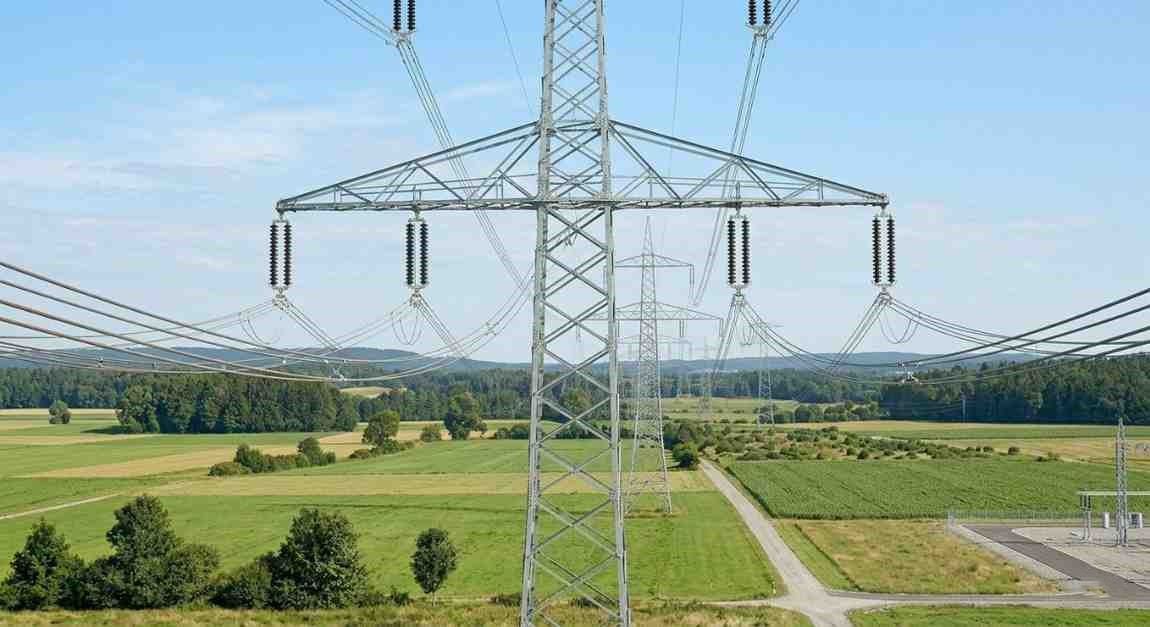
If you have ever looked up at tall steel towers with wires running between them, you have already seen one of the most important parts of the power system in action. Without overhead transmission lines, modern industries, hospitals, homes, railways, and data centers would struggle to function consistently.
At SPKN India, we work closely with electrical infrastructure products and understand how critical reliable transmission systems are for stable power delivery. From substations to switching equipment, every component connected to transmission lines plays a role in keeping the grid secure and efficient.
What Are Overhead Transmission Lines?
Overhead transmission lines are electrical conductors installed above ground to transmit high-voltage electricity over long distances. They connect power generation stations with substations and distribution networks.
Unlike underground cables, these lines are suspended in the air using towers or poles. The elevated design helps maintain safe clearance from people, vehicles, and buildings while reducing insulation requirements.
You will typically find overhead lines in:
- Urban electrical grids
- Rural electrification projects
- Industrial zones
- Railway power systems
- Renewable energy installations
- Interstate transmission corridors
The basic idea is simple. Electricity generated at a power plant is stepped up to very high voltage levels using transformers. The high voltage minimizes energy loss during transmission. Once the electricity reaches substations closer to consumers, the voltage is reduced again for practical use.
Why Overhead Transmission Lines Are Still Widely Used
Many people assume underground cables are always better. In reality, overhead systems continue to dominate large-scale power transmission for several practical reasons.
Easier Installation
Installing overhead transmission lines is usually faster and less complex than laying underground cables. Towers can be erected across long distances without major excavation work.
Better Cooling
Conductors suspended in open air naturally dissipate heat more effectively. This allows higher current carrying capacity under many conditions.
Lower Maintenance Cost
When faults occur, overhead systems are generally easier to inspect and repair. Technicians can visually identify damaged sections much faster.
Suitable for Long Distances
For cross-country power transfer, overhead transmission lines remain the most practical solution in terms of engineering and scalability.
In my experience, utility operators often prefer overhead systems for large transmission projects because troubleshooting becomes far more manageable compared to underground installations.
Main Components of Overhead Transmission Lines
An overhead transmission system may look simple from a distance, but it consists of several carefully engineered components working together.
Conductors
Conductors carry electrical current from one point to another. These are commonly made from aluminum, copper, or reinforced alloys.
Popular conductor types include:
- AAC (All Aluminum Conductor)
- ACSR (Aluminum Conductor Steel Reinforced)
- AAAC (All Aluminum Alloy Conductor)
The selection depends on load capacity, environmental conditions, and mechanical strength requirements.
Transmission Towers
Transmission towers support the conductors and maintain safe spacing between phases.
Tower designs vary depending on:
- Voltage level
- Terrain conditions
- Wind load
- Line angle
- Environmental exposure
You may see lattice steel towers in high-voltage corridors, while smaller poles are common in local distribution systems.
Insulators
Insulators prevent unwanted current flow between conductors and towers.
Common insulator materials include:
- Porcelain
- Glass
- Composite polymer
At SPKN India, we understand how vital quality insulation is for maintaining transmission reliability, especially in polluted or coastal environments.
Ground Wires
Ground wires are installed above conductors to protect transmission systems from lightning strikes.
They safely redirect fault currents into the earth, helping reduce equipment damage.
Hardware and Fittings
Transmission lines rely on multiple fittings such as:
- Clamps
- Connectors
- Suspension assemblies
- Tension fittings
- Spacers
- Dampers
These small components may not attract much attention, but they significantly influence system stability and lifespan.
Voltage Levels Used in Overhead Transmission Lines
Different transmission systems operate at different voltage levels depending on distance and load requirements.
High Voltage Transmission
Typically ranges from 66 kV to 220 kV.
Used for:
- Regional power transfer
- Industrial supply networks
- Urban transmission systems
Extra High Voltage Transmission
Usually above 220 kV.
Used for:
- Interstate grids
- Bulk power transfer
- National transmission corridors
Ultra High Voltage Systems
Certain advanced grids operate beyond 765 kV for extremely long-distance power transmission.
These systems reduce transmission losses substantially.
According to the International Energy Agency, efficient transmission infrastructure is becoming increasingly important as electricity demand rises globally and renewable energy integration expands rapidly.
How Overhead Transmission Lines Work
The process sounds technical, but it can be understood quite easily.
- Electricity is generated at a power station.
- Transformers increase voltage levels for transmission.
- Overhead transmission lines carry power across long distances.
- Substations reduce voltage near consumption areas.
- Distribution systems deliver electricity to homes and industries.
Think of it like transporting water through pipelines. High pressure allows water to travel farther efficiently. Similarly, high voltage allows electricity to move with lower energy loss.
Types of Overhead Transmission Lines
Single Circuit Transmission Lines
These lines contain one set of three-phase conductors.
They are commonly used where power demand is moderate.
Double Circuit Transmission Lines
Double circuit systems carry two separate circuits on the same tower structure.
Benefits include:
- Increased power capacity
- Better land utilization
- Improved reliability
HVAC Transmission Lines
High Voltage Alternating Current systems are the most commonly used transmission format worldwide.
HVDC Transmission Lines
High Voltage Direct Current systems are preferred for very long-distance transmission and underwater interconnections.
I have noticed that HVDC technology is becoming more popular in renewable energy projects because it supports efficient long-range power transfer with lower losses.
Advantages of Overhead Transmission Lines
Cost-Effective for Large Networks
Overhead systems are generally more economical than underground alternatives for long distances.
Faster Fault Detection
Visible infrastructure allows easier monitoring and quicker repair.
Flexibility in Expansion
Transmission networks can be expanded more easily when demand increases.
Reliable Performance
With proper maintenance, overhead transmission lines can operate efficiently for decades.
Better Heat Dissipation
Air circulation helps cool conductors naturally.
Challenges Faced by Overhead Transmission Systems
No transmission system is perfect. Overhead lines also face several operational challenges.
Weather Exposure
Storms, heavy rain, snow, and lightning can affect line performance.
Environmental Impact
Transmission corridors may require vegetation clearance and land usage planning.
Bird and Wildlife Interaction
Bird collisions and nesting sometimes create operational concerns.
Visual Impact
Large towers may affect landscape aesthetics in urban or tourist areas.
Maintenance Requirements
Regular inspection is essential for preventing failures.
In my experience, preventive maintenance is one of the most overlooked aspects of transmission infrastructure. Small hardware issues can eventually lead to significant outages if ignored.
Importance of Insulators in Overhead Transmission Lines
Insulators are often underestimated, yet they are absolutely critical.
A weak or damaged insulator can result in:
- Flashovers
- Leakage current
- Power interruption
- Equipment failure
Different environments require different insulation strategies.
For example:
- Coastal regions require salt-resistant insulators.
- Industrial zones need pollution-resistant designs.
- Desert areas need high thermal stability.
This is where experienced electrical manufacturers like SPKN India contribute by supporting durable and dependable transmission-related solutions for industrial applications.
Safety Measures Around Overhead Transmission Lines
Safety should never be ignored around high-voltage infrastructure.
Important Safety Practices
- Never touch fallen power lines
- Maintain clearance during construction work
- Avoid flying kites near transmission corridors
- Use proper grounding during maintenance
- Install warning signage in high-risk areas
Electrical utilities also use advanced monitoring systems for real-time fault detection and protection.
Role of Overhead Transmission Lines in Renewable Energy
Renewable energy projects depend heavily on transmission infrastructure.
Solar parks and wind farms are often located far from cities. Overhead transmission lines connect these generation sites to the main grid.
Without efficient transmission systems:
- Renewable energy integration becomes difficult
- Grid instability may increase
- Power wastage can occur
India's growing renewable energy sector is increasing demand for robust transmission infrastructure across multiple states.
Maintenance of Overhead Transmission Lines
Regular maintenance improves reliability and extends equipment life.
Common Maintenance Activities
- Thermal inspection
- Tower corrosion checks
- Insulator cleaning
- Vegetation management
- Conductor tension testing
- Hardware replacement
Modern utilities also use:
- Drone inspection
- Infrared scanning
- Smart monitoring sensors
When I visited an industrial transmission site a few years ago, I was surprised by how much technology is now involved in preventive inspection. Drones were identifying tiny defects that would have been difficult to spot manually.
Choosing the Right Transmission Infrastructure Components
Selecting reliable components matters more than many people realize.
Poor-quality fittings or insulators can create:
- Frequent outages
- Safety hazards
- Increased maintenance cost
- Reduced system lifespan
Before selecting equipment, engineers usually evaluate:
- Voltage requirements
- Environmental conditions
- Mechanical strength
- Pollution exposure
- Expected service life
SPKN India supports industries and electrical infrastructure projects with dependable transmission-related products designed for performance and durability.
Future Trends in Overhead Transmission Lines
The transmission industry is evolving rapidly.
Smart Grid Integration
Modern grids use sensors and digital monitoring for improved efficiency.
Advanced Composite Materials
Lightweight materials are reducing mechanical stress on towers.
High Capacity Conductors
New conductor technologies improve current carrying capability.
Renewable Integration
Transmission systems are adapting to decentralized energy generation.
AI-Based Predictive Maintenance
Utilities increasingly rely on artificial intelligence for early fault prediction.
These developments are helping make power systems more stable, efficient, and environmentally responsible.
Final Thoughts
Overhead transmission lines remain one of the most important foundations of modern electrical infrastructure. They quietly support industries, homes, transportation systems, healthcare facilities, and communication networks every single day.
Although they often fade into the background of daily life, these systems require careful engineering, quality materials, and consistent maintenance to operate safely and efficiently.
As energy demand continues to rise and renewable integration expands, the importance of reliable transmission infrastructure will only grow stronger. Companies like SPKN India continue contributing to this evolving sector by supporting dependable electrical solutions built for long-term performance.